Gleaning the Shuk: Fugee Fridays Feeds Refugees With Produce Donations

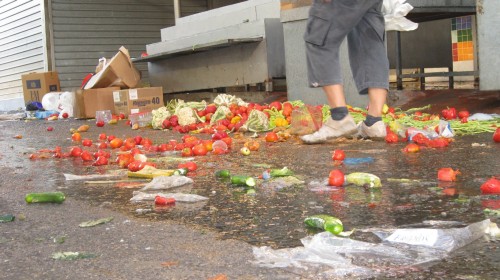
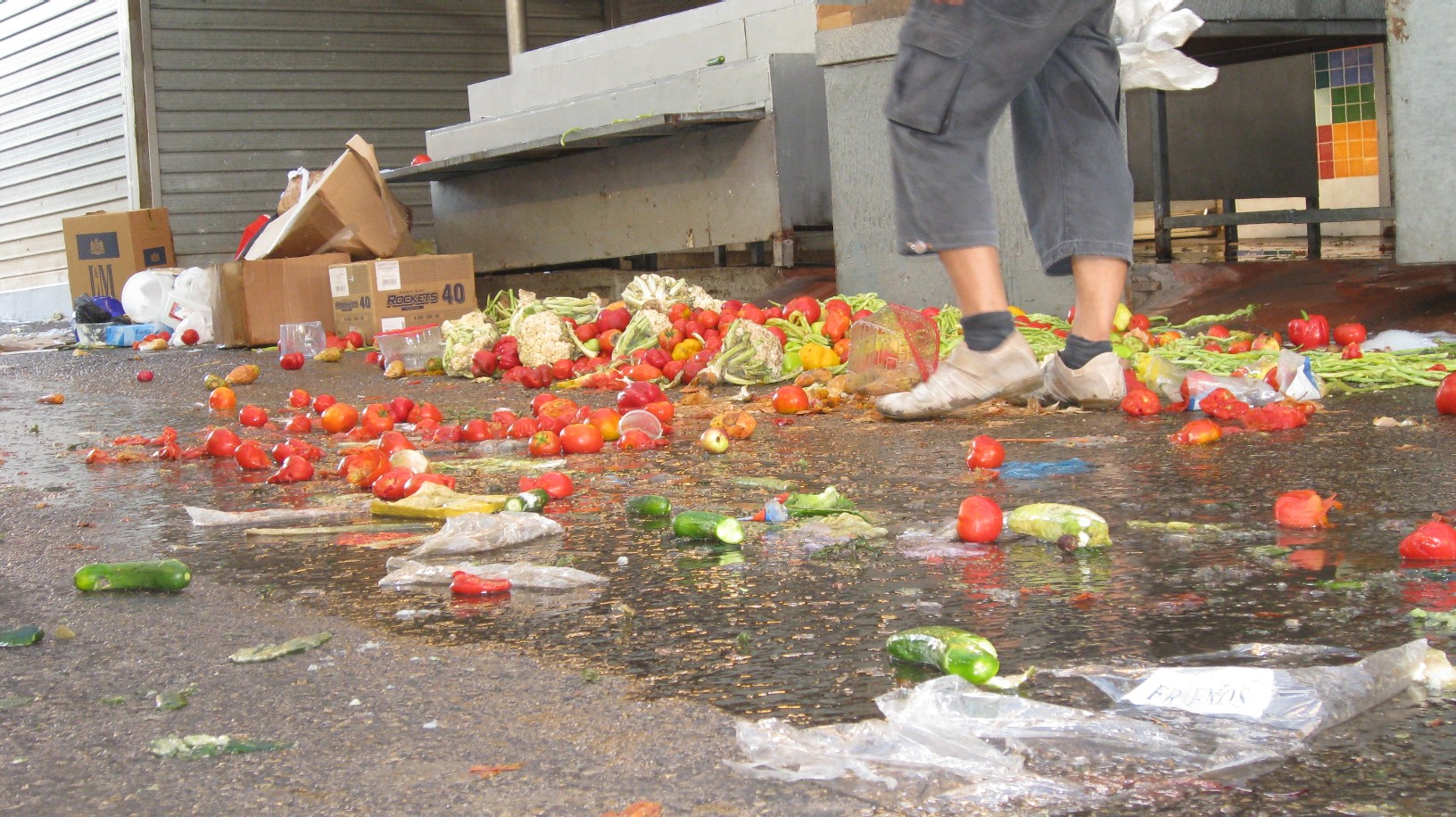
The carmel market shuk floor on a regular Friday in early August

The shuk floor on a regular Friday in early August (photo: Daniella Cheslow)

One of the best things about most major Israeli cities is the shuk, the giant outdoor food market where bright vegetables sit in precarious piles and entire alleyways are devoted to freshly butchered meat and refrigerated cases full of fish, sometimes even still squirming.

But one of the worst things about these shuks is the terrible waste at the end of each day, especially on Friday afternoons before the Sabbath comes in and the shuks are closed for the day. Lettuce covers entire meters of asphalt, chicken offal sits in piles surrounded by squashed tomatoes, and soggy cardboard boxes soak up the rotting vegetable mash.

In Tel Aviv, there are plenty of people who could use those discarded vegetables and fruit, and ‘Fugee Fridays – an initiative of Green Prophet Jesse Fox, his brother Steven, and their friend Gilli Cherrin – started up in February to collect excess produce from the shuk vendors and bring it to refugee shelters in southern Tel Aviv. Fugee Fridays meets at the bottom of Shuk Hacarmel each Friday at about 6 pm.

Fox said a friend of his told him about refugees lingering around Park Levinsky, a green patch near the Central Bus Station. He and the other founders took a carload of donated vegetables to the park, and were instantly swarmed.

“As soon as people realized we were taking out food, a bunch of guys just jumped toward the car. Dozens,” Fox said. “We saw they have their own way of distributing it and making sure everyone got some.”
helping hand coalition

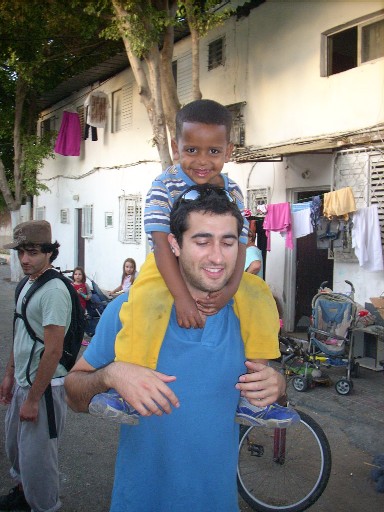
Green Prophet Jesse Fox at the Shapira shelter in June (photo: Luke Gasiorowski of the Helping Hand Coalition)

After the first few trips to the park, Fox said, the Fugee Fridays team realized their work would be easier at the refugee shelters scattered around southern Tel Aviv, in the area of the bus station. They now deliver to three shelters in the city – one for Darfurians, and two for Eritreans.

At first, Fox said, the refugees from warmer African climates didn’t know what to do with some of the food, liked broccoli, cauliflower or most winter vegetables. No one touched a box of fresh avocados until one woman peeled one and bit into it. “Maybe they thought it was a turtle,” Fox said.

Two weeks ago, I went along on a Fugee Fridays run. I got to the shuk at 5:40 pm, but took about twenty minutes to buy some heavily discounted passion fruit and pita bread before getting to the end of the market, where a Fugee Fridays volunteer was watching over backpacks and the growing pile of boxes of vegetables, fruit and bread.

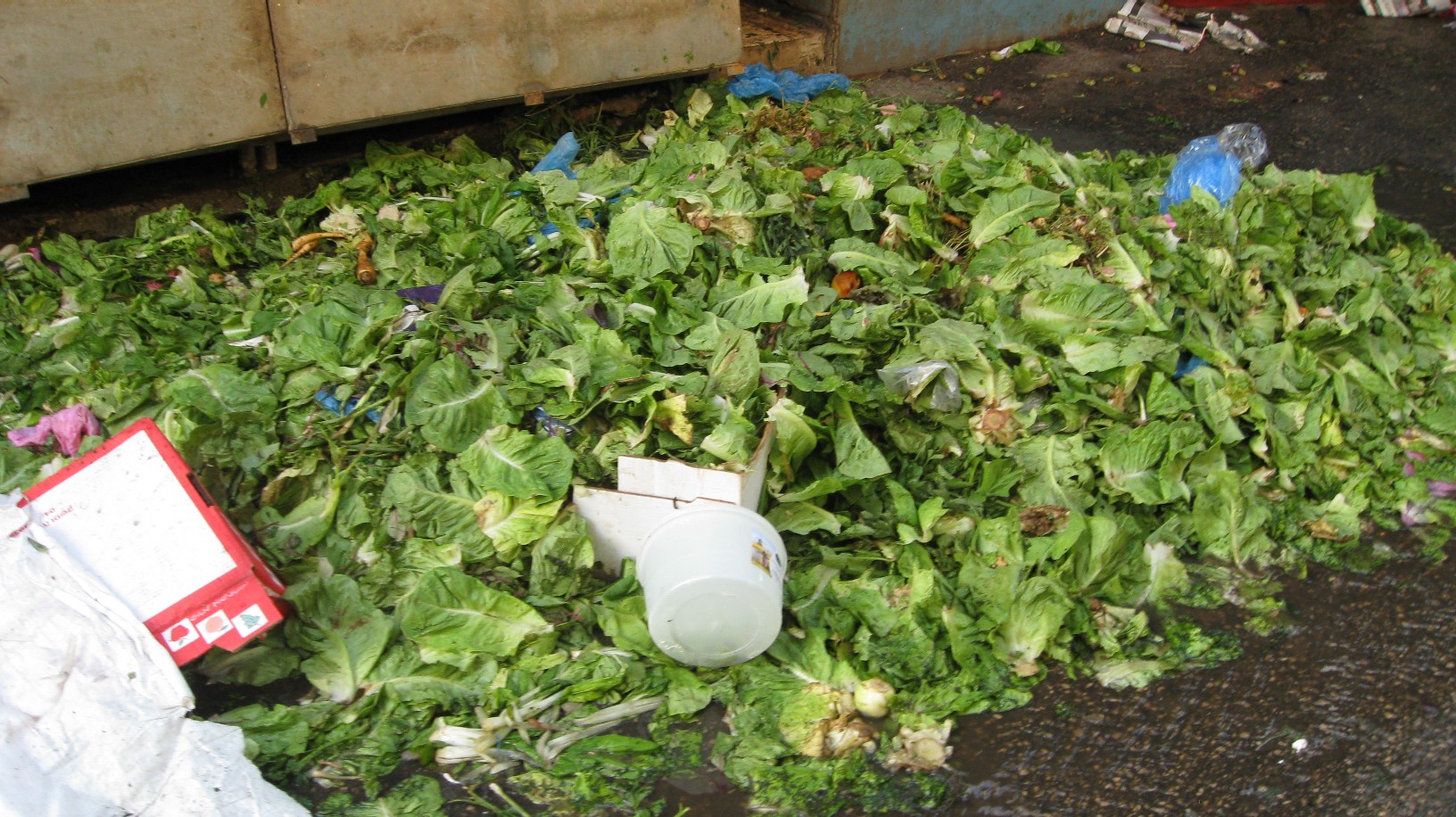
Then I found an empty cardboard box and went from vendor to vendor, asking for tomatoes, sweet potatoes, carrots, ciabatta bread and whatever else they had for refugees. It was a great feeling to fill up a box with bagged lettuce and herbs, and to know that it would probably have otherwise joined the giant green carpet spreading across the wet shuk street.
green vegetables shuk Tel Aviv

Discarded greens (photo: Daniella Cheslow)

At about 7 pm, we had enough boxes to fill up three cars, which drove to a shelter on Har Zion street. Everyone who couldn’t fit in the cars followed them by bike or cab, and we unloaded the produce in front of a group of apartments where mostly Eritrean refugees lived. The women picked over the vegetables and divided them between themselves. The kids snatched grapes and then jumped all over us, grabbing our arms and demanding that we play with them. Some of the refugee children have been in Israel long enough to pick up Hebrew, others just smiled at us and ran around the pavement in front of the apartment doors.

Interviewed recently for TimeOut Tel Aviv, Fox said he has gotten complaints from poor Israelis in the Shapira neighborhood where he delivers, who say that he should put his own city’s poor first, rather than newcomers from Africa.

“For now we are working on the idea of bringing boxes of food to poor families in Shapira,” Fox told TimeOut. “Maybe this is the way to diffuse the tension between the refugees and their neighbors.”

Fox told the Green Prophet that Fugee Fridays is also considering starting a community garden in Shapira to bring together the refugees and their Israeli neighbors. Finally, he said, the volunteers have taught the refugees to put the vegetables they won’t eat on the curb so their neighbors can eat them.

Fugee Fridays depends on cars to deliver the vegetables and fruit, so if you have a car and don’t mind driving it on early Friday evening, get in touch with Jesse at Jessefox82 [at] gmail [dot] com.

Daniella Cheslow
Daniella Cheslowhttp://www.greenprophet.com
Daniella Cheslow grew up in a car-dependent suburb in New Jersey, where she noticed strip malls and Wal-Marts slowly replacing farmland. Her introduction to nature came through hiking trips in Israel. As a counselor for a freshman backpacking program at Northwestern University, Daniella noticed that Americans outdoors seemed to need to arm themselves with performance clothing, specialized water bottles and sophisticated camping silverware. This made her think about how to interact with and enjoy nature simply. This year, Daniella is getting a Master’s in Geography from Ben Gurion University of the Negev. She also freelance writes, photographs and podcasts. In her free time, she takes day trips in the desert, drops off compost and cooks local foods like stuffed zucchini, kubbeh and majadara. Daniella gets her peak oil anxiety from James Howard Kunstler and her organic food dreams from Michael Pollan. Read more at her blog, TheTruthHerzl.com. Daniella can be reached at daniella (at) greenprophet (dot) com.
1 COMMENT
  1. This is a great idea and I’m sure it could be applied to other parts of the world too. I took part in a Donate Boat Charity event a few months ago and some of the money raised went towards supporting refuges in Israel, especially orphaned children.

Comments are closed.

Hot this week

How Renewable Energy is Revolutionizing the Way We Power Our World

Solar has become the star of the transition thanks to modular hardware and straightforward installation. It fits dense cities and remote towns alike. Many companies are turning to rooftop arrays and carport systems - and exploring commercial solar installation as a practical way to lock in future savings.

How does one start prepping?

Faced with an extreme winter storm this year, Americans wonder how to be prepared for catastrophe. Miriam has lived through wars in the Middle East - so she's prepared on giving you a guide to prepping.

Fishermen sue tire manufacturers on behalf of the salmon

A federal trial in San Francisco has brought US tire manufacturers, fishing groups, and environmental scientists into court over a chemical most drivers have never heard of — but which scientists say may be silently reshaping aquatic ecosystems.

Listening to Water: Tarek Atoui’s Next Work for Tate Modern

Born in Beirut, Lebanon in 1980 and now living in Paris, Atoui has spent years building instruments that don’t sit comfortably in concert halls. Many of them involve water, glass, and ceramics — materials that react to sound instead of simply producing it.

Leading Through a Dual-Energy Transition: Balancing Decarbonisation with Energy Security

Experience in one area of the energy industry isn't enough to guarantee readiness across all the others. That's where a structured program like an MBA in energy can come in. Today's advanced curricula explore energy economics, finance, policy, and strategic management alongside the technical subjects. And when pursuing an energy MBA online, professionals can skill up and retrain without having to step out of the labor market -- an important perk at a time when skilled professionals are already in short supply.

Topics

How Renewable Energy is Revolutionizing the Way We Power Our World

Solar has become the star of the transition thanks to modular hardware and straightforward installation. It fits dense cities and remote towns alike. Many companies are turning to rooftop arrays and carport systems - and exploring commercial solar installation as a practical way to lock in future savings.

How does one start prepping?

Faced with an extreme winter storm this year, Americans wonder how to be prepared for catastrophe. Miriam has lived through wars in the Middle East - so she's prepared on giving you a guide to prepping.

Fishermen sue tire manufacturers on behalf of the salmon

A federal trial in San Francisco has brought US tire manufacturers, fishing groups, and environmental scientists into court over a chemical most drivers have never heard of — but which scientists say may be silently reshaping aquatic ecosystems.

Listening to Water: Tarek Atoui’s Next Work for Tate Modern

Born in Beirut, Lebanon in 1980 and now living in Paris, Atoui has spent years building instruments that don’t sit comfortably in concert halls. Many of them involve water, glass, and ceramics — materials that react to sound instead of simply producing it.

Leading Through a Dual-Energy Transition: Balancing Decarbonisation with Energy Security

Experience in one area of the energy industry isn't enough to guarantee readiness across all the others. That's where a structured program like an MBA in energy can come in. Today's advanced curricula explore energy economics, finance, policy, and strategic management alongside the technical subjects. And when pursuing an energy MBA online, professionals can skill up and retrain without having to step out of the labor market -- an important perk at a time when skilled professionals are already in short supply.

From Green Energy to Healthy Societies: Why old systems thinking is becoming relevant again

Across the Middle East and North Africa, large investments are being made in green hydrogen, renewable energy, water infrastructure and sustainability. Most of these efforts are discussed in the context of climate change, decarbonization and economic diversification. That framing is important, but it may not capture their full value.

We saw peace – an interreligious encounter deep in our eyes

They came from Israel, Palestine, Jordan, Iraq, Yemen, Morocco, Tunisia, Lebanon, Egypt… There are Sunni Muslims, Shiite Muslims, Jews (Orthodox and Reform), Orthodox Christians, Coptic Christians, Protestant Christians, Druze, Baha'is, a Scientologist.

Can biochar reduce ‘Forever Chemicals’ in food if it’s used in farms?

Biochar is produced by heating organic material in a low-oxygen environment so it does not burn. This process, known as pyrolysis, transforms plant matter into a stable, carbon-rich material.

Related Articles

Popular Categories