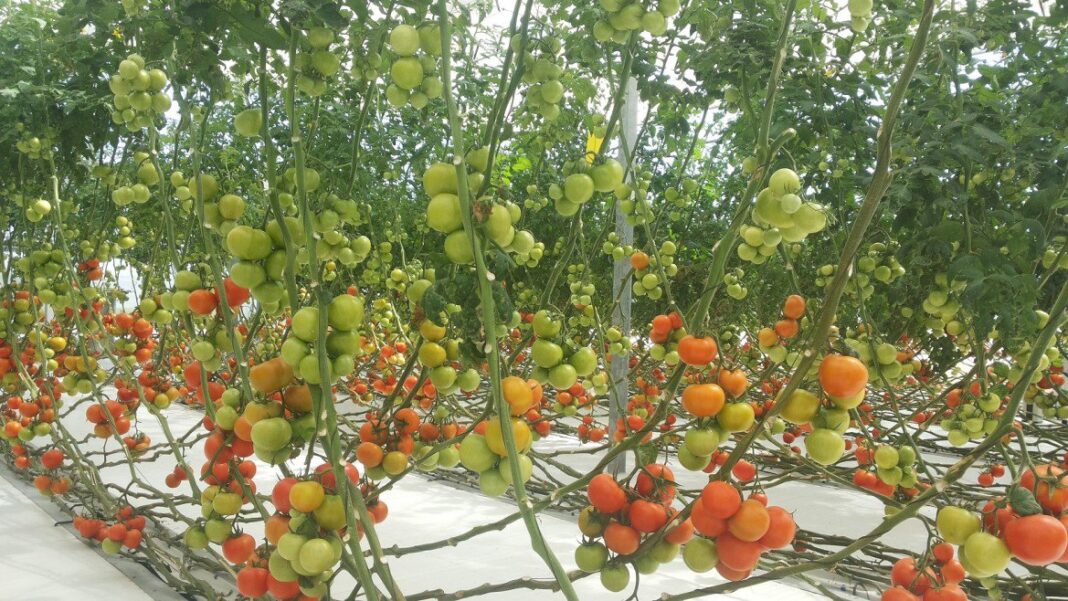

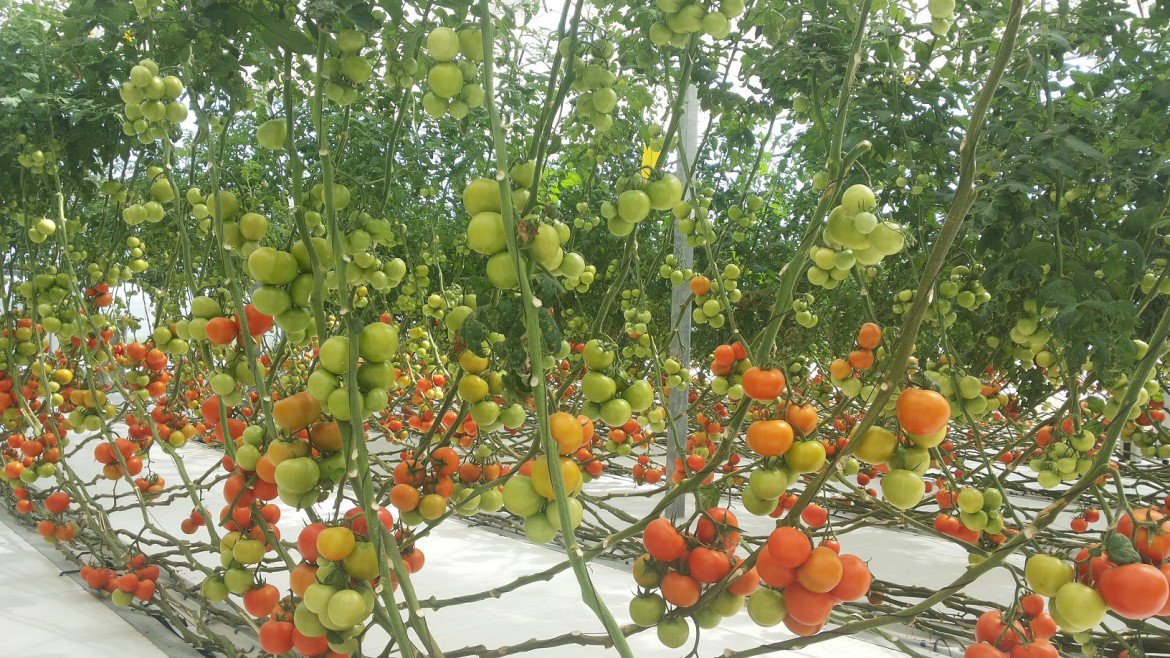
 Qatar – the tiny desert nation known for sinking millions into futuristic follies like artificial clouds and underwater TV studios – has come down to earth with a plan to grow up to 70 percent of its own vegetables by 2023. Currently under 16 percent of their veggies are locally grown. “Cutting edge technology” will underpin greater harvest, Doha’s biggest agricultural group announced last Tuesday. Said differently, it’s hydroponics, stupid.
RELATED: flux leads smart monitor in hydroponics for everyone!
The surge in projected productivity rests on the Zulal Oasis hydroponics project in Al Shahaniyah, west of capital city Doha, sponsored by Hassad Food in partnership with Oasis Agrotechnology, a consortium led by Spain’s Primalor Group. The two-year pilot project successfully grew tomatoes without soil using recycled irrigation water in greenhouses specifically adapted to Qatar’s punishing heat, where summer daytime temperatures exceed 110 °F.
The greenhouses use Primaflor technology which features a dry air cooling system. It doesn’t use soil or substrate materials, and gets moisture from recycled irrigation water. It is “the most advanced hydroponic system in the world,” Hassad Food said in a statement.
Nasser Mohamed al-Hajri, chairman and managing director of Hassad Food, “The Zulal Oasis technology is a long-term sustainable production model, with the capability of producing high-grade crops 12 months a year regardless of season.”
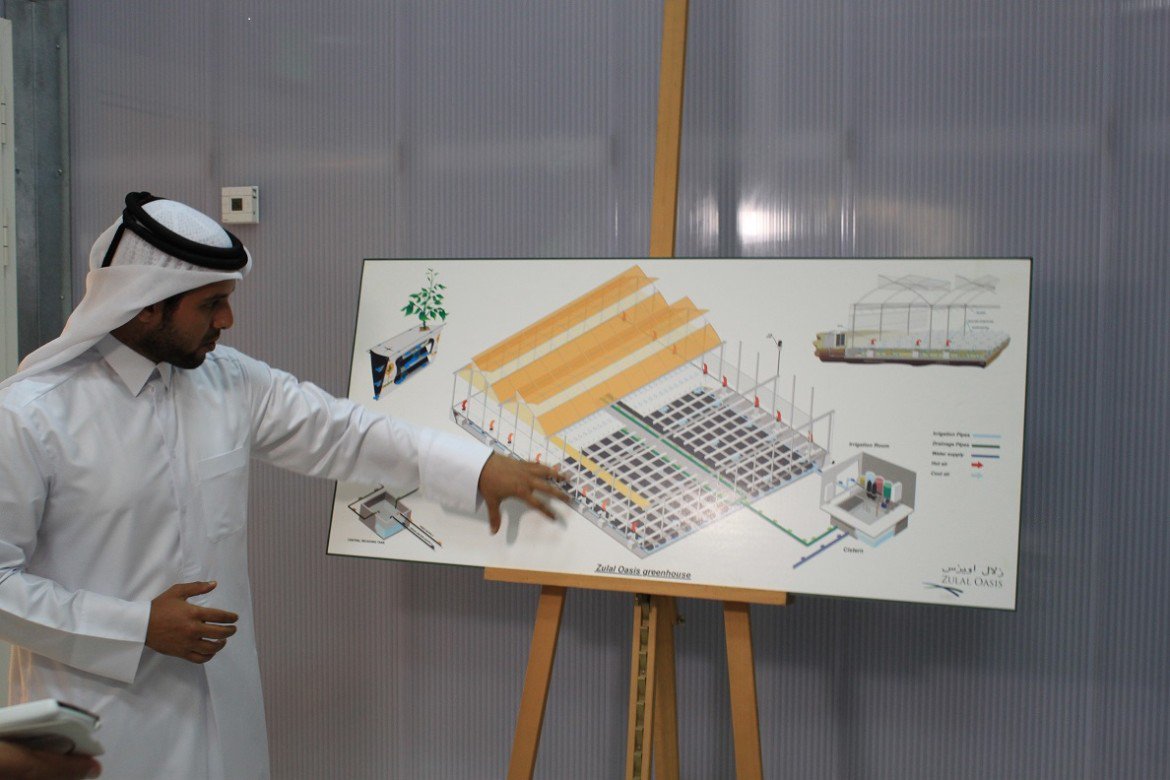
The dry cooling technology is an automated smart control system that controls interior greenhouse temperature, independent of outdoor weather, eliminating regional climate challenges such as high humidity, heat and a lack of groundwater.
The company plans to deploy this technology to grow cucumbers, eggplant, peppers and varieties of squash – all popular vegetables in Qatar cuisine. In addition to growing vegetables, the system can also be used for herb, fruit and flower production. Other produce could be grown outdoors using the system, but the growing season would be limited to cooler months.
Qatar imports the majority of its food, making it vulnerable to supply disruption and pricing fluctuations. In 2013, it launched a National Food Security program to make the water-parched state more self-sufficient in fresh produce. Since 2009, home-grown food volume has increased (specifically dates, cucumbers and green peppers) partly due to an expansion in cultivated land. However, according to the latest agricultural report from the Ministry of Development Planning and Statistics, Qatar’s largest crop is not used for human consumption: farmers are cultivating livestock fodder to meet the dramatic rise in red meat and dairy production.
Hassad Foods is Qatar’s premier investor in the food and agribusiness sectors, focused on Qatar food security, and of course, turning a profit. Established in 2008, the company and its subsidiaries annually produce 9,000 tons of livestock fodder, 3 million cut flowers, 100 tons of chemical free vegetables, 190,000 tons of grains and 290,000 heads of sheep.
Hassad Food said the Zulal Oasis system is cost-effective for farmers, as production costs would be lower than importing the same quality of fresh produce. It also allows farmers to diversify their crops to meet local demand. Bloomberg reported that the company is in talks on sharing its technology with investors in Saudi Arabia and Oman, and the technology is now being licensed for local farmers to use. Bring it on.
Images from Hassad Foods