

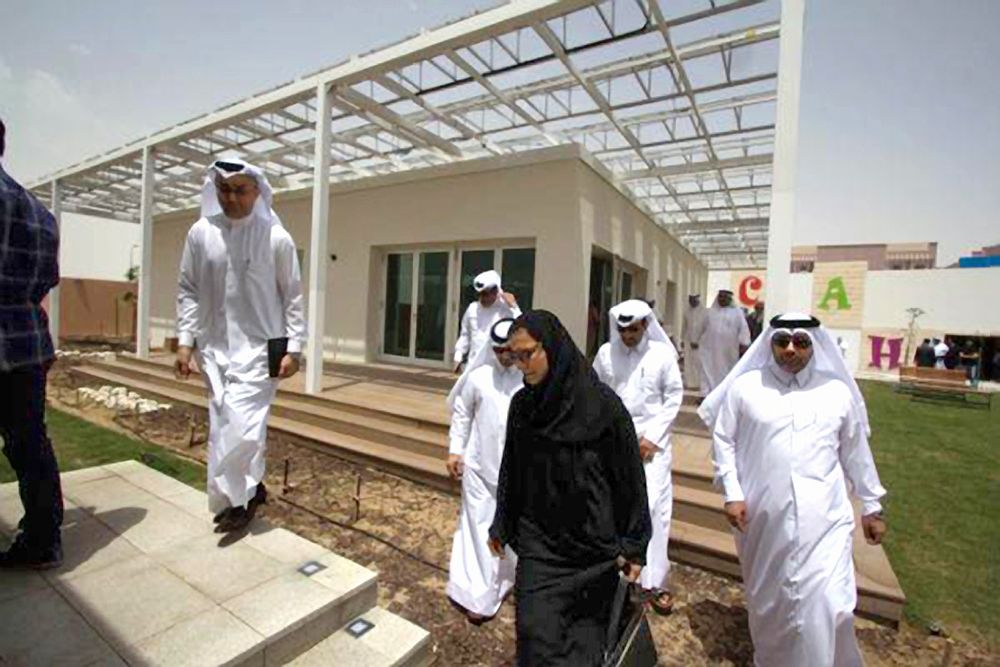
 An energy-efficient house in Barwa City, Qatar will be put through its paces to see if it can perform to computer-modeled expectations. We first visited the idea of Passivhaus in 2012, but much has progressed in making a new energy efficient standard green building for hot climates.
The designers of Passivhaus (or Passive House in English) aim to demonstrate that their building will double the “greenness” of a comparable home built to Qatar’s existing green rating system – Global Sustainability Assessment System (GSAS). Can a house designed to be “hot” also be “cool”?
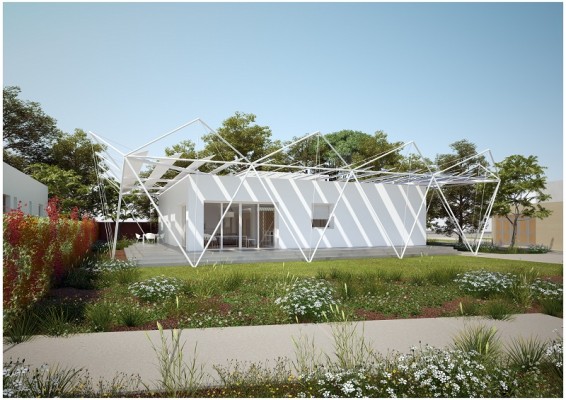
The Passivhaus design (or passive house) is an adaptation of a German concept, newly modified for Qatar’s punishing climate. In the 1990’s, two German researchers developed specifications for a building whose thermal mass and super insulation could protect its interior from a harsh external climate. Their strategy was proven to work in cold environments. Researchers are now exploring how it pans out in extreme heat and humidity.
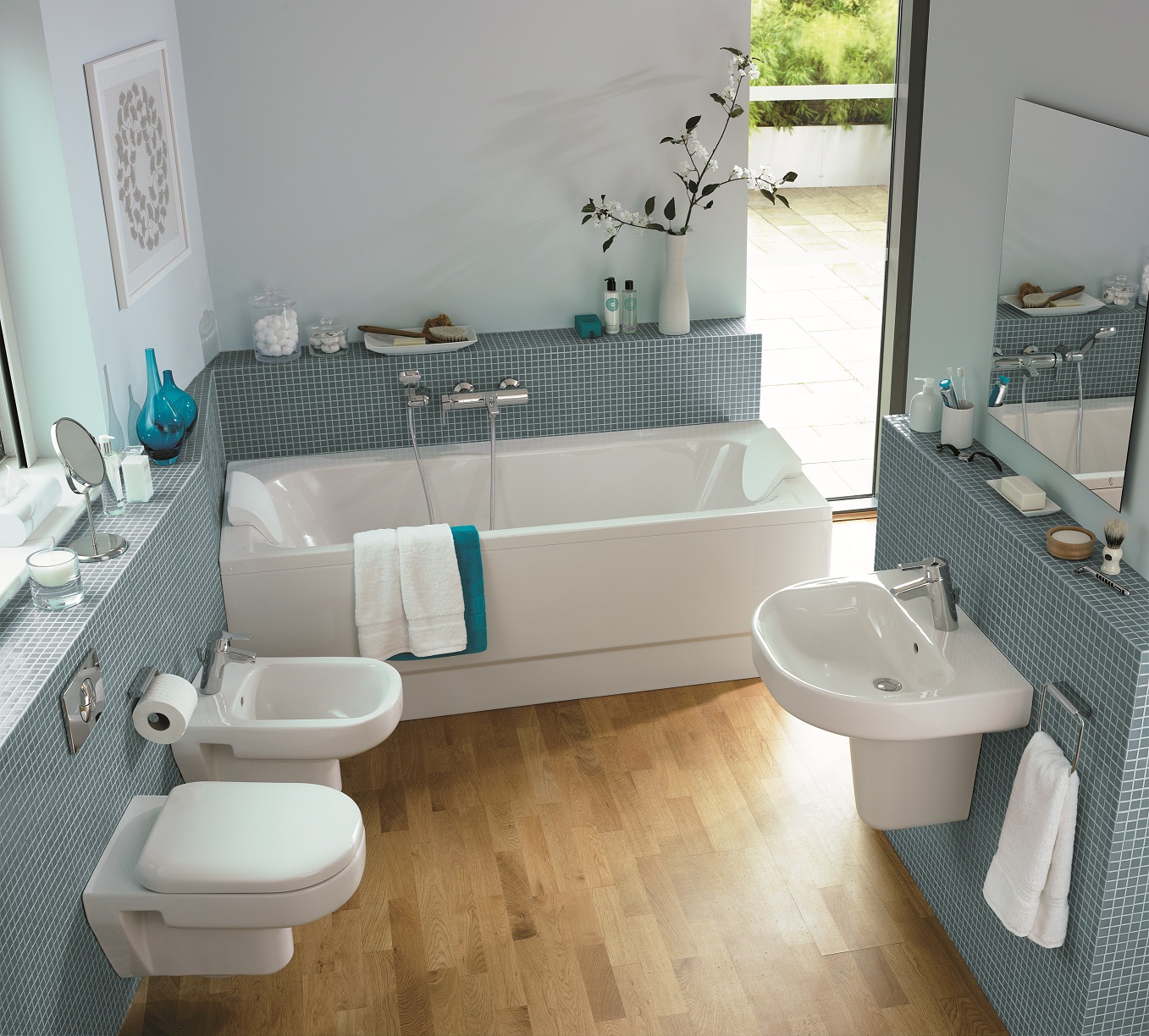
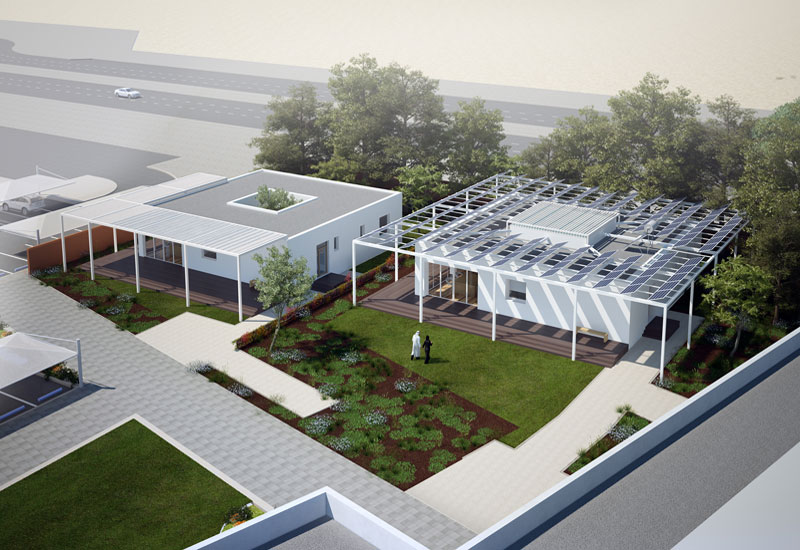 The project pits two 225 square meter (2,745 square foot) single-story villas against each other to determine which guzzles more energy and water. Over a six month test period, a family of four will reside in both buildings – each with similar layouts, fixtures, and appliances. The study is part of a 2-year, $665,000 project, underwritten by the Qatar National Research Fund.
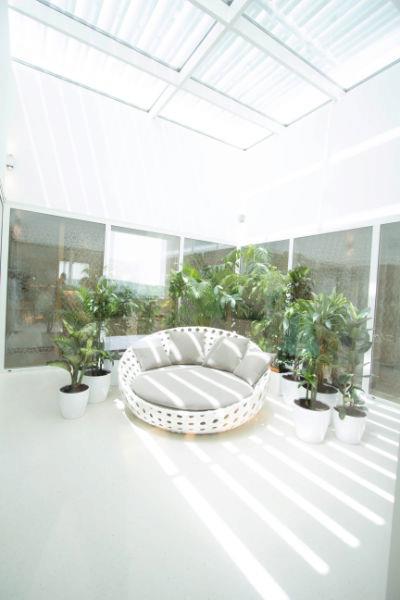
On one corner, Passivhaus features airtight construction and high-efficiency air conditioning. Heat-gain and daylighting are passively controlled via small windows and skylights with high performance glazing. Roof-mounted solar panels generate renewable energy, with any surplus electricity sent back to the national power grid – a first for this Persian Gulf nation. Bioreactor tanks which clean and recycle water have also been installed.
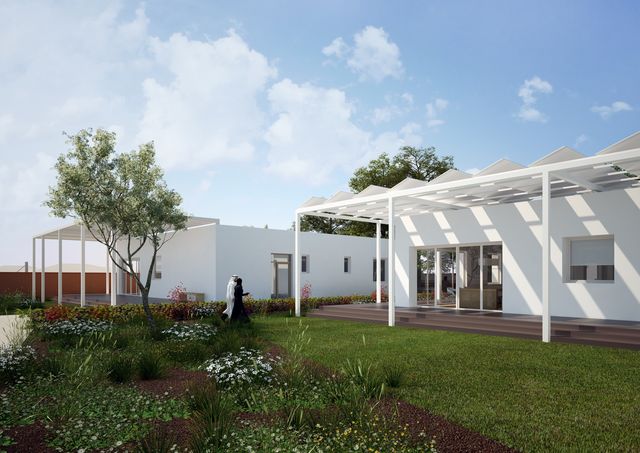
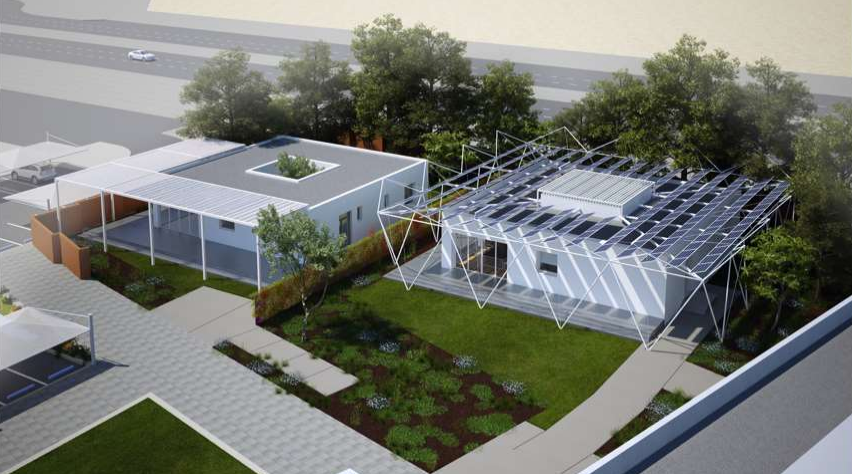
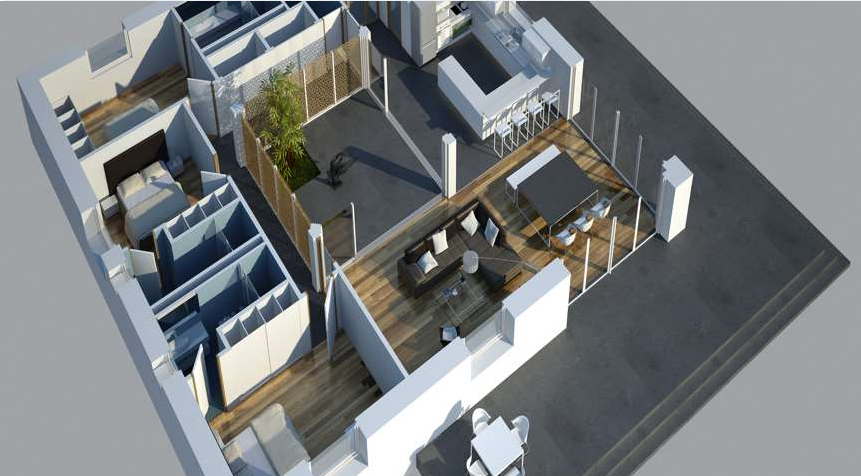
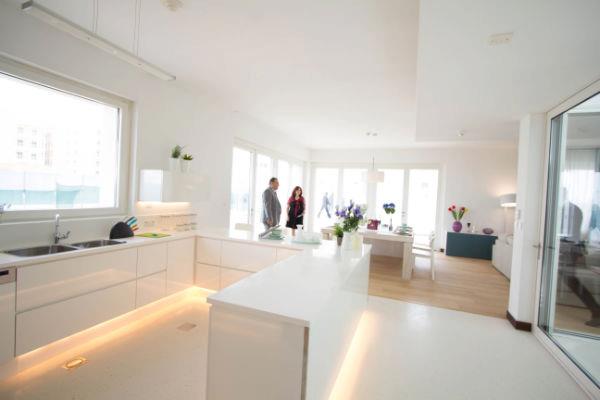
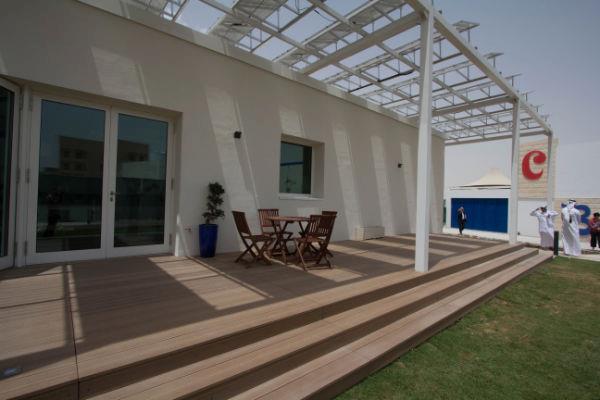
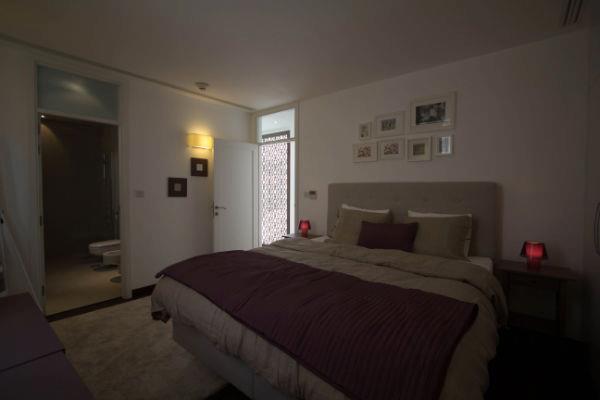
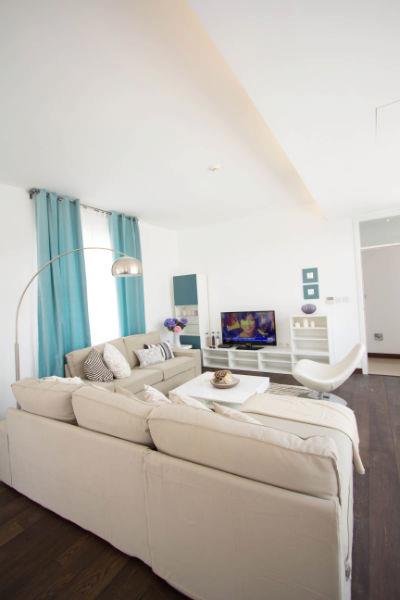
On the other corner, a conventional villa, named “Baytna” (Arabic for “our house”), was built to a one-star GSAS standard using standard construction methods.
Although GSAS guidelines make this building greatly more efficient than most Qatari homes, researchers predict that this house will consume 50% more energy and water and 50% more carbon dioxide emissions compared with Passivhaus.
But enough with predictions – time to put this to the test. This autumn, same-size families will move into each home to compare energy use and carbon footprint.
A team from the Texas A&M University at Qatar will monitor and analyze the families’ energy use and water consumption, and track performance of equipment and materials used in each of the houses.
After six months, the families will be trained on how to live eco-friendly lifestyles before allowing them to stay for another six months. That phase of the project will observe how behavioral modification impacts resource consumption. (This screams to be sold as a geeky reality show – one I’d happily tuck in to.)
Dr. Alex Amato, head of sustainability at Qatar Green Building Council (QGBC), said the live-in experiment was chosen to produce more true-to-life findings than using a computer-simulated test. “If we can achieve success, the next step will be to see how we can reward people for their behavior, and to expand the program for existing houses and new neighborhoods,” he said in a statement on the Qatar Foundation website.
He believes that cost of adopting Passivhaus standards for Qatar’s climate can be reduced if prefabrication and off-site manufacturing are maximized.
“Sustaining economic growth is not possible without a vision that…balance(s)…economic development and protection of the environment,” said Ahmad Al-Abdulla, Deputy Group CEO at Barwa Real Estate Group (BRE).
This project, which seeks to create a model for the home of the future, is the brainchild of the QGBC, BRE and Qatar General Electricity & Water Corporation (Kahramaa). Good stuff, but what’s how do those lush green lawns fit into the sustainable equation?



frekqnc – thanks for the math catch! error noted and corrected – !
Interesting article, but you should correct the information where you stated that 225 square meters is equal to 740 square feet, because the correct amount is about 2421.8 square feet.