Gulf Inventor Creates “Alma” – a 20 Square Mile Saltwater and Dew Collector

Abdullah Al Shehi, alma dew collector
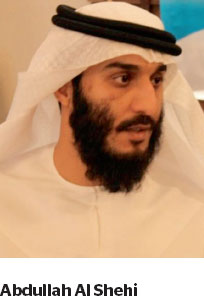
Abdullah al-Shehi from the United Arab Emirates has shown his worth in environmental technology by patenting his sea-borne water collector that he hopes will help deliver clean water to desert regions across the Middle East and the world. It’s a positive step for the United Arab Emirates, which continues to show itself able to be a leading force in the clean energy and clean technology world. It’s also a solution that could help the region wean itself off energy intensive desalinated water.

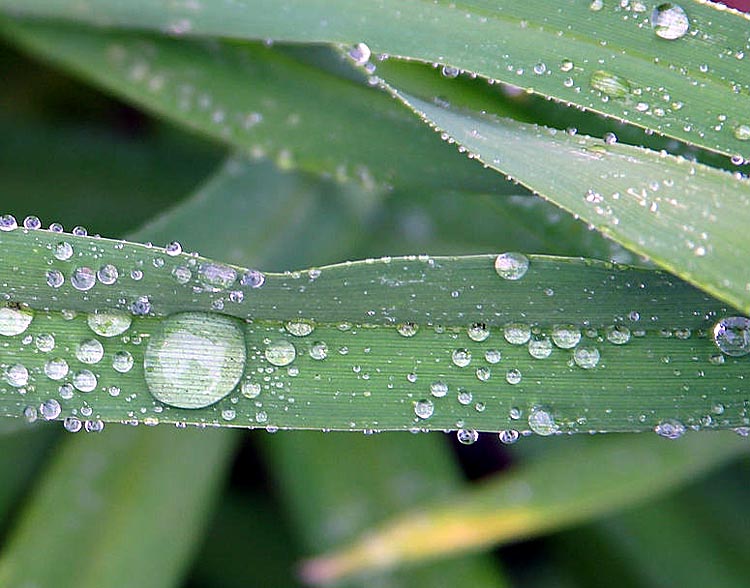
al-Shehi’s idea is simple: take airborne moisture and turn it into clean water that is potable and healthy.

For the 31-year-old from Abu Dhabi, who is also involved in creating a green car wash hopes to grab rainwater or dew and then it can be adapted to “float or rest on a body of water above the water.”

In an interview with Khaleej Times, he talked about the massive energy cost as well as economic needs to have desalination projects across the UAE to turn sea water into drinking water.

“The cost involved with desalination is huge as it requires energy. ‘Alma’ can help reduce the cost drastically. An Alma would take up to 20 square miles and it can collect up to 253.6 million liters a month, serving many households in the UAE,” he told the newspaper.

Al-ma means “water” in Arabic.

The Alma invention also comes on the heels of a number of clean water projects in the UAE and according to experts Green Prophet spoke to, Shehi’s mechanism could be a boost for the region as water issues continue to rise and create tension between countries.

The Alma was patented in the United Kingdom via IP Consult, and according to the patent document, “can be anchored to collect airborne moisture such as rain water, dew or mist over water bodies such as seas or lakes. The water thus collected is pure and does not require desalination for commercial usage.”

This was the second time he attempted to have the idea patented, failing in August 2011, but successful this time around.

The patent number in is GB 2493699A.

“This is a unique invention with great potential for countries with poor water resources like the UAE or other regional countries. I am planning to seek investors to commercialize this invention and market it to countries that can benefit from it. As an initial step, we will seek to present it soon to environmental bodies,” Shehi said.

According to the newspaper, he is a trained electrical and electronics engineer with a degree from Huddersfield University in West Yorkshire.


2 COMMENTS
  1. I’ve heard of similar ideas in South America where vegetation growing on nets traps the moisture off of the remaining coastal breezes heading towards the inland deserts. It sounds viable and I certainly hope he is successful to the nth degree. We need people that think outside the box and to pursue their dreams.

LEAVE A REPLY

Please enter your comment!
Please enter your name here

TRENDING

10 Proven Israeli Technologies to Help Somaliland Build Food, Water, and Energy Security

Israel’s water and agricultural technologies didn’t emerge from ideal conditions. They were developed under pressure: low rainfall, saline water, political isolation, lack of energy resources, and the constant need to feed a growing population with limited land. Over the years, I’ve written about many of these companies not as miracle-makers, but as problem-solvers. That’s what makes them relevant to places like Somaliland. Israel was the first country in the world to recognize Somaliland as an independent state although Ethiopia has been treating the nation as such for decades.

Dead shark on beach injured by fishing nets

  A dead shark that washed ashore this week at...

Investing in the Middle East? These 20 Energy consultants can de-risk your portfolio

For instance is your clean tech firm or company in wastewater treatment considering an office in Riyadh or should you stick with Dubai?  Below is a curated spotlight on 20 firms that shine for their deep expertise and proven ability to manage the complex risks of sustainable energy investment.

Choosing Riyadh over Dubai? What Investors Should Know

Saudi Arabia is deploying capital at unmatched scale to catalyze tourism and advanced industry while rewiring its power-and-water backbone. The investable frontier is widening—especially in renewables, grid storage, water efficiency/desal retrofits, and hospitality operating platforms. Prudent investors will insist on phased delivery, enforceable KPIs (energy, water, biodiversity), and RHQ/zone compliance—while pricing political-economy and reputational risks alongside growth upside.

Saudi Arabia’s oil-powered desalination “success” consumes 20% of its domestic oil use

Nearly 20% of Saudi Arabia’s oil powers desalination, with projections rising to 50% by 2030. Experts warn it should remain a last-resort solution due to high energy and environmental costs.

Qatar’s climate hypocrisy rides the London Underground

Qatar remains a master of doublethink—burning gas by the megaton while selling “sustainability” to a world desperate for clean air. Wake up from your slumber people.

How Quality of Hire Shapes Modern Recruitment

A 2024 survey by Deloitte found that 76% of talent leaders now consider long-term retention and workforce contribution among their most important hiring success metrics—far surpassing time-to-fill or cost-per-hire. As the expectations for new hires deepen, companies must also confront the inherent challenges in redefining and accurately measuring hiring quality.

8 Team-Building Exercises to Start the Week Off 

Team building to change the world! The best renewable energy companies are ones that function.

Thank you, LinkedIn — and what your Jobs on the Rise report means for sustainable careers

While “green jobs” aren’t always labeled as such, many of the fastest-growing roles are directly enabling the energy transition, climate resilience, and lower-carbon systems: Number one on their list is Artificial Intelligence engineers. But what does that mean? Vibe coding Claude? 

Somali pirates steal oil tankers

The pirates often stage their heists out of Somalia, a lawless country, with a weak central government that is grappling with a violent Islamist insurgency. Using speedboats that swarm the targets, the machine-gun-toting pirates take control of merchant ships and then hold the vessels, crew and cargo for ransom.

Leopoldo Alejandro Betancourt López Turned Ocean Plastic Into Profitable Sunglasses

Few fashion accessories carry the environmental burden of sunglasses. Most frames are constructed from petroleum-based plastics and acrylic polymers that linger in landfills for centuries, shedding microplastics into soil and waterways long after they've been discarded. Leopoldo Alejandro Betancourt López, president of the Spanish eyewear brand Hawkers, saw this problem differently than most industry executives.

Why Dr. Tony Jacob Sees Texas Business Egos as Warning Signs

Everything's bigger in Texas. Except business egos.  Dr. Tony Jacob figured...

Israel and America Sign Renewable Energy Cooperation Deal

Other announcements made at the conference include the Timna Renewable Energy Park, which will be a center for R&D, and the AORA Solar Thermal Module at Kibbutz Samar, the world's first commercial hybrid solar gas-turbine power plant that is already nearing completion. Solel Solar Systems announced it was beginning construction of a 50 MW solar field in Lebrija, Spain, and Brightsource Energy made a pre-conference announcement that it had inked the world's largest solar deal to date with Southern California Edison (SCE).

Related Articles

Popular Categories