

The Red Sea is Getting Hotter Faster Than the Rest

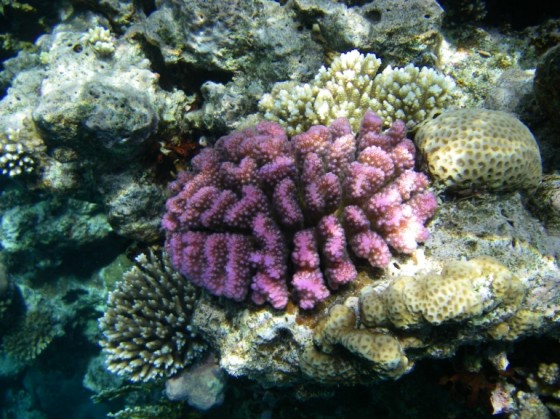
coral, red sea, global warming, climate change, rising temperaturesAs the Red Sea gets hotter, what will be the fate of its magnificent coral reefs?

1,000 Israelis dropped their drawers over the weekend – a memorable event made even more so by acclaimed photographer Spencer Tunick, whose photo shoot in a secret location has drawn much-needed attention to the dying Dead Sea. The Red Sea could use similar treatment given its own environmental issues – sick coral reefs, oil spills ad nauseam, uninhibited post-revolution development in Egypt – but we might have to wait a while. In the meantime, Nature Middle East reports that researchers from King Abdullah University of Science and Technology (KAUST) have discovered not only that the Red Sea is getting hotter, but that the rate at which its temperatures are rising exceeds that of the global average.

Hot water

KAUST researchers concluded from a recent study of satellite-derived sea surface temperatures (SST) and ground-based air temperatures that Red Sea temperatures have increased by 0.7°C since 1994. This data was taken from the AVHRR Pathfinder V5 dataset, considered among the reliable datasets available in the Middle East, which measured the Red Sea between 1985 and 2007.

The Red Sea is roughly 0.2° higher than the global average, which might seem like an inconsequential number, but even small changes in temperature can have wide-ranging impacts on the overall ecosystem and marine life. Also, note that warmer water expands, contributing to rising sea levels.

Treading lightly

Unfortunately, researchers are reluctant to draw indisputable connections to global warming. Elsewhere in the world we seem to have surmounted this rhetorical obstacle, but Ibrahim Hoteit from KAUST – one of the leaders of the study – is still treading lightly. He told Nature ME:

We cannot say with confidence which factor led to this abrupt warming…However, our analysis suggests that the pattern isn’t caused by a regional phenomenon, but follows trends in the whole of the northern hemisphere.

Despite their reticence to draw unequivocal conclusions, KAUST researchers pointed out that Red Sea warming took place one month after air temperatures spiked, suggesting a direct correlation between changing air and sea temperatures.

Hard to predict

It is likewise difficult for scientists to predict the consequences of rising temperatures on Red Sea ecology. The KAUST team is not certain whether corals will survive, though Mahmoud Hassan Hanafi from Suez Canal University seems to think they will despite contrary evidence that shows worldwide corals to be in dire threat. How other Red Sea creatures will fare depends to a large degree on how well corals can cope.

:: Nature Middle East

More on Red Sea environmental issues:

Post-Revolution Egypt Development Destroys Popular Red Sea Dive Spot

PetroGulf Misr Denies Responsibility for Red Sea Oil Spill

Government Cracks Down on Illegal Red Sea Development

image via viator

Tafline Laylin
Tafline Laylinhttp://www.greenprophet.com
As a tour leader who led “eco-friendly” camping trips throughout North America, Tafline soon realized that she was instead leaving behind a trail of gas fumes, plastic bottles and Pringles. In fact, wherever she traveled – whether it was Viet Nam or South Africa or England – it became clear how inefficiently the mandate to re-think our consumer culture is reaching the general public. Born in Iran, raised in South Africa and the United States, she currently splits her time between Africa and the Middle East. Tafline can be reached at tafline (at) greenprophet (dot) com.

TRENDING

The life of a coral gives clues to the origins of our heartbeat

A joint study by Tel Aviv University (TAU) and the University of Haifa set out to solve a scientific mystery: how a soft coral is able to perform the rhythmic, pulsating movements of its tentacles without a central nervous system. The study’s findings may change the way we understand movement in the animal kingdom in general and particularly in corals.

Ethiopians are Looking to Somaliland for Red Sea Access as Global Powers Move In

Somaliland, for its part, has operated as a de facto independent state since 1991. It has its own government, elections, currency, and security forces. It’s often described as one of the more stable and democratic political systems in the region, despite never being formally recognized internationally. 

Peace hospital opens between Jordan and Israel

The proposed medical centre, described by Emek HaMaayanot Regional Council head Itamar Matiash as “a centre for cancer treatment, so that people from Jordan or further away could come and receive treatment,” would become the flagship of a wider cluster of medical, academic and innovation-based services planned for the Israeli half of the zone.

Benban solar in Egypt and the companies that make the energy shine

Benban isn’t a single solar plant at all, but a collection of 41 facilities, each developed by different companies but connected through shared infrastructure. This structure is what makes Benban unique: dozens of developers working like nodes in a vast energy network, each feeding electricity into shared substations and Egypt’s national grid.

Musk’s Saudi Mega-Data Center Signals a Desert Arms Race for AI

For now, Musk’s partnership signals a deepening alignment between Silicon Valley and Riyadh — and a new chapter in the Middle East’s data-powered future. The satellites and robots may come later. The energy footprint, however, is already here.

Turning Your Energy Consultancy into an LLC: 4 Legal Steps for Founders in Texas

If you are starting a renewable energy business in Texas, learn how to start an LLC by the books.

Tracking the Impacts of a Hydroelectric Dam Along the Tigris River

For the next two months, I'll be taking a break from my usual Green Prophet posts to report on a transnational environmental issue: the Ilısu Dam currently under construction in Turkey, and the ways it will transform life along the Tigris River.

6 Payment Processors With the Fastest Onboarding for SMBs

Get your SMB up and running fast with these 6 payment processors. Compare the quickest onboarding options to start accepting customer payments without delay.

Qatar’s climate hypocrisy rides the London Underground

Qatar remains a master of doublethink—burning gas by the megaton while selling “sustainability” to a world desperate for clean air. Wake up from your slumber people.

How Quality of Hire Shapes Modern Recruitment

A 2024 survey by Deloitte found that 76% of talent leaders now consider long-term retention and workforce contribution among their most important hiring success metrics—far surpassing time-to-fill or cost-per-hire. As the expectations for new hires deepen, companies must also confront the inherent challenges in redefining and accurately measuring hiring quality.

8 Team-Building Exercises to Start the Week Off 

Team building to change the world! The best renewable energy companies are ones that function.

Thank you, LinkedIn — and what your Jobs on the Rise report means for sustainable careers

While “green jobs” aren’t always labeled as such, many of the fastest-growing roles are directly enabling the energy transition, climate resilience, and lower-carbon systems: Number one on their list is Artificial Intelligence engineers. But what does that mean? Vibe coding Claude? 

Somali pirates steal oil tankers

The pirates often stage their heists out of Somalia, a lawless country, with a weak central government that is grappling with a violent Islamist insurgency. Using speedboats that swarm the targets, the machine-gun-toting pirates take control of merchant ships and then hold the vessels, crew and cargo for ransom.

Related Articles

Popular Categories