CollPlant Enables Vegan-Friendly Collagen

Vegan-friendly lip enhancers? CollPlant makes an animal-free collagen, using tobacco plants.

Advocates of vegetarianism often point out the detrimental effects of raising livestock on the environment.  One frequently cited study is the  Food and Agriculture Organization of the United Nations (FAO) report, Livestock’s Long Shadow, showing that livestock production is responsible for 18 percent of greenhouse gas emissions, a bigger share than that of transport. But even the most devout vegetarians are likely to avail themselves of drugs and bio-materials  that owe their origins to animal subjects.

Is there a way to replace the role animals play in the bio-pharmaceutical industry where they are used for testing new drugs? And what about the use of pig and cow tissues for the  repair of defective human organs?An alternative to animal drug testing is the use of computer modeling that simulates  how novel drugs will impact on diseases. One specialist in this area, Ramat-Gan-based Optimata, is  conducting virtual trials of cancer drug candidates on behalf of  Teva Pharmaceuticals and other major pharmaceutical companies.

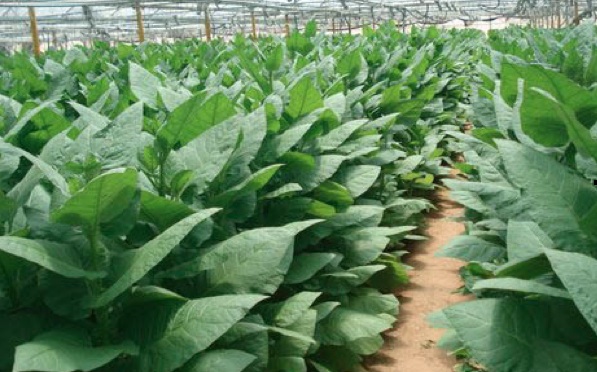
Now, another Israeli company, CollPlant, has found a way to replace  animal sources for the production of collagen,  a major bio-material used in the medical device industry. The Rehovot-based company has invented a way to generate human collagen in tobacco plants.

Collagen,  a protein that forms much of the skin, ligament and bone tissues in the body, is used in more than 1,000 medical therapies, including bone grafts, shoulder operations,  and heart valve repair.

Until now, pigs or cows, have been the major sources of therapeutic collagen.   These livestock sources, along with another source —  human cadavers —  constitute serious safety risks, as undetected diseases can spread from the animal or human donor.

CollPlant’s green technology, enables a readily-accessible supply of  collagen that is free from all of the safety and environmental problems associated with livestock. The company uses  genetic engineering to endow the tobacco plants with  the genes that produce human collagen; after the plants reach maturity, the collagen is extracted.

The company has been careful to grow the transgenic plants in a protected way. The plants are cultivated in isolated greenhouses in northern Israel; and the choice of tobacco as a plant carrier is not coincidental: tobacco is not part of the food chain.

Not only is CollPlant’s collagen safer, it also turns out to be  superior to animal collagen, as it offers uniform properties and enhanced qualities.

Consequently, two of the world’s largest pharmaceutical companies, Pfizer and Edwards, recently entered into co-development deals with CollPlant for the development of innovative collagen therapies; Pfizer in the orthopedics field, Edwards for cardio products.

The financial public has also shown interest in the company’s business prospects and CollPlant last year began to trade on the Tel Aviv Stock Exchange (TASE:CLPT).  Investors who have forsaken the tobacco industry may consider coming back to a tobacco-linked investment; only this time to a company that raises tobacco plants that save lives – and — protects the environment.

This guest post is written by Bernard Dichek, the editor of BioIsrael

LEAVE A REPLY

Please enter your comment!
Please enter your name here

TRENDING

The Air Tea Kettle creates a new way to meet plants and herbalism

Air Tea is a new technology. Instead of drinking tea, you inhale herbal vapor through warm air extraction. There is no water and no combustion. The warm air releases essential oils that are often lost in hot water and digestion.

Biodiversity Blueprint Set for 2026

If we seize this moment, the 2026 review can catalyse a new wave of finance (see Green Finance mechanisms in the UAE), innovation and policy coherence — and move us closer to the vision of a nature-positive world by 2050. If not, the checkpoint risks becoming another missed opportunity while ecosystems, livelihoods and economies continue to degrade.

The hidden chatter beneath our feet – how trees, mushrooms, and microbes speak

Mushrooms, microbes, and machine learning? Why does this matter? The underground networks built by fungi and bacteria are essential for healthy ecosystems—and for our ability to grow resilient crops in a changing climate. Fungi, in particular, act as “middlemen”, connecting roots across distances and helping move nutrients, water, and even chemical signals between plants.

How to grow an olive tree in a container

Don't have a garden? You can still own a fruiting olive tree, grown in a container. A sunny balcony and the right climate are the essential things; that, and time.

How cold water divers can save kelp forests

Kelp forests are some of the most biodiverse ecosystems on Earth. We might know kelp as a superfood but in the sea it provides shelter, food, and breeding grounds for countless marine species. Unfortunately, these vital underwater habitats are in decline due to factors like climate change, pollution, and overfishing.

Qatar’s climate hypocrisy rides the London Underground

Qatar remains a master of doublethink—burning gas by the megaton while selling “sustainability” to a world desperate for clean air. Wake up from your slumber people.

How Quality of Hire Shapes Modern Recruitment

A 2024 survey by Deloitte found that 76% of talent leaders now consider long-term retention and workforce contribution among their most important hiring success metrics—far surpassing time-to-fill or cost-per-hire. As the expectations for new hires deepen, companies must also confront the inherent challenges in redefining and accurately measuring hiring quality.

8 Team-Building Exercises to Start the Week Off 

Team building to change the world! The best renewable energy companies are ones that function.

Thank you, LinkedIn — and what your Jobs on the Rise report means for sustainable careers

While “green jobs” aren’t always labeled as such, many of the fastest-growing roles are directly enabling the energy transition, climate resilience, and lower-carbon systems: Number one on their list is Artificial Intelligence engineers. But what does that mean? Vibe coding Claude? 

Somali pirates steal oil tankers

The pirates often stage their heists out of Somalia, a lawless country, with a weak central government that is grappling with a violent Islamist insurgency. Using speedboats that swarm the targets, the machine-gun-toting pirates take control of merchant ships and then hold the vessels, crew and cargo for ransom.

Leopoldo Alejandro Betancourt López Turned Ocean Plastic Into Profitable Sunglasses

Few fashion accessories carry the environmental burden of sunglasses. Most frames are constructed from petroleum-based plastics and acrylic polymers that linger in landfills for centuries, shedding microplastics into soil and waterways long after they've been discarded. Leopoldo Alejandro Betancourt López, president of the Spanish eyewear brand Hawkers, saw this problem differently than most industry executives.

Why Dr. Tony Jacob Sees Texas Business Egos as Warning Signs

Everything's bigger in Texas. Except business egos.  Dr. Tony Jacob figured...

Israel and America Sign Renewable Energy Cooperation Deal

Other announcements made at the conference include the Timna Renewable Energy Park, which will be a center for R&D, and the AORA Solar Thermal Module at Kibbutz Samar, the world's first commercial hybrid solar gas-turbine power plant that is already nearing completion. Solel Solar Systems announced it was beginning construction of a 50 MW solar field in Lebrija, Spain, and Brightsource Energy made a pre-conference announcement that it had inked the world's largest solar deal to date with Southern California Edison (SCE).

Related Articles

Popular Categories