“Mekkah Metro” Marks A Green Hajj For Pilgrims

green-hajj-mecca-mekkah-metro

A high speed train to Mecca in Saudi Arabia will cut down on carbon emissions during hajj this year, but its reach is limited.

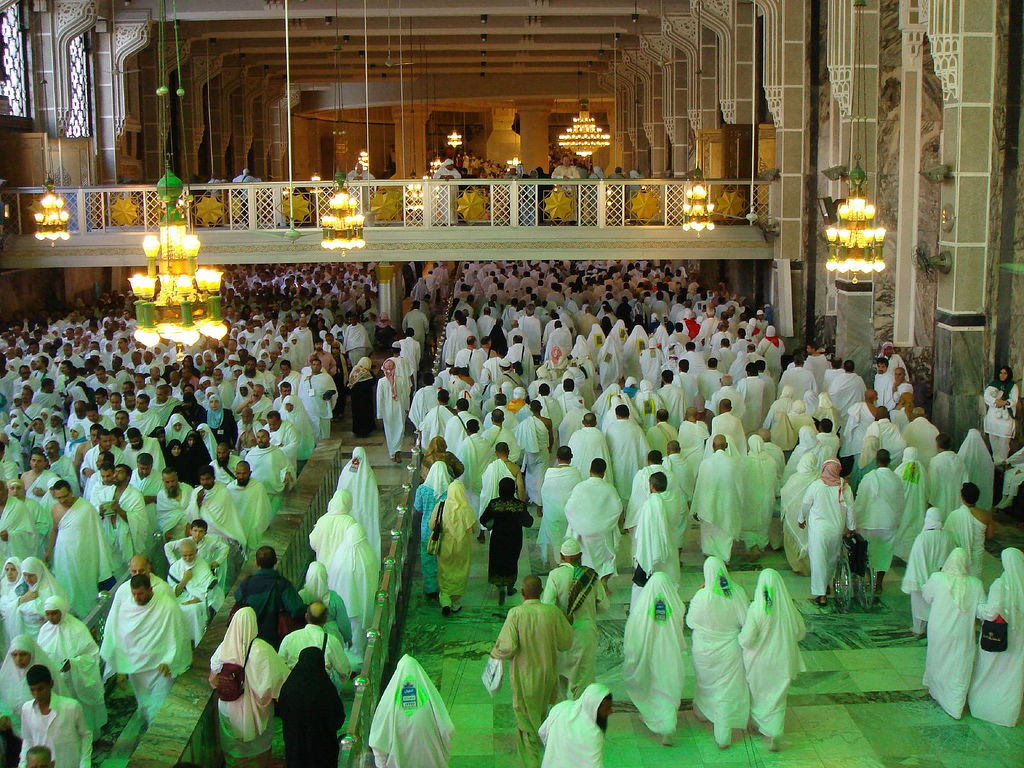
Every year, around three million Muslims from across the world prepare for the spiritual journey of a lifetime. Many will have been saving up for the trip for years and will be prepared to travel thousands of miles to reach their destination: Mecca in Saudi Arabia to perform the hajj.

As one of the five pillars of Islam, every Muslim who has the financial and physical ability is encouraged to make the pilgrimage to Mecca which is Islam’s most holy site. The question is can this spiritual pilgrimage, which leaves behind a trail of waste and carbon emissions, really be transformed into something more green?

Progress Towards A ‘Green Hajj’
The concept of a ‘Green Hajj‘ has already been discussed here at GreenProphet following the UN-backed Muslim Seven Year Plan which announced plans to encourage Muslims to be more environmentally friendly. Although there was talk of printing Qur’ans on sustainably sourced paper, reducing energy consumption at mosques and places of worship, many were cynical as to whether these plans would ever materialize. However, this year for the first time ever, pilgrims will be able to reduce their carbon footprint during hajj by travelling between Mecca’s holy sites via a very green form of public transport- the train.

From this November 2010, the high speed train will be able to transport 130,000 passengers between the holy sites which will help reduce the number of vehicles on the roads and make hajj journeys more eco-friendly. Sadly, only pilgrims from Saudi Arabia and the Arab Gulf states will be able to purchase tickets and make full use of the trains this year. (My auntie and her family are going to hajj this year from the UK and I was going to ask her for a blow-by-blow account of using the metro but I guess that won’t be happening.)
Image via Arab news

Reducing Congestion and Pollution

The Mekkah Metro, as its been dubbed, is only in the first stages and is operating at 33 percent of its total capacity. It will be fully operational by hajj season 2011 and will carry around 500,000 passengers by then at the rate of 72,000 passengers an hour in a single direction. By the final stage in 2012 the metro, which has elevated tracks to avoid busy roads, will be able to transport up to two million people. This rail network is expected to reduce traffic by approximately 30,000 cars- so not only will it reduce congestion but it will also cut the noxious emissions which cars release.

The introduction of the train network is clearly an important step towards making hajj more environmentally-friendly but there is still a lot more to be done. It is estimated that 100 million plastic bottles are left behind every year after the hajj season and food packaging is still a big issue that needs to be tackled alongside the carbon emissions of the travellers. Although the flora and fauna around the two holy sites in Saudi Arabia are protected by a hima, a middle-eastern form of environmental protection, more is needed before a truly ‘Green Hajj’ is realized.

For more on Green Hajj:
Go On “Hajj” To Mecca and Medina On Saudi’s New High Speed Train
Saudis Listen to Call for Green Hajj
Greening Hajj and Madina for the Muslim World

Image via go-mekkah.com
Arwa Aburawa
Arwa Aburawahttp://www.greenprophet.com
Arwa is a Muslim freelance writer who is interested in everything climate change related and how Islam can inspire more people to care for their planet and take active steps to save it while we can. She is endlessly suspicious of all politicians and their ceaseless meetings, especially as they make normal people believe that they are not part of the solution when they are the ONLY solution. Her Indian auntie is her model eco-warrier, and when Arwa is not busy helping out in the neighborhood alleyway garden, swap shopping or attempting fusion vegetarian dishes- with mixed success, she’d like to add- she can be found sipping on foraged nettle tea.

Hot this week

How Renewable Energy is Revolutionizing the Way We Power Our World

Solar has become the star of the transition thanks to modular hardware and straightforward installation. It fits dense cities and remote towns alike. Many companies are turning to rooftop arrays and carport systems - and exploring commercial solar installation as a practical way to lock in future savings.

How does one start prepping?

Faced with an extreme winter storm this year, Americans wonder how to be prepared for catastrophe. Miriam has lived through wars in the Middle East - so she's prepared on giving you a guide to prepping.

Fishermen sue tire manufacturers on behalf of the salmon

A federal trial in San Francisco has brought US tire manufacturers, fishing groups, and environmental scientists into court over a chemical most drivers have never heard of — but which scientists say may be silently reshaping aquatic ecosystems.

Listening to Water: Tarek Atoui’s Next Work for Tate Modern

Born in Beirut, Lebanon in 1980 and now living in Paris, Atoui has spent years building instruments that don’t sit comfortably in concert halls. Many of them involve water, glass, and ceramics — materials that react to sound instead of simply producing it.

Leading Through a Dual-Energy Transition: Balancing Decarbonisation with Energy Security

Experience in one area of the energy industry isn't enough to guarantee readiness across all the others. That's where a structured program like an MBA in energy can come in. Today's advanced curricula explore energy economics, finance, policy, and strategic management alongside the technical subjects. And when pursuing an energy MBA online, professionals can skill up and retrain without having to step out of the labor market -- an important perk at a time when skilled professionals are already in short supply.

Topics

How Renewable Energy is Revolutionizing the Way We Power Our World

Solar has become the star of the transition thanks to modular hardware and straightforward installation. It fits dense cities and remote towns alike. Many companies are turning to rooftop arrays and carport systems - and exploring commercial solar installation as a practical way to lock in future savings.

How does one start prepping?

Faced with an extreme winter storm this year, Americans wonder how to be prepared for catastrophe. Miriam has lived through wars in the Middle East - so she's prepared on giving you a guide to prepping.

Fishermen sue tire manufacturers on behalf of the salmon

A federal trial in San Francisco has brought US tire manufacturers, fishing groups, and environmental scientists into court over a chemical most drivers have never heard of — but which scientists say may be silently reshaping aquatic ecosystems.

Listening to Water: Tarek Atoui’s Next Work for Tate Modern

Born in Beirut, Lebanon in 1980 and now living in Paris, Atoui has spent years building instruments that don’t sit comfortably in concert halls. Many of them involve water, glass, and ceramics — materials that react to sound instead of simply producing it.

Leading Through a Dual-Energy Transition: Balancing Decarbonisation with Energy Security

Experience in one area of the energy industry isn't enough to guarantee readiness across all the others. That's where a structured program like an MBA in energy can come in. Today's advanced curricula explore energy economics, finance, policy, and strategic management alongside the technical subjects. And when pursuing an energy MBA online, professionals can skill up and retrain without having to step out of the labor market -- an important perk at a time when skilled professionals are already in short supply.

From Green Energy to Healthy Societies: Why old systems thinking is becoming relevant again

Across the Middle East and North Africa, large investments are being made in green hydrogen, renewable energy, water infrastructure and sustainability. Most of these efforts are discussed in the context of climate change, decarbonization and economic diversification. That framing is important, but it may not capture their full value.

We saw peace – an interreligious encounter deep in our eyes

They came from Israel, Palestine, Jordan, Iraq, Yemen, Morocco, Tunisia, Lebanon, Egypt… There are Sunni Muslims, Shiite Muslims, Jews (Orthodox and Reform), Orthodox Christians, Coptic Christians, Protestant Christians, Druze, Baha'is, a Scientologist.

Can biochar reduce ‘Forever Chemicals’ in food if it’s used in farms?

Biochar is produced by heating organic material in a low-oxygen environment so it does not burn. This process, known as pyrolysis, transforms plant matter into a stable, carbon-rich material.

Related Articles

Popular Categories