The Inner Circle blog in Lebanon is reporting what it calls “an absurd” idea proposed by the Lebanese Heath Minister Mohammad Khalifeh as a means to prevent the Swine Flu from spreading. Israel, the country bordering Lebanon to the south, has already confirmed one case of the virus.
“If you visit someone, don’t exchange kisses… Let’s stop the social kissing habit,” Khalifeh said in a Reuters news story.
Like in Lebanon where people traditionally greet each other with 3 kisses, over here in Israel, you can find the younger secular generation opting for a single smooch on the cheek or a double — on each side of the cheek. It’s delivered along with a semi-hug.
With the country’s first reported case of Swine Flu announced yesterday, abstinence from the social norm of kissing, may be a cheap and effective method from coming into contact with the infection.
Since it appears to be afflicting totally healthy people, it’s not yet clear if taking immune boosters, or natural remedies will do anything to keep the immune system in check and protected.
It’s probably hype anyway, but instead of investing in expensive and probably ineffective solutions, maybe just refrain from the kiss?
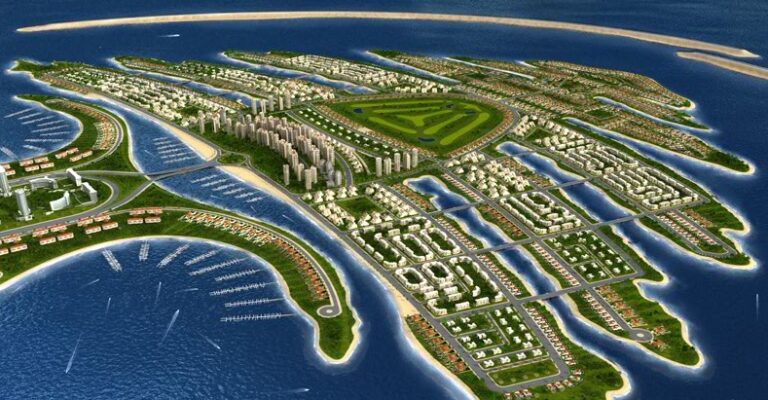
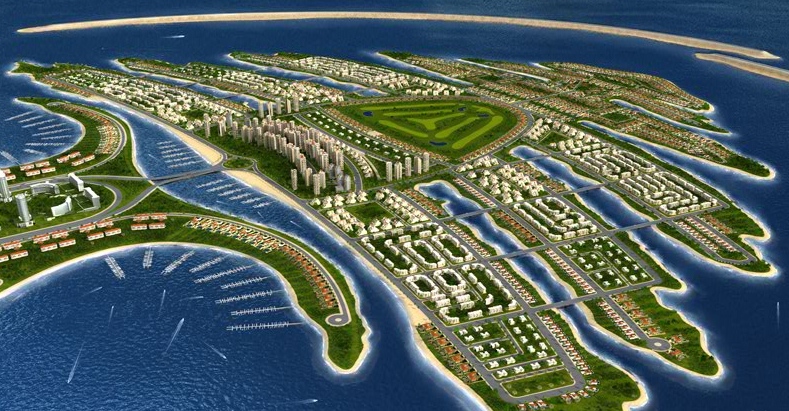
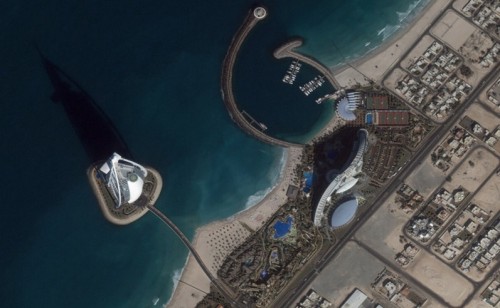
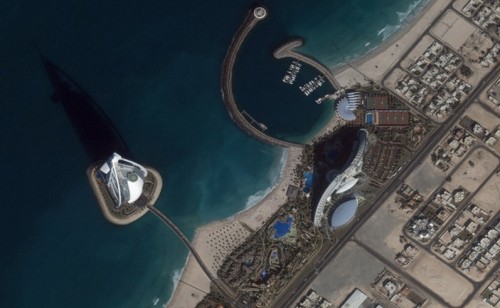
They are calling it Cedar Island, modeled after the Lebanese Cedar, the country’s national symbol. And Panasonic Corporation, and Chinese partners and Arab investors are already on board.
This documentary film describes the activities of IBSAR, an interfaculty center at the American University of Beirut dedicated to nature conservation and sustainable research.
According to IBSAR members, “Nature is a special trust to be enjoyed and conserved for future generations. Conserving the biodiversity of nature in the Middle East is the foundation on which we can build an improved quality of land and ensure a sustainable future for the people of the region.”
This video outlines some research activities of the 20 or so faculty members at the University; and includes plant hunters looking for new drugs, and specifically how the researchers are making clinical investigations on plants like the local Lebanese herbs hindbeh and kishk.
The diet in the Eastern Mediterranean and especially Lebanon, Syria, and Jordan is characterized by a heavy reliance on refined grains (white flour) as the primary source of energy.
These countries also experience an increase in the rates of chronic non communicable diseases (cardiovascular disease, diabetes), a reflection of the emerging “nutrition transition” experienced by these countries. The “nutrition transition,” reports ISBAR scientists, seems to be occurring alongside chronic problems of under nutrition, specifically micronutrient deficiencies reflected in high rates of anemia among certain subgroups, particularly the urban and rural poor.
IBSAR is engaged in a project that aims at increasing dietary diversity in the urban and rural poor through the promotion of the sustainable use of wild edible plants, ultimately improving general health status in the targeted communities.
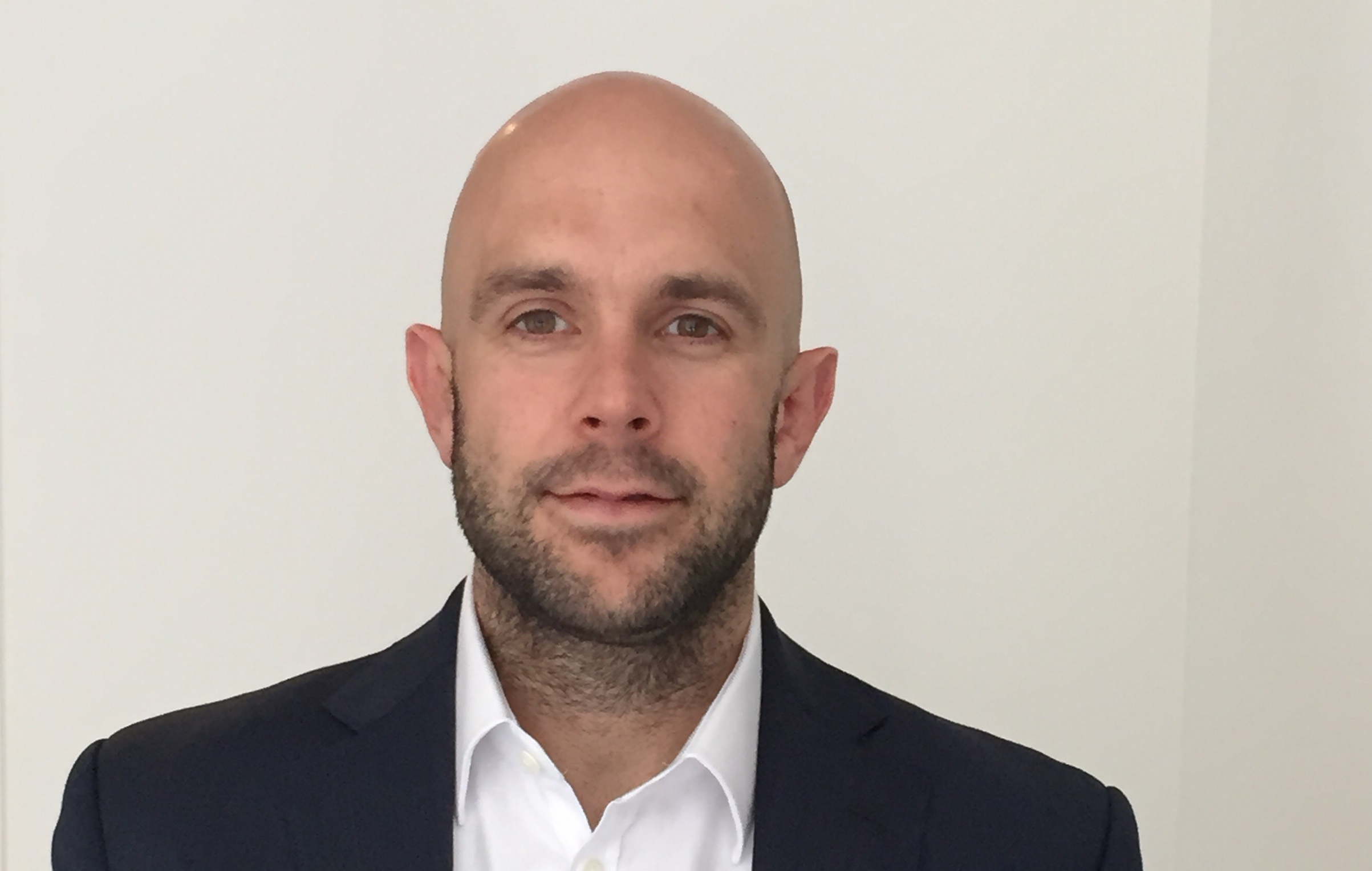
Green Prophet readers, as we know, are not only dreamers, they are doers. For all those that want to play your part, a job in clean technology might be up your alley. Today we interview Sam Newell from Renewable Energy Jobs, on trends and renewable energy jobs up for grabs in the Middle East.
Green Prophet: Tell us a little bit about your background and why you founded Renewable Energy Jobs
Sam Newell: I’m a career recruiter, and have been in recruitment for about 12 years. I ran technology recruitment businesses as well as focusing on financial services. I have also held roles such as Head of Recruitment & Resourcing for a global consulting business and Leadership Recruitment Manager for a FTSE listed financial services firm.
I started my own executive search firm in 2006 specialising in the early stage cleantech market and I noticed that there was very few quality advertising opportunities within the renewable energy recruitment sector.
In my opinion many of the existing sites where too broad in their scope for what I needed. There were quality ‘green’ or ‘environmental’ sites but little specifically for renewables.
Those that were renewables focused often appeared badly designed or were overpriced in my opinion. I was a technology recruiter during the internet boom of the 90’s, I also had a go at building my first online business at that point which wasn’t a huge success, it did teach me a few things though and so I have a few more tools to use when assessing websites than many recruiters I guess.
Charging hundreds of dollars or pounds to advertise on a site with little traffic is pointless.
Tonight begins Israel’s Independence Day, and a lot of recent articles on Green Prophet have been about the regional water crisis, and what must be done to alleviate it.
Both agronomists and hydrologists in our region have tried to find ways to deal with the increasing lack of water resources, including recycling of sewage and other wastewaters, building of reservoirs to collect winter rains and runoffs from winter snow falls in mountain areas, and most of all, desalination plants to change salty sea water into potable fresh water (after all, the earth’s surface is 70% water).
The recent water article by Professor Hillel Shuval, Director of Environmental Health Services at the Hadassah Academic College in Jerusalem probably summed it up by his opinions as what is the real cause of the current water problems in Israel.
The real cause, according to Prof. Shuval, has been government policies concerning water use and conservation for the past 20-25 years. There is a lot of truth in what he says, and it doesn’t take an expert in this area to conclude that he is right.
Green Prophet is honored to present this opinion piece written by one of Israel’s foremost experts in environmental science and policy. Professor Hillel Shuval was the director of the Department of Environmental Health Sciences at the Hadassah Academic College in Jerusalem. Prof. Shuval describes the harmful consequences that stem from agricultural overuse of Israel’s scarce water resources, and calls for a change in the water management policy to preserve natural areas and green spaces.
This country is facing one of its most severe water crises, triggered by the harsh droughts of 2006-2009.
However the crisis is no less the result of the long-term chronic problem of overutilization of its limited natural water resources. This resulted mainly from demands for more and more water from the agricultural sector, even after the country’s natural water resources were fully developed to their limit in the 1980s. To meet these growing demands, the agricultural and water authorities embarked on a conscious program of dangerous overpumping of ground and surface water resources, the precursor of the water crisis.
Why was this done? We must examine the question of the relationship between water management problems and the role of the country’s deep historic and cultural commitments to agriculture and a romantic vision of a pastoral Israel which still influences water policy.
“It is illogical and immoral to dry up the urban parks, gardens and green areas, while exporting flowers grown with subsidized drinking water to Europe.”
Since water resources are limited, we need to reevaluate the division of water allocations between the sectors resulting from rapidly growing domestic and urban demand associated with the growing population and the continued demands of agriculture for water.
Agriculture has, up to now, used some 50 percent of good quality drinking water, despite the fact that it represents only 2%-3% of the country’s GDP and 3%-4% of the population. To understand this deep commitment to agriculture, an overcommitment as far as allocation of water resources is concerned, it is necessary to understand the historic evolution of the role of agriculture in our society and culture.
The first period, which established the roots of Israel as an agricultural nation, goes back to biblical times when the Jewish people lived in its own land.
During the 2,000 or so years of the Diaspora, the image of Israel as an agricultural nation was continually reinforced in the collective memory by religious rituals and Jewish holidays mainly based on the agricultural seasons in Eretz Yisrael. However, we only began to reestablish our national roots in the land with the establishment of the first settlements in the First Aliya of 1880-1905.
This was followed by a more ideologically motivated period of settlement of the land of the Second Aliya led by such thinkers as A.D. Gordon, who in 1910-20 preached the religion of labor and the mystic need for the nation to reestablish its roots by working the soil in its native land. In the prestate period, the ideology, dream and vision of a pastoral agricultural nation was promoted in the popular culture – poems, press, books, youth movements, popular songs and children’s stories. Every child worked in agriculture in school.
The issue of the limitations of land and water became a serious existential political threat to the Yishuv when attempts by the British to cancel the Balfour Declaration where made by the Hope-Simpson White Paper in 1930 to end Jewish immigration to Palestine due to “lack of economic absorptive capacity… specifically lack of water and land.”
This led to a massive national drive to establish agricultural settlements – “dunam after dunam” – by the Jewish Agency. The national commitment to urgent agriculture development deepened.
Thus, with the founding of the State of Israel in 1948 the drive to establish hundreds of new settlements – moshavim and kibbutzim – became top priority, both to settle the land and assure the borders of the new state as well as to provide jobs for newly arrived immigrants and to provide food security.
Over the years some 700 new agricultural settlements were valiantly established. However, in the view of Meyer Ben-Meir, former water commissioner, we overdid it and could never have met their water needs.
Simultaneously, major efforts were made to develop the nation’s water resources, regardless of costs and economic implications, including the National Water Carrier and more than 1,000 new wells.
As a result of the very high cost of water produced by these heroic national projects, which was greater than most farmers could afford, the subsidy of water for agriculture became a basic part of national policy. While agriculture became highly efficient in water utilization, the heavy subsidy has resulted in farmers growing many crops that would otherwise not be economically feasible and using more water than economically justified.
When natural water resources development reached its limit in about 1980, the country faced a dilemma – not enough water to meet both the growing urban needs and maintain the same level of allocations for agriculture. The agriculture-dominated water establishment developed a new strategy of “temporary” overpumping and “one-time draw-down” of aquifers to justify maintaining the high levels water of allocations for agriculture.
The State Controller’s Report points out that “as a result of overpumping and overutilization, underground water levels were lowered to dangerous levels below the red line, water reserves held for emergency use in case of droughts have dwindled and seawater pollution has intruded to contaminate ground water.”
The water planners naively even promised that eventually these dangerous overdrafts would be repaid with cheap desalinated water, which never came. Thus, based on the deep overcommitment to agriculture, the seeds of the water crisis were planted, which has resulted in the near collapse of rational water management.
This short article cannot go into details, but some of the solutions to this crisis include a reevaluation of the role of agriculture, painful as that may be.
This country can survive only as a hi-tech society and will have to reallocate water from agriculture to the domestic/urban/industrial sectors. We must end wasteful water subsidies to agriculture. It is illogical and immoral to dry up the urban parks, gardens and green areas, while exporting flowers grown with subsidized drinking water to Europe. New ways must be found to maintain as many of the agricultural communities as much possible by subsidizing green areas as the Swiss do, but not by subsidizing water.
We must make major efforts to speed up the construction of seawater desalination plants and the building of treatment plants to increase wastewater recycling and reuse which can assure agriculture a growing source of water to replace fresh water. We will need to increase the allocations of fresh and recycled water to nature, gardens, parks and the environment to keep the country green so as to provide the green lungs required for the health and welfare of those who live in such a crowded urban society.
A solution to our water crisis is possible, but requires giving up many deeply imbedded dreams and visions of the past.
Professor Hillel Shuval has been active for over 50 years in protecting environment and health, founding the National Program for Environmental Protection, and led the development of reclaimed sewage water as a resource. As part of the 60 year Independence celebrations, he was presented last year with a lifetime achievement award. Prof. Shuval is a professor emeritus at Hebrew University’s Environmental Studies Program and is currently the director of the Department of Environmental Health Sciences at the Hadassah Academic College in Jerusalem (where our contributor Daniel Pedersen teaches).
What is the best way to visit Israel? By plane, by bus, or maybe by car? Derech Hateva believes the best way to see this small but fascinating country is by foot.
Registration is now open for Derech Hateva’s annual Israel Trail Teen Adventure (ITTA), a month-long outdoor program for Jewish teens from North America and Israel.
Covering parts of the Israel National Trail by foot (as well as mountain biking and rock climbing thrown in), combining environmental education, leadership and Torah-learning along the way.
“Derech Hateva teaches our kids how to be independent, strong mensches who are caring members of a community,” says Elena, an alumni parent.
This summer’s adventure dates are June 28th to July 27th for girls, and June 29th to July 27th for boys (ages 14 to 19).
There has been a lot of hype around Zenith Solar lately in Israel, where they’ve publicly launched their new solar power technology in Kibbutz Yavne, not far from Tel Aviv. Some residents of the kibbutz are against the industrialization in their kibbutz, others see it as an important environmental contribution. See the video above.
I am told that Zenith Solar might be the most efficient Israeli solar energy technology out there (developed by Ben Gurion University’s Prof. David Faiman), but there are infrastructure barriers this company will have to overcome in order to be relevant.
The Jerusalem Post website is reporting that six Israeli companies made it into the water consultancy firm, The Artemis Project’s first Top 50 Water Companies Competition last week.
The site, quoting promotional materials, states that the award, “distinguishes advanced water and water-related technology companies as leaders in their trade for helping to build water into one of the great high-growth industries of the 21st Century. The companies were selected by a panel of experts based on an integrated matrix of four criteria: technology, intellectual property and know-how, team and market potential.”
Two of the companies, Emefcy and AquaPure were listed in the top 10, at four and seven respectively.
(Melting like crazy: compare image of arctic ice cap from 1979 to that from 2003. Something seem off to you?)
Last year he was in Israel encouraging Israel cleantech companies that they could be part of the solution. But according to latest research and images of glaciers receding, Al Gore’s call to arms in the war against global warming might not come fast enough.
Former U.S. Vice President and Nobel Prize winner Al Gore was again in the environmental limelight when he warned the U.S. Congress concerning the urgency of addressing the issues of climate change recently.
Speaking during a hearing over a new bill that would require a substantial reduction in greenhouse gas emissions from both industry and private sources by the middle of the 21st century, Gore called the new bill one of the most important pieces of legislation ever introduced before Congress.
“We, along with the rest of humanity, are facing a most dire threat in relation to climate change,” he said.
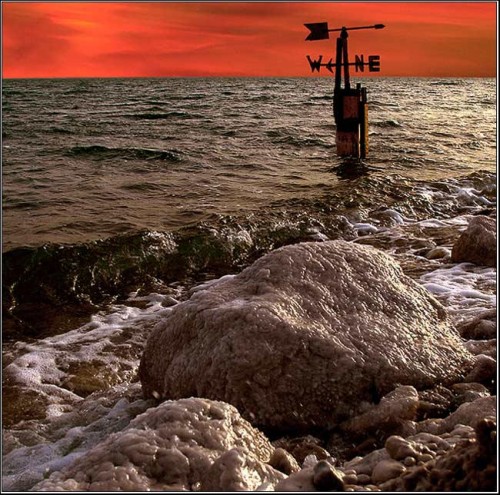
Following the latest incident in which a Tel Aviv University student, Idan Shadmi, was seriously when falling into a Dead Sea sinkhole, a Tel Aviv University physics professor, claims to have created a seismic warning system that will be able to give an indication when one of these holes, mostly located on the western shore, is about to open up.
Idan was hiking in the area with his girlfriend when the ground suddenly opened up below them. Shadami was able to help push his friend out the opening gap but not before he was swallowed up – resulting in him receiving serious injuries.
The continuing receding of the water in the Dead Sea has resulted in instability of the ground on the seashore, when brine deposits are dissolved by fresh surface water, resulting in a cavity or sink hole forming.
In recent years, literally thousands of sink holds have formed, most of them on Israel’s western side. They can be very dangerous, and threaten roads, hotels and peoples’ lives.
EcoVentures is a company – an emissions reduction specialist – which help companies in the Middle East take control of their carbon footprints.
According to a Gulf News story, the UAE companies aim to reduce their carbon footprint in their manufacturing operation and induce their employees to become more aware of the environment in which they live.
Eighty-two companies in the UAE were sent a 22 question survey dealing with what they can do to help reduce emissions caused by them.
Some companies preferred to remain anonymous, out of a fear of losing business from non-complying firms; and are instructing their employees to take measures such as conservation of the natural resources they are using to not only conserve them but protect the environment as well.
We couldn’t miss this one for the world: last night about 20 professional cyclists put the pedal to the metal and powered the Balkan Beat Box free concert at Rabin Square. Thousands of people (and dogs) of all ages took part in seeing the show.
The show to celebrate Earth Day couldn’t run on people power alone, so to keep the wattage flowing, the concert producers tapped into biodiesel made from used falafel oil.
Green Prophet and our entourage danced our way through the crowd, rushing to the center stage of the power production. The cyclists themselves.
See this amateur video of how pedal power of the Earth Day concert in Israel looks.
Israel celebrated the annual event a day after most others in the world, out of respect for Holocaust survivors who are memorialized the day before Earth Day. (It’s not considered respectful to party and celebrated as we mourn).
As we covered earlier in It’s The Water That Binds Us, in this video Alexandra Cousteau continues her mission Expedition: Blue Planet and interviews a local man from Jordan, Othman Mizra, whose father built a livelihood around a water oasis – Azraq – in Jordan. Now the water from the oasis is pumped to Amman instead and the Azraq oasis has run dry.
See the story of the tragedy in the above video.
According to Wikipedia, Azraq (Arabic: الأزرق) is a small town with a population of approximately 5,000 people (1990) in central-eastern Jordan, 100km east of Amman.
Azraq has long been an important settlement in a remote and now-arid desert area of Jordan. The strategic value of the town and its castle (Qasr Azraq where Lawrence of Arabia once stayed) is that it lies in the middle of the Azraq oasis, the only permanent source of fresh water in approximately 12,000 square kilometres of desert.

 The Inner Circle blog in Lebanon is reporting what it calls “an absurd” idea proposed by the Lebanese Heath Minister Mohammad Khalifeh as a means to prevent the Swine Flu from spreading. Israel, the country bordering Lebanon to the south, has already confirmed one case of the virus.