Home Blog Page 670

Lebanon's Environment Inaction May Affect Entire Region

14

lebanon environmentRunning for green issues in Beirut: but will the government listen?

The year 2009 was bleak for Lebanon’s environmental track record, according to the country’s Daily Star.

Despite the impressive action of IndyACT, Lebanon’s delegation brought little effect at December’s COP 15 climate change summit; they were not able to accomplish much of anything insofar as solving the many serious environmental issues that now plague the country.

These issues include ones like serious forest fires, the destruction of Lebanon’s remaining cedar groves and forests, some of which date back to biblical times; and serious damage to Lebanon’s coastline due to pollution and eroding beaches which could become worse if a planned Dubai-type island project is undertaken Pollution to the country’s fresh water supplies. This adds to the already seriously polluted coastline was noted recently in our article dealing with a huge garbage dump near the city of Sidon, that can be “smelled before you see it” according to local fishermen.

Water Security in the Middle East: from the Desk of Israel's Ministry of Environmental Protection

6

israel water interviews ministry environment logo

Water can start wars, but it can also be a bridge to peace. And as a Middle East environment news blog, Green Prophet thinks “green” solutions – be it water, clean energy, clean air – can stimulate and lubricate peace. That’s why we engaged in a series of interviews with Israeli water experts in partnership with the Strategic Foresight Group. There’s been a lot of talk about how Israel manages its water, but what solutions do its experts, policy makers and business people see as viable for water security in the Middle East?

We launched into a deep investigation and found the influentials in the country’s water industry. (Scroll down for the complete list of interviews.) Today’s interview with the desk of the Ministry of Environmental Protection. We hope that loyal readers finds this series useful, and that policy makers, and journalists will have new channels of experts to approach.

Here’s our interview with the Ministry:

Interview With Ashkelon Mayor on water peace with Gaza

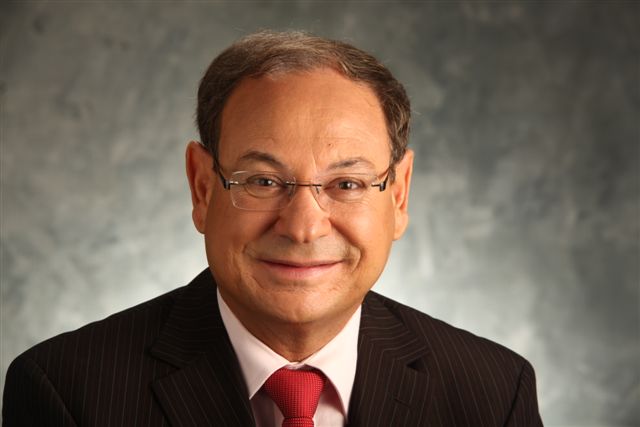
benny vaknin ashkelon mayorHe’s already building a water bridge with the city of Gaza. How does Ashkelon’s mayor Benny Vaknin see “liquid” peace in the region?

Can water lubricate peace? We hope so. This is our second to last interview in our water series. Today we interview Benny Vaknin, the Mayor of Ashkelon, who is trying to cooperate with Gaza for building a sewage treatment plant in Gaza city.

The former businessman is working to solutions for peace and cooperation with the nearby Gaza City. He thinks through water is a good way to achieve that. Here are his views on the water situation in Israel and regional water cooperation:

Q. Turkey and Israel have had talks about freshwater supply and purchase in the past. The Turkish government has been positive in its overall response so far but there is some opposition to this in the Turkish political spectrum. If the Turkish government were to agree to supply 1 BCM of freshwater to Israel, is there a possibility that Israel will agree in return to share this water with the Palestinian Authority (PA) and Jordan?

A1. This project that you mention between Turkey and Israel is not economical and therefore is not relevant.

Q2. Israel is counting on desalination as a major source of its future water supply. However, there are limits to the growth of Israel’s water supply based on marginal water alone. What are the other ‘regional’ solutions that Israel can examine in terms of water cooperation with other countries?

A2. Water shortage is a common problem amongst all countries in the Middle East. One of the regional solutions that Israel should consider is transportation of water. They have extra water in Lebanon. Perhaps we should consider transportation of water from Lebanon for all the countries in the region where there is shortage of water.

Q3. Lebanon’s Litani River has a particularly high quality of water, with a very low quantity of chlorates and nitrates present. Water cooperation with Lebanon would therefore serve Israeli interests but in order for this to happen, political cooperation between these two parties is required; in addition Israel-Lebanon relations are inter-linked with the Israel-Palestine conflict. Is it worth it for Israel to find political cooperation with Lebanon in order to secure its water situation or is this not a practical option?

A3. Israel wants peace with all the countries of the region and this could result in a very positive initiative. One of the outcomes of such peace would be cooperation on water. Water can be a cause for war but it can also be a good platform for peace.

Q4. Technical reports suggest that over-pumping is leading to the depletion of groundwater aquifers in the West Bank, both in terms of water levels as well as water quality.  This could cause water shortages in the short-run and devastation of the eco-system in the long-run. What can be done to preserve these aquifers?

A4. Desalination is a part of the solution. Both the Israelis and the Palestinians are pumping water; the state of Israel supplies 40 -50 million cubic meters of water every year to the Palestinians. The best solution is for cooperation is the regional management of water.

Q5. Israel has experienced a severe drought period in the recent past. With environmental neglect and the effects of climate change, this can be a frequent and imminent risk in the future. What can be done to minimize the impact of such a danger in terms of national measures as well as well as regional cooperation?

A5. At the national level Israel has implemented the use of re-used water for agriculture. Israel should also utilize and manage a more effective water system. At the regional level Israel can assist and share its experience with others in the region. Another promising effort in regional cooperation is the pilot project that is being implemented in Gaza using sewage water for agriculture.

Read our series of interviews with Israeli water experts:
1. All the Water in Israel: Interviews with Government, Analysts and Researchers
2. Interview with Israel’s past water commissioner, Shimon Tal
3. Gidon Bromberg on Water Security and Sustainability in the Middle East
4. Read our interview with Israel’s Water Commission
5. Interview with Eli Ronen, the Chairman of Mekorot
6. Interview with Ranaan Borel (SPNI) on Water Security in Israel


Are Energy Advances in Israel in Parallel With Those Abroad?

5

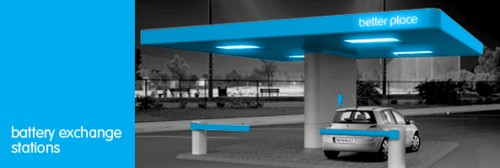
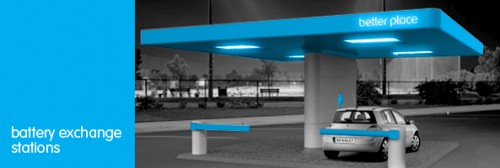
better place recharging stationsWill Israeli designed recharging stations keep America going?

Despite the world economic slowdown, a number of advancements were made worldwide in the fields of alternative and renewable energy.

The hottest energy trends of 2009, according to MIT review are:

Natural gas drilling technology
New batteries for hybrids
Carbon capture
Smart grid
Cellulosic ethanol (biofuel from algae)
Nanotech

And in lieu of cut backs in scientific research in areas dealing with solar (see our quick guide to Israeli companies), wind, biomass, and other forms of clean energy sources, significant advancements were made with massive US federal stimulus funding for batteries and renewable energy and programs. These include the US Energy Frontier Research Centers and Advanced Research Projects Agency-Energy (A Year of Stimulus for High Tech).

Published on MIT Technology Review, America’s industrial future is intertwined with high tech the magazine reports, of which alternative and renewable energy development is definitely part of.

If one takes the message of this article to heart, it’s easy to see that Israel is in a similar situation as many “low tech” industries, such as manufacturing of various products, textiles, and even diamond cutting and polishing have now been “outsourced” to countries in Southern and East Asia.

Raanan Boral on Israel's Water Security and Sustainability Potential in Middle East

6

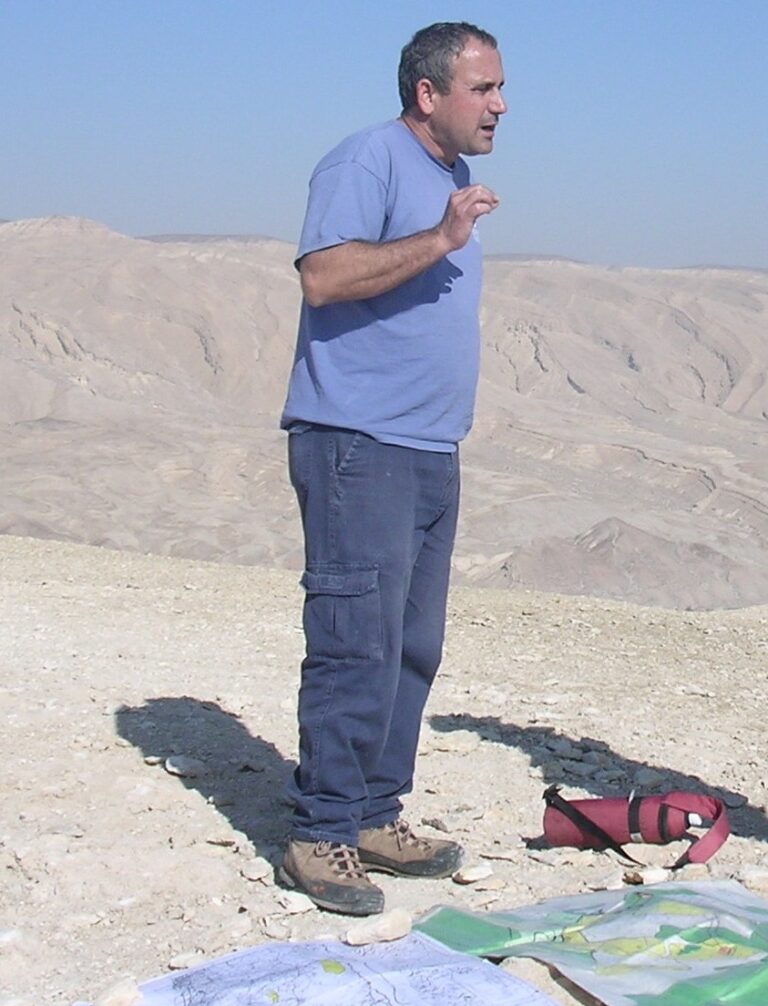
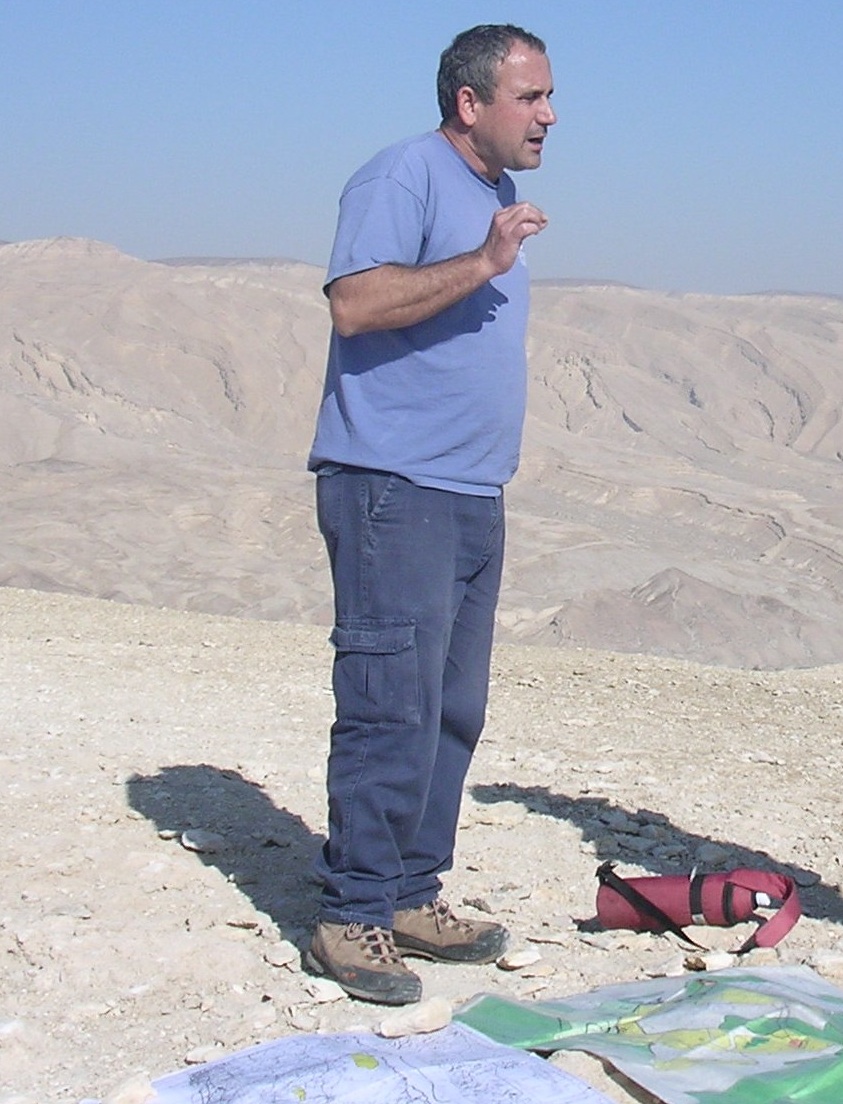
ranaan borel water israelThe Arab world is in a water crisis. That much we know from this week’s news. To encourage more regional cooperation, Green Prophet has been building on a series of interviews with influential water experts from Israel. In partnership with the Strategic Foresight Group we are gathering information to understand Israel’s water industry from the key players who maintain it. This series is intended to be a tool for policy makers to follow, for journalists to get on-the-ground contacts, and to eliminate some of the controversy vis a vis Israel’s water relations with the Palestinian Authority and its neighbours.

We’ve interviewed the past water commissioner of Israel Shimon Tal; the office of Uri Shani, the present water commissioner; as well as Gidon Bromberg, a TIME Magazine environment hero, and regional water champion. And we can’t forget Eli Ronen, the chairman of Mekorot, the country’s national water carrier.

Today we interview Raanan Boral, who has been working in the field of nature conservation and environment for more than 25 years. He has worked as an advisor to the Minister of Environment in Israel and directed the Environment Protection Division at the SPNI (Society for the Protection of Nature in Israel). Today Boral works as a consultant to non-government and private organizations.

Click below for our questions and Boral’s answers:

Iran Creates Biofuel from Algae

27

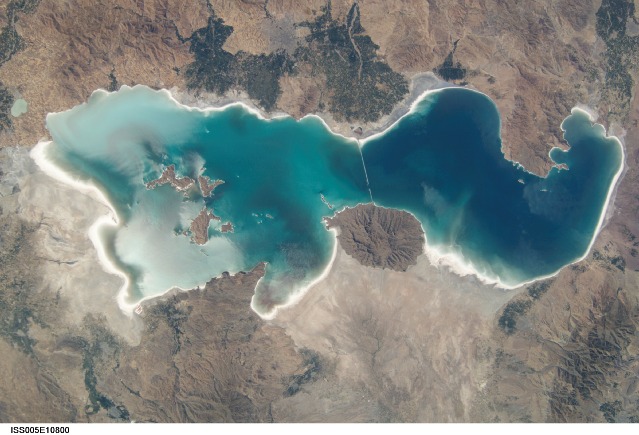
A salt lake in Iran has given rise to a new species of algae for biofuel. This is the large salt lake “Urmia”.

Are the Iranians looking for biofuel alternatives such as algae to dangerous and polluting nuclear power? Iran Daily reports that researchers at Iran’s Shiraz University have succeeded to make biofuel from algae, a new kind of algae for biofuel Science Direct reports.

Either the threat of increased international sanctions is finally convincing the Iranians that so much emphasis in “going nuclear” is not good for them in the long run. Or, perhaps, the mullahs there are realizing that there are feasible alternatives to using enriched uranium to provide fuel, as well as for using their petroleum reserves which someday will be depleted.

The Iranian project leader Dr. Mohammad Hossein Morowvat (not listed on the university directory) said: “Iran and many other countries are seeking new energy sources like biofuels.”

Learn Permaculture and Green Building Techniques in Israel

12

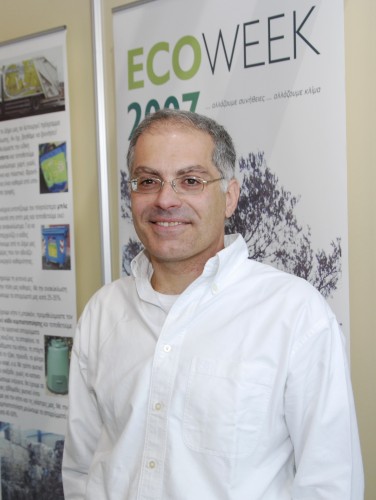
elias messinas green building israel permacultureWe’ve had our eyes on Greek-Israeli green architect, Elias Messinas, for a while. 

President of the NGO ECOWEEK (active in Greece, Cyprus, and Israel), and an environmental consultant to the Kramim Eco Village project in Israel, he’s also been busy over the past year in organizing a “green” civil engineering lecture series for the city of Beersheva.

Apparently, he still has some time on his hands.  He’s going to be one of the important lecturers in a permaculture and green building course starting January 22nd in Meshek Tapuchi in Beit Nehemia, Israel.

Meshek Tapuchi is a center for permaculture studies and is in and of itself an example of sustainable living.

The course, hosted by Yonatan Tapuchi, will host lecturers with a range of experiences including Messinas and Tami Tsoori from Tel Aviv’s City Tree among others.  It will also grant participants an international permaculture planning certificate, and those who excel during the course will be integrated into relevant projects.

Interview With Eli Ronen, Chairman of Mekorot, Israel's National Water Company

11

When we talk about water security in the Middle East, Israel could play a role in making water allocation a sustainable endeavour for this water-starved region. Partnering with the Strategic Foresight Group for its water series, Green Prophet interviews one of the most influential water company in Israel today: Mekorot.

We talk with Eli Ronen, the chairman of the board at Israel’s National Water Company – Mekorot. Founded in 1937, Mekorot has set up hundreds of water projects all over the country, and also globally – most recently it’s announced its intentions to desalinate California. Mekorot is also a pioneer in the field of new water technologies, handled by its WaTech division. Here are Ronen’s answers to the 5 questions we posed to him.

To Immunize, or Not Against the H1N1 Swine Flu?

9

swine flu mask injectionTo get the needle or not, that is the question some of us are asking. A researcher looking at bacteria model, says these ancient organisms wouldn’t mass immunize.

The swine flu is taking its toll in the Middle East, not immune to the deadly virus that tends to attack younger, healthier people, and those who are pregnant. (For other reasons, it’s also decimated the pig population in Cairo, which had been composting the city’s organic waste.)

In America, and Canada, large numbers of people are opting for the swine flu shot – to be on the safe side.

Yet, in countries like Israel, where the swine flu shot is now being offered, only a small part of the population is opting for protection, mainly healthcare workers. According to an Israeli researcher, only those people who are networked in public positions, or who contact many people in a day or in the week, should be immunized. Because there could be other risks by getting the shot, which has yet to be proven safe over the long term. Looking at the model of bacteria behaviour, here’s more on the research.

New Study Says Put Limits on Vitamin E Intake

10

vitamin E heart health
Who doesn’t want to live the longest, fullest life? We all do right? That’s why we go to the gym, fight for the right for clean air and water, and eat healthy organic food. As environmentalists with eyes wide open, some of us take vitamin supplements, like Omega 3, and other multi-vitamin packs, hoping to stave off illness and promote healthy tissues in our bodies. But buyer beware. Taking vitamins, like Vitamin E, a new Tel Aviv University study has found may do more harm than good.

The potent anti-oxidant has been used to stave off heart disease in those at risk, but indiscriminate use of the vitamin, without medical intervention, warn researchers, could shave time off your life.

Israel's HelioFocus Gets Sunny Investment from China Firm

12

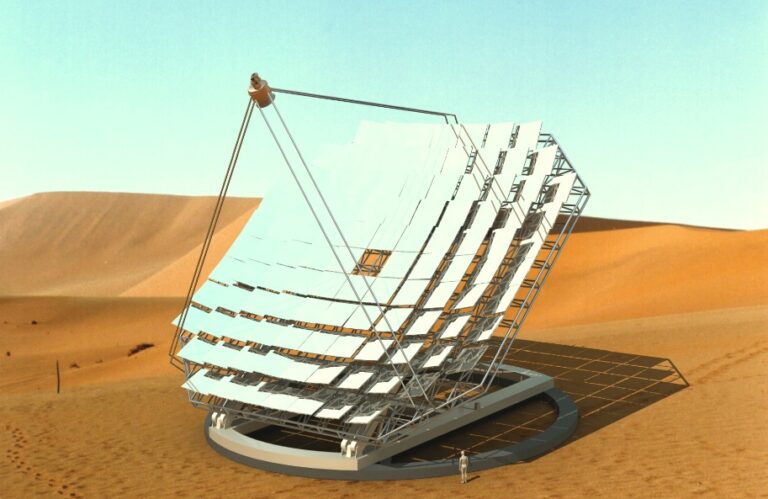
heliofocus china israelChina takes a shine to Israel and invests more than $10 million in new solar technology innovation.

Israel’s solar tech company HelioFocus, based on research from the Weizmann Institute, will be invested in by China’s Zhejiang Sanhua 002050 in a $10.5 million agreement, reports HelioFocus in a press announcement. The solar thermal systems developed HelioFocus will be the first direct investment made by a Chinese company in an Israeli one, reports Tova Cohen from Reuters.

The Chinese company will not only be a developer but a strategic partner, and is expected to produce components and control parts to enable the technology.

Seanergy Rides and Holds Wave Power

6

seanergy buoy wave power energy photoIt can harness 20 times more energy than any other wave technology in existence today and also produce carbon-free desalinated water. How? Seanergy ‘holds the waves.’

To wean America off polluting and politically unstable foreign oil, government members and legislators are advocating technologies such as solar, wind, geothermal and also wave energy to develop new sources of power. President Obama is pushing for green jobs and Americans want them.

Inspired by children playing with a beach ball at the seaside, Shlomo Gilboa an Israeli politician-turned-inventor has invested millions of his own dollars in Seanergy, a new company and product that share a name. Seanergy harvests the energy of ocean waves through an offshore farm of buoys. It could be the next technology adopted by American utility companies, if Gilboa has his way.

Death by Sewage: Saudi Arabia's Desire to "Go Green" Spoiled by Sewage Scandal

19

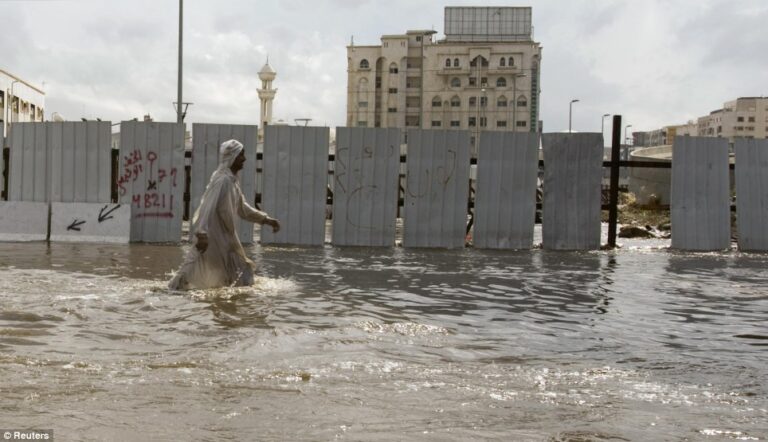
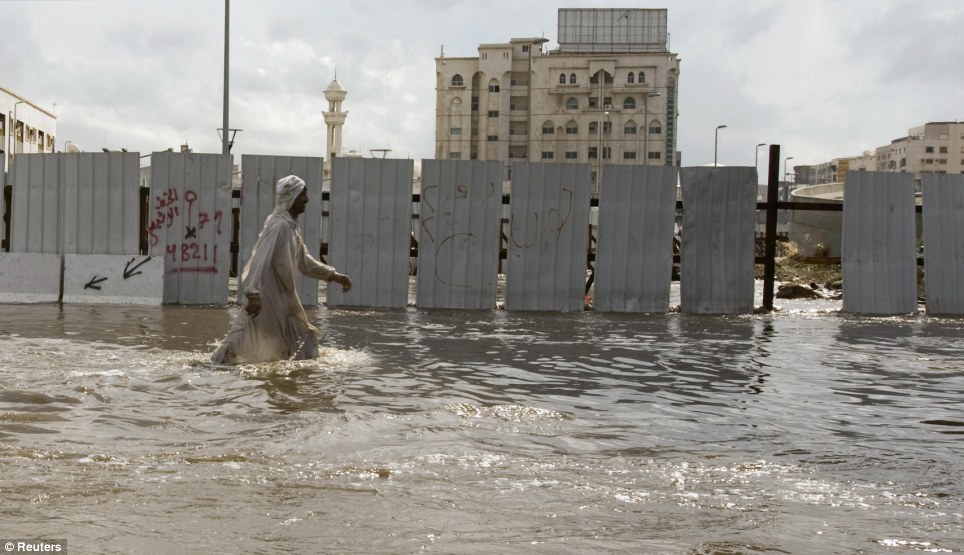
jeddah floods sewage saudi arabia photo man streets walkingSewage on the streets of Jeddah, Saudi Arabia, left more than 120 dead and questions about the country’s green credibility very much open to debate. Photo: Reuters.

We’ve covered the recent Hajj 2009 to Mecca in Saudi Arabia and the Saudi Abrabian government’s desire to make future Hajj pilgrimages more environmentally friendly.

All these efforts may be for naught if the Kingdom’s infrastructure authorities do not make a greater effort to deal with environmental disasters such as the recent flooding and sewage leak incidents in Jeddah, a city of about 2.6 million people, with almost no municipal sewerage system.

Susita, and Cash For Clunkers, Israeli style

susita cars israel camel carmel photo
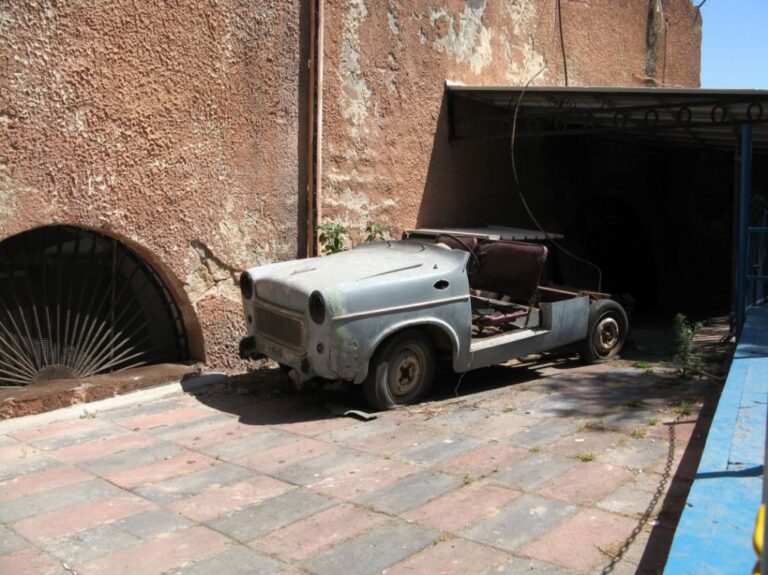
Susitas sitting in a junk pile. Getting clunkers off the streets in Israel, paves the way for hybrids and electric cars. This is the Israeli-made Susita, a lemon of a car, but snack of choice for local camels.

Copying the wildly popular Cash for Clunkers program in the United States, the Israeli government has announced its own plan to get polluting gas guzzlers off the streets and cities of Israel.

While it’s not really that common to see Texas-size Cadillacs and old gas guzzling V8 engines in Israel anyway – with gas at about $2 USD a liter, and with 100% import tax, who could afford such luxuries – the plan is to get people to trade in their more polluting hunks of steel for more fuel efficient, less polluting cars.

The troubled history of the Susita, the short-lived Israeli-made car reflects the conflict between Israel’s attraction to Western technology and the Middle-Eastern corruption that often hobbles advances in the Middle East.

The first car-composting lot opened in the city of Ashdod on Friday and new sites are expected to open across the country over the coming months. The deal is that anyone with a car more than 20 years old (you must have proof) will be given NIS 3,000 (about $800 USD) in exchange.

Some NIS 100 million (about $30 million dollars) has been allocated to support the program, being sponsored by Israel’s ministries of environmental protection and infrastructure. The Hebrew reporter writing the article did say that the Israeli version of Cash for Clunkers was copied on the model developed by US President Barack Obama.

ad for susita in 3 models, a car that camels liked to eat
An ad for Susita in 3 models, a car that camels liked to eat

The American program, whose name has been changed to the rather less catchy Car Allowance Rebate System, proved enormously popular. Owners received $4,500 each for their heaps of steel. More than 700,000 new vehicles were sold as part of the program, which a number of other countries have also adopted (Mexico too, for example).

Thousands of polluting cars, which are also deemed unsafe, are expected to be taken off the roads. Perhaps to pave the way for Shai Agassi’s electric car of Better Place?

More on cars:
A DIY Electric Car
Michigan State Looks to Rev Up Battery Business With Israel
New Vehicle Tax in Israel Stiffs Hybrids

Arab World in Water Crisis, Reports Jordanian Journalist

13

water tanks on apartments in jordan photo
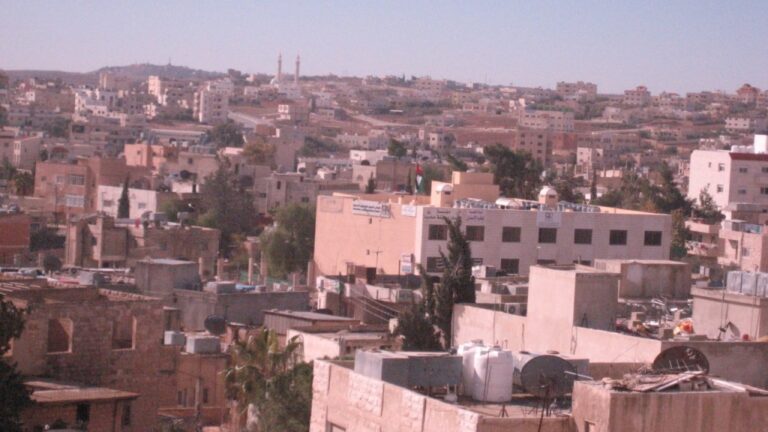
A water conference in Jordan was a call to arms in Arab world to fight water insecurity. Photo: Water tanks on the roofs of buildings in Madaba, Jordan.

There are people in over 17 Arab countries living well below the water poverty line of 500 cubic metres annually, said Arab decision makers from around the Arab world, meeting on water insecurity this past Monday, in Jordan, reports the Jordan Times. They recognized climate change in the Middle East as an issue that will further impact their poorly-available water resources, noting that 75% of the surface water in the Arab world, originates from outside its borders.