 Find your inner warrior, and the fountain of youth with pregnancy?
Women from the western world put off pregnancy (even green ones!) for as long as possible, making way for career, adventures, or finding that somewhat “elusive” true love. In the meantime, these same women postpone the effects of ageing by becoming gym rats, getting Botox treatments, and taking any step possible to retain the youthfulness and vigour of someone younger.
A new study I’ve reported on, suggests that women who get pregnant – like Middle East women, who give birth much younger and more often than their western counterparts – may be staving off the effects of old-age. The Jerusalem-based study has found evidence that pregnancy, while it might cause your teeth to fall out, can have a restorative effect on damaged organs – in this case the liver.
But the researcher I spoke with says that pregnancy, over all, is probably very good for a woman’s body.
It’s common to associate pregnancy with the maladies that may accompany it. There’s fatigue, morning sickness, weight gain – and in some cases diabetes. But for all the complaints, one Israeli professor has found new evidence that pregnancy may be a source of the elusive “fountain of youth” that all drug developers would love to find.
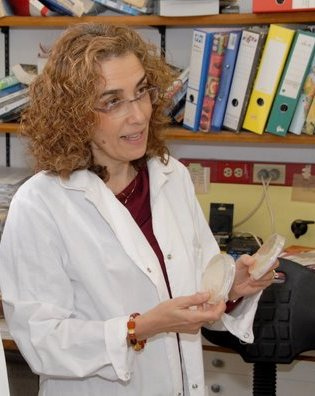 In a new study, Prof. Yehudit Bergman (pictured left) and her colleagues at the Hebrew University (HU) Medical School report finding a process that occurs only in pregnant animals that appears to have a restorative effect on damaged organs, in this particular study on the liver. The news has been reported in the journal Genes & Development.
Using animal models, they applied their findings to two-year-old geriatric mice and found that the same processes that appear to trigger quicker healing of liver damage in pregnant mice, also work in older ones who are not pregnant. Using a novel formula to trigger the effect of pregnancy, what the researchers believe they have discovered may lead to a new class of compounds that could heal a number of organs that degenerate over time as we age.
It is Bergman’s goal to adapt this trigger for regeneration to more organs, but she cautions that the drug development process may take a decade or more.
Triggering the regeneration process
Bergman tells me that her research on mice shows that pregnancy does good things for the body. “In pregnancy, regeneration of the liver is faster and better than when the same mouse is not pregnant. Moreover, we understand some of what’s happening in pregnancy – in its cells, the hepatocytes and why they regenerate better.
“Once we understood the signaling pathway that instructs the cell to do what it does, we imitated the same kinds of signaling effects in aged mice who were not pregnant,” she explains. This approach led the research team to understand why the liver regenerates itself in pregnancy.
The team, which included Dr. Yuval Gielchinsky and Dr. Eli Pikarsky from Hadassah Medical School, Prof. Neri Laufer, from Hadassah Hospital, and Efi Weitman, Dr. Rinat Abramovitch and Dr. Zvi Granot, all affiliated with the Hebrew University of Jerusalem, found that during pregnancy, liver cells regenerated better and in less time than during periods when the mice were not pregnant.
In non-pregnant mice, one sees normal cell division. From one cell, you get two, as the liver attempts to heal itself. “When the animal is pregnant,” Bergman found, “the liver gets bigger because each cell gets larger. It becomes a bigger liver.”
While under normal circumstances an enlarged liver is a sign of liver damage, in pregnant animals different processes are at work. The growth is not caused by increased blood volume, which is a normal effect of pregnancy.
“This wouldn’t be a good sign, unless we knew that the liver was working in the normal fashion and regenerating itself faster,” explains Bergman. “Once we understood how this happens during pregnancy we turned to very old mice – those that were two years old – whose [liver] regeneration process is not as good as that of young mice.”
Get pregnant, live longer?
And that’s when the researchers had their Eureka moment. “We mimicked the liver regeneration of pregnancy in old mice,” Bergman reports. With their new understanding of the process, they gave a group of older mice drugs that mimic the state of pregnancy. They had determined that the repair mechanism was a kind of switch in the cells, and they developed a molecule that could trigger that switch.
Like any serious scientist, Bergman hesitates to jump to conclusions. “The fountain of youth? It is quite novel research, but this is just research in pre-pre-clinical stages,” she points out.
However, the research is her raison d’être. “The dream is to help people, to aid older people to regenerate their liver and we are looking into achieving the same goals for other organs in the body,” she says. These could include the heart, lungs and kidneys.
So is pregnancy the elixir for extended youth? “The only evidence I have for that is the study I have published,” says Bergman, but adds: “Friends I have who are gynecologists do say pregnancy is good for the body.”
Read more on greening your pregnancy:
EcoMum Greens Your Pregnancy
Dioxin Affects Milk Production in Mice
Breastfeeding and How to Keep Up With Supply and Demand


 Will a thermal solar power plant like this one provide power for the IAF?


















 Inside view of Maserati MC Sport: worth 300 grand? Maybe for some wealthy Lebanese who are more interested in “green” of the envious variety.