
Egypt Establishes Country’s First Dolphin Sanctuary

wildlife conservation, animal conservation, marine ecosystem, red sea, hurghada, tourism, marine protected areaEgypt’s first wildlife sanctuary in the Red Sea will ensure that Hurghada’s Indo-pacific dolphins can rest and socialize in peace!

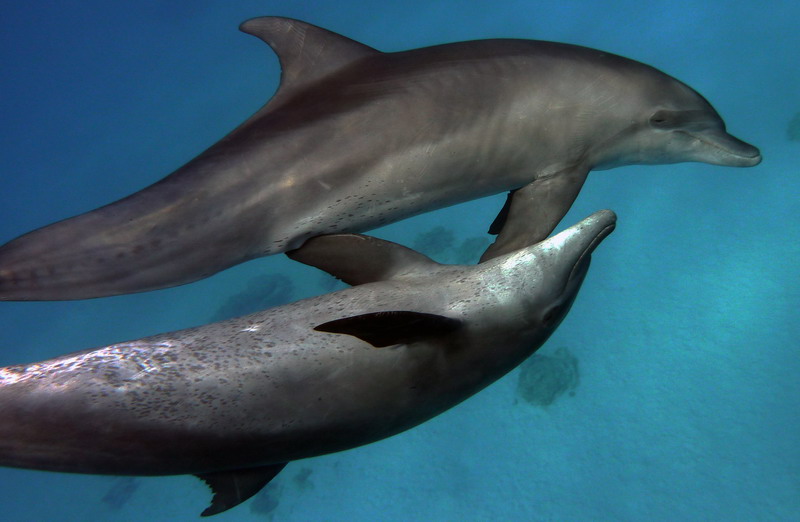
Egypt’s Red Sea Governor Mahmoud Assem has established a safe-zone designed to protect the vulnerable Indo-pacific dolphin (Tursiops aduncus). The move, which bans any kind of vessel from entering the Fanous Reef, has been lauded by conservation groups such as the Hurghada Environmental Protection and Conservation Agency (HEPCA) – one of the few organizations committed to protecting the region’s marine life. HEPCA recognizes Egypt’s first dolphin sanctuary as a ” milestone achievement” and published a handy guide for divers and swimmers still permitted in the safe zone that describes best practices to maintain in the presence of dolphins. 

Red Sea, Hurghada, animal conservation, wildlife conservation, dolphins, dolphin sanctuaryBikya Masr reports that the tourism industry in Hurghada has had a deleterious effect on the region’s wildlife.

Unbridled development and poor environmental oversight have led to a serious degradation of the local ecosystem, and tourists eager to see dolphins in their natural environment inevitably put undue stress on them.

Tourism accounts for a large portion of Egypt’s gross domestic product, but diving and other activities are only sustainable in the long term if the local ecosystem is kept intact.

By cordoning off an area at the southern tip of the Sinai peninsula, where dolphins routinely rest and and socialize, the Red Sea governorate is sending a very clear message that it is committed to caring for its marine life.

Although boats are not permitted to enter the safe zone, divers and swimmers still can, so HEPCA has provided the following behavioral tips that will ensure harmony between human visitors and custacean residents.

  • Feeding dolphins is strictly forbidden (it is detrimental to their health and behavior)
  • Do not throw any objects in the water
  • Reduce noises such as shouting or whistling (dolphins rely almost completely on sense of hearing)
  • Swim gently and quietly avoiding movement with arms and splashes
  • Swim to intercept the dolphin route and then freeze; let the animals approach and decide if and how to interact
  • Avoid noises such as shouting, whistling, using rattles and horns
  • Do not chase the dolphins (it could only increase their speed)
  • If snorkeler, do not free dive when dolphins dive
  • If diver, do not follow the dolphins when they surface
  • Touching the dolphins is strictly forbidden (and could lead to skin infections for both)
  • Always use fins, masks and snorkels

Mostly thanks to HEPCA’s concerted efforts and those of the local community, Hurghada has taken huge strides when it comes to wildlife conservation. Just last year four dolphins imported from the infamous Cove were discovered in a tiny, filthy private swimming pool. Efforts to learn more about the dolphins resulted in personal attacks on Animal Planet’s Richard Barry – the man who first blew the whistle on the inhumane treatment of “blood dolphins” in Taijii.

:: Bikya Masr

images via HEPCA

More on the Red Sea and Dolphins:

Four Dolphins in Egypt Found Living in a Filthy Pool 1/10 of Acceptable Size

Post-Revolution Development in Egypt Destroys Popular Red Sea Diving Spot

Bottlenose Dolphins in Egyptian Pool Imported From “The Cove”

Tafline Laylin
Tafline Laylinhttp://www.greenprophet.com
As a tour leader who led “eco-friendly” camping trips throughout North America, Tafline soon realized that she was instead leaving behind a trail of gas fumes, plastic bottles and Pringles. In fact, wherever she traveled – whether it was Viet Nam or South Africa or England – it became clear how inefficiently the mandate to re-think our consumer culture is reaching the general public. Born in Iran, raised in South Africa and the United States, she currently splits her time between Africa and the Middle East. Tafline can be reached at tafline (at) greenprophet (dot) com.
1 COMMENT

Comments are closed.

Hot this week

Why Health Systems Are Reaching a Turning Point

Health emerges from a continuous energy and material flow from water through food to human physiology. Technical energy systems support this cycle through water treatment, agriculture, and infrastructure.

Sustainability That Sells: How Profit and Purpose Come Together in the Hive

Whether you are a commercial grower, hobbyist beekeeper or retail equipment supplier, this system opens a new income stream with minimal environmental impact.

The Fitness App Revolution: Building the Future of Wellness Through Strategic Development

In an era where smartphones are ubiquitous and health consciousness is at an all-time high, the fitness industry has undergone a radical digital transformation. Fitness applications have moved far beyond simple pedometers, evolving into comprehensive wellness platforms that serve as personal trainers, nutritionists, and community hubs right in our pockets.

A Brief History of Basil From India to Italy

Beloved, fortunate, sweet, and royal; an herb with a long and storied history in Asia and across the world. Called by many names, basil has featured in previous Green Prophet articles, so enjoy another serving, a brief history of basil.

How Renewable Energy is Revolutionizing the Way We Power Our World

Solar has become the star of the transition thanks to modular hardware and straightforward installation. It fits dense cities and remote towns alike. Many companies are turning to rooftop arrays and carport systems - and exploring commercial solar installation as a practical way to lock in future savings.

Topics

Why Health Systems Are Reaching a Turning Point

Health emerges from a continuous energy and material flow from water through food to human physiology. Technical energy systems support this cycle through water treatment, agriculture, and infrastructure.

Sustainability That Sells: How Profit and Purpose Come Together in the Hive

Whether you are a commercial grower, hobbyist beekeeper or retail equipment supplier, this system opens a new income stream with minimal environmental impact.

The Fitness App Revolution: Building the Future of Wellness Through Strategic Development

In an era where smartphones are ubiquitous and health consciousness is at an all-time high, the fitness industry has undergone a radical digital transformation. Fitness applications have moved far beyond simple pedometers, evolving into comprehensive wellness platforms that serve as personal trainers, nutritionists, and community hubs right in our pockets.

A Brief History of Basil From India to Italy

Beloved, fortunate, sweet, and royal; an herb with a long and storied history in Asia and across the world. Called by many names, basil has featured in previous Green Prophet articles, so enjoy another serving, a brief history of basil.

How Renewable Energy is Revolutionizing the Way We Power Our World

Solar has become the star of the transition thanks to modular hardware and straightforward installation. It fits dense cities and remote towns alike. Many companies are turning to rooftop arrays and carport systems - and exploring commercial solar installation as a practical way to lock in future savings.

How does one start prepping?

Faced with an extreme winter storm this year, Americans wonder how to be prepared for catastrophe. Miriam has lived through wars in the Middle East - so she's prepared on giving you a guide to prepping.

Fishermen sue tire manufacturers on behalf of the salmon

A federal trial in San Francisco has brought US tire manufacturers, fishing groups, and environmental scientists into court over a chemical most drivers have never heard of — but which scientists say may be silently reshaping aquatic ecosystems.

Listening to Water: Tarek Atoui’s Next Work for Tate Modern

Born in Beirut, Lebanon in 1980 and now living in Paris, Atoui has spent years building instruments that don’t sit comfortably in concert halls. Many of them involve water, glass, and ceramics — materials that react to sound instead of simply producing it.

Related Articles

Popular Categories