Is your groundwater too young? New study finds risks for Parkinson’s and type of water you drink

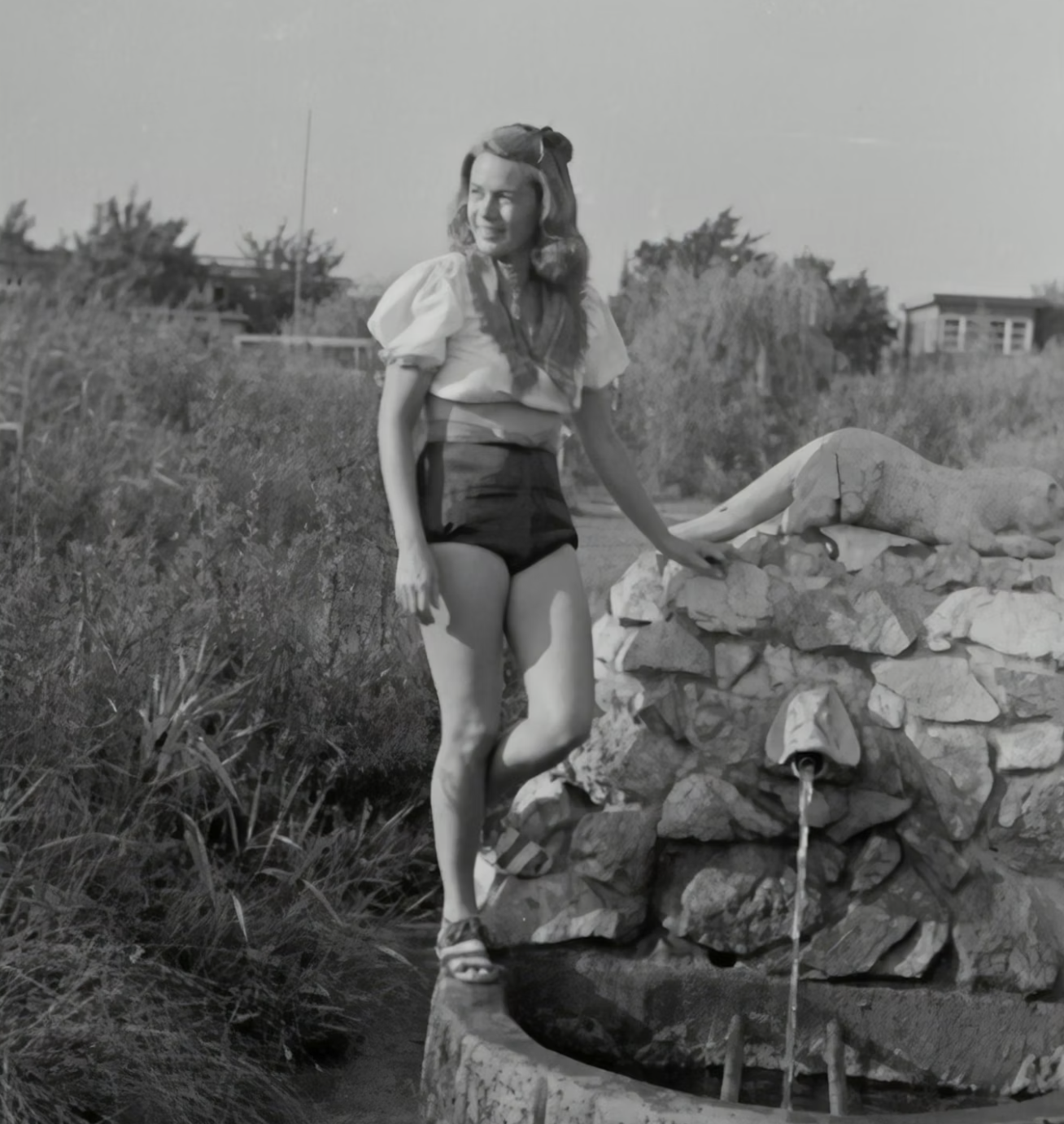
Austrian woman at water well in 1940
Europe was built with free access to safe, clean, spring water in cities. Here is an Austrian woman at water well in 1940

People whose drinking water came from newer groundwater had a higher risk of developing Parkinson’s disease than those whose drinking water came from older groundwater, according to a preliminary study released March 2, 2026, that will be presented at the American Academy of Neurology’s 78th Annual Meeting taking place April 18–22, 2026, in Chicago and online.

The study does not prove that newer groundwater causes Parkinson’s disease; it only shows an association.

The research focused on the age of groundwater and the aquifers that supply it. An aquifer is an underground layer of porous rock, silt, or sand that stores and transports groundwater. Scientists increasingly see water sources as a window into long-term environmental exposures.

“One way to examine our exposure to modern pollution is through our drinking water,” said study author Brittany Krzyzanowski, PhD, of the Atria Research Institute in New York City, who conducted the research while at the Barrow Neurological Institute. “Newer groundwater, created by precipitation that has fallen within the past 70 to 75 years, has been exposed to more pollutants. Older groundwater typically contains fewer contaminants because it is generally deeper and better shielded from surface contaminants. Our study found that groundwater age and location is a potential environmental risk factor of Parkinson’s disease.”

The study analyzed data from 12,370 people with Parkinson’s disease and more than 1.2 million people without the disease, matched for age, sex, race, and ethnicity. All participants lived within three miles of 1,279 groundwater sampling sites across 21 major U.S. aquifers.

A case for raw water from ancient sources

A natural raw water spring in Nipissing, Ontario.

Researchers examined groundwater age, aquifer type, and drinking water source—such as municipal groundwater systems or private wells—as indicators of possible exposure to neurotoxic contaminants.

Two types of aquifers stood out. Carbonate aquifers, made mostly of limestone, often allow water to move quickly through fractures, making them more vulnerable to surface contamination. Glacial aquifers, formed more than 12,000 years ago as glaciers advanced and retreated, are composed of sand and gravel that can naturally filter water as it moves underground.

After adjusting for factors such as age, sex, income, and air pollution, people whose drinking water came from carbonate aquifers had a 24% higher risk of developing Parkinson’s disease compared with those whose water came from other aquifers. When compared specifically with people whose water came from glacial aquifers, the risk was 62% higher.

Researchers also found that older groundwater appeared to have a protective effect in carbonate aquifers. For each increase in groundwater age, the risk of Parkinson’s disease declined by about 6.5%. In contrast, groundwater formed in the past 75 years in carbonate systems was linked to an 11% higher risk compared to water dating back to the ice age.

“We speculate that the apparent protective effect of older groundwater is seen mainly in carbonate aquifers because these systems can show a clearer contrast between newer and older water,” said Krzyzanowski. “In these aquifers, newly recharged groundwater is more vulnerable to surface contamination, while older groundwater can remain cleaner if it is separated from recent inputs by a confining layer.”

“In contrast, glacial aquifers tend to slow groundwater movement and naturally filter contaminants as water travels underground,” she added.

The findings highlight how where drinking water comes from may matter for long-term health. People can often learn about their water source through local utilities or regional groundwater agencies. For households using private wells, testing water periodically and considering filtration systems can help reduce potential exposure to contaminants.

“This study highlights that where our water comes from, including the age of groundwater and the type of water source, could shape long-term neurological health,” said Krzyzanowski. “While additional research is needed, bringing together knowledge about groundwater and brain health may help communities better assess and reduce environmental risks.”

Karin Kloosterman
Karin Kloostermanhttp://www.greenprophet.com
Karin Kloosterman is an award-winning journalist, innovation strategist, and founder of Green Prophet, one of the Middle East’s pioneering sustainability platforms. She has ranked in the Top 10 of Verizon innovation competitions, participated in NASA-linked challenges, and spoken worldwide on climate, food security, and future resilience. With an IoT technology patent, features in Canada’s National Post, and leadership inside teams building next-generation agricultural and planetary systems — including Mars-farming concepts — Karin operates at the intersection of storytelling, science, and systems change. She doesn’t report on the future – she helps design it. Reach out directly to [email protected]

LEAVE A REPLY

Please enter your comment!
Please enter your name here

TRENDING

Mango and avocado combine for heart health

The Avocado-Mango group also saw increases in fiber, vitamin C, and heart-healthy monounsaturated fat – nutrients tied to cardiovascular wellness – without changes in calorie intake or body weight. Select kidney function markers, such as estimated glomerular filtration rate (eGFR), also improved.

The Saudi Startup Turning Desalination’s Toxic Waste Into Its Own Disinfectant

For millennia, the Middle East's water crisis seemed an immutable fact of geography — a region defined as much by what it lacked as by what lay beneath its sands. Today, a convergence of plummeting solar costs, advancing membrane technology, and hard-won engineering expertise is rewriting that story.

Forever chemicals banned from Europe’s drinking water

The EU is taking a bold step in making sure all European Union member states worked to monitor and reduce PFAS levels in drinking water.

Elon Musk to create Mars base station on the Moon

For those unaware, SpaceX has already shifted focus to building a self-growing city on the Moon, as we can potentially achieve that in less than 10 years, whereas Mars would take 20+ years.

Astro uses AI to help procure land for renewable energy

For oil-rich, environmentally vigilant Gulf states, Astro isn’t just another startup story. It is a blueprint for accelerating an energy transition that is now existential, not optional.

Pulling Water from the Air

Faced with water shortage in Amman, Laurie digs up...

Turning Your Energy Consultancy into an LLC: 4 Legal Steps for Founders in Texas

If you are starting a renewable energy business in Texas, learn how to start an LLC by the books.

Tracking the Impacts of a Hydroelectric Dam Along the Tigris River

For the next two months, I'll be taking a break from my usual Green Prophet posts to report on a transnational environmental issue: the Ilısu Dam currently under construction in Turkey, and the ways it will transform life along the Tigris River.

6 Payment Processors With the Fastest Onboarding for SMBs

Get your SMB up and running fast with these 6 payment processors. Compare the quickest onboarding options to start accepting customer payments without delay.

Qatar’s climate hypocrisy rides the London Underground

Qatar remains a master of doublethink—burning gas by the megaton while selling “sustainability” to a world desperate for clean air. Wake up from your slumber people.

How Quality of Hire Shapes Modern Recruitment

A 2024 survey by Deloitte found that 76% of talent leaders now consider long-term retention and workforce contribution among their most important hiring success metrics—far surpassing time-to-fill or cost-per-hire. As the expectations for new hires deepen, companies must also confront the inherent challenges in redefining and accurately measuring hiring quality.

8 Team-Building Exercises to Start the Week Off 

Team building to change the world! The best renewable energy companies are ones that function.

Thank you, LinkedIn — and what your Jobs on the Rise report means for sustainable careers

While “green jobs” aren’t always labeled as such, many of the fastest-growing roles are directly enabling the energy transition, climate resilience, and lower-carbon systems: Number one on their list is Artificial Intelligence engineers. But what does that mean? Vibe coding Claude? 

Related Articles

Popular Categories