
When wars in Iran threaten oil routes, and Saudi Aramco jacks up prices because it can, the weakness of global freight becomes impossible to ignore. The latest tensions tied to Iran and the Strait of Hormuz have exposed, again, how fragile it is to move food, medicine, fuel, industrial goods and consumer products through a logistics system still built around diesel.
A single chokepoint can raise prices across continents. A single delay or boat of Houthi pirates attempting to blow up an oil tanker ripples from port to warehouse to supermarket shelf. The lesson is no longer abstract. Freight needs to become more electric, more local, more automated, more resilient and, above all, safer. And all that needs to be linked to battery storage microgrids and renewable energy produced close to home. My goal is to see the share price of Saudi Aramco sink.
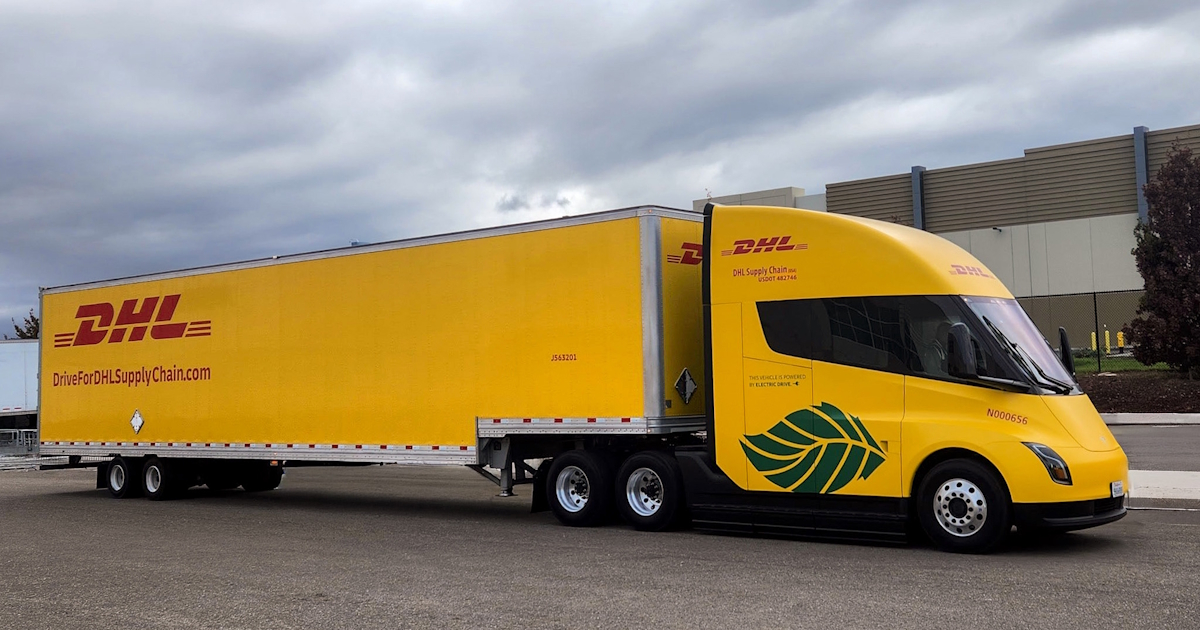
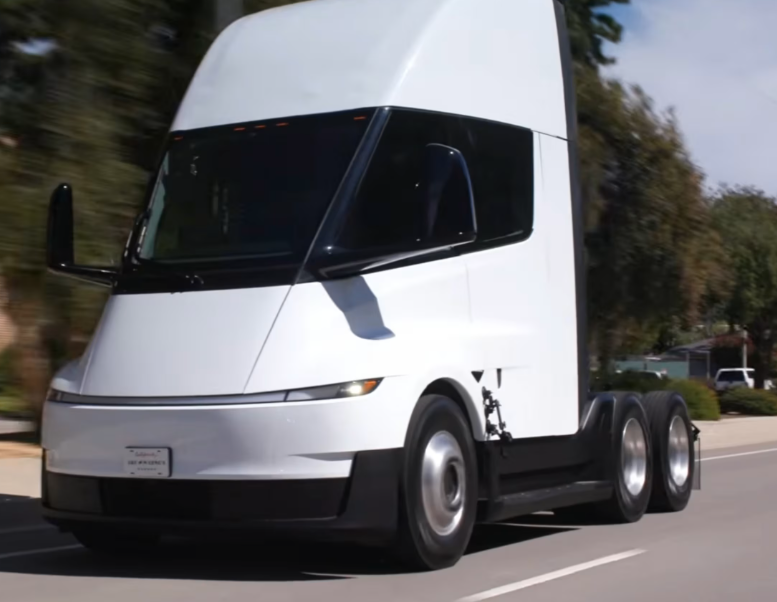
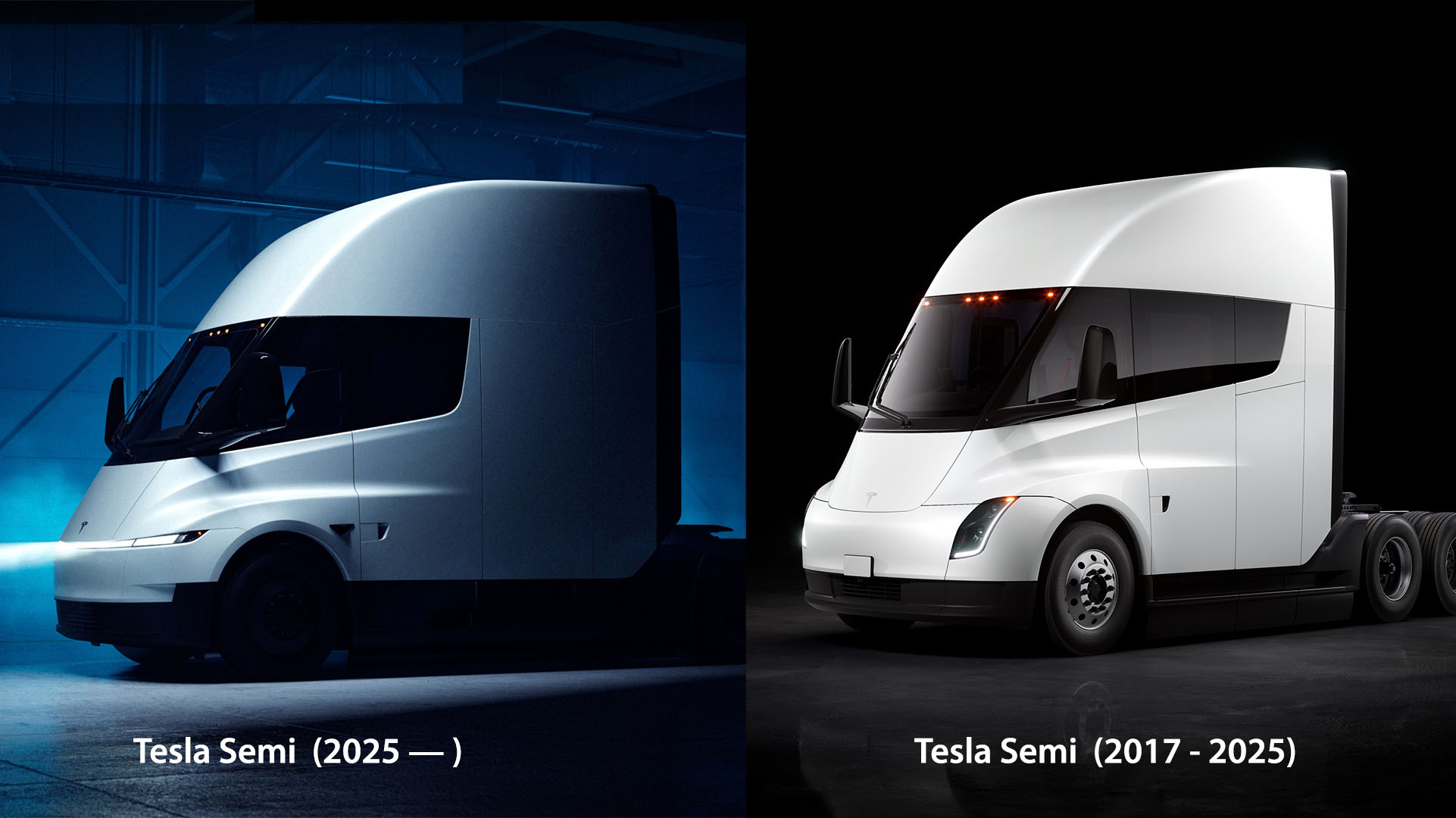
The symbol most people recognize is the Tesla Semi, Tesla’s battery-electric Class 8 truck which we wrote about more than 5 years ago. Tesla says the Semi can travel up to 500 miles on a charge, use about 1.7 kWh per mile, and recover up to 70% of range in 30 minutes with its 1 MW charging system. Those are no longer vague concept-car numbers. They are logistics numbers that matter because freight does not need novelty: it needs predictable routes, lower operating costs, better energy security and fewer people dying on the road.
But Tesla is only one part of the story. The more interesting shift is that long-haul trucking is now splitting into two serious zero-emission paths: battery-electric for predictable corridors and depot-based logistics, and hydrogen fuel cell for longer ranges, faster refueling and heavier-duty freight where batteries may still be too limiting.
Why electric trucks are finally becoming real
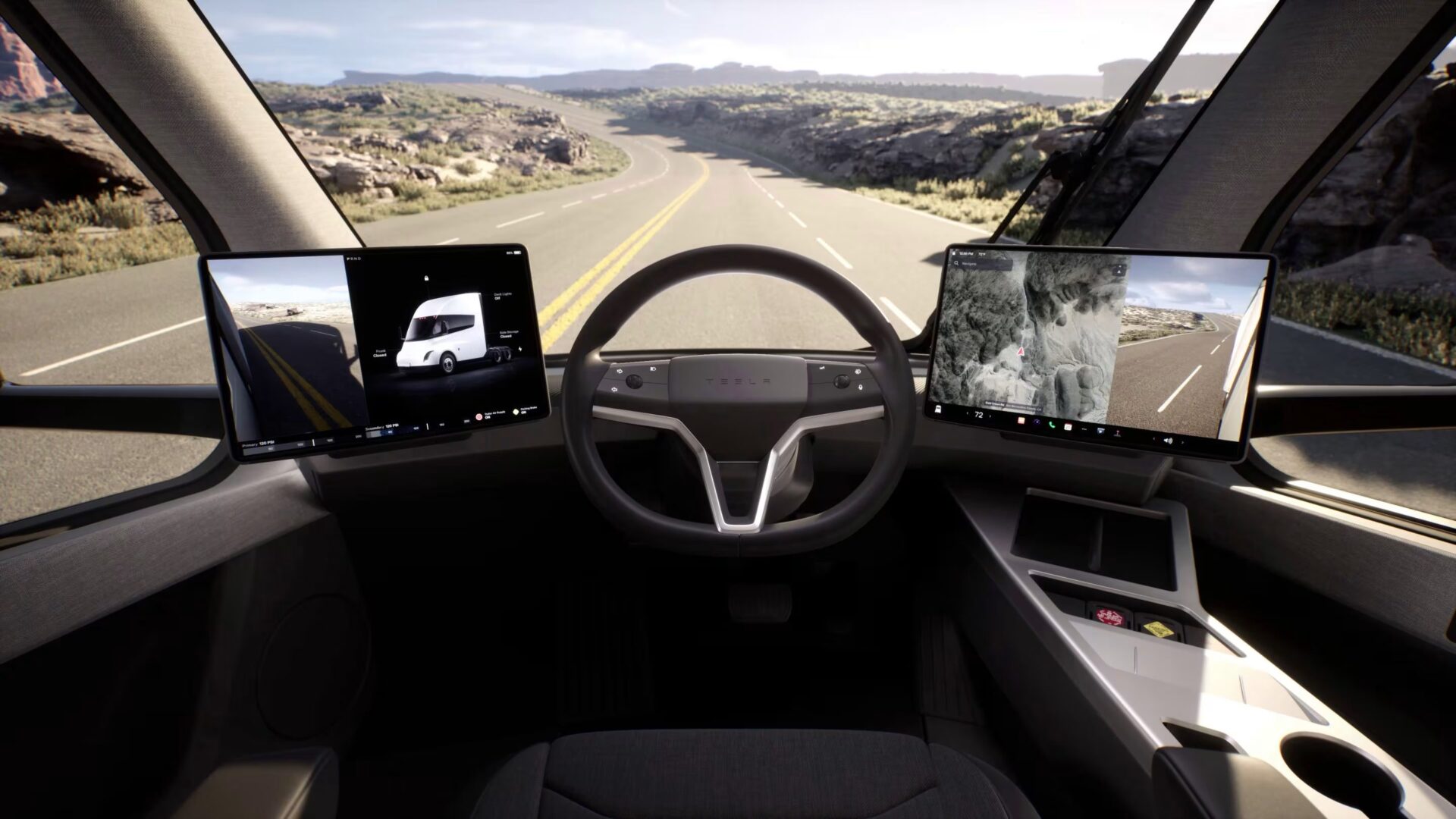
Battery-electric trucks make the most sense where routes are repetitive and tightly managed: ports to warehouses, regional distribution centers, industrial parks, airport freight corridors and retail supply loops. These trucks can charge during planned dwell times, brake regeneratively in traffic and increasingly move as part of coordinated fleets rather than as isolated machines.
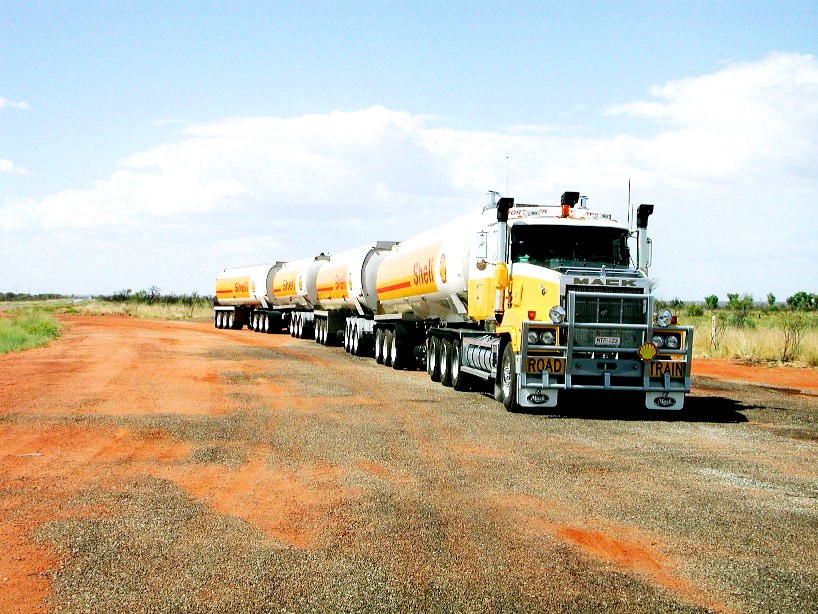
This is where Green Prophet’s old fascination with road trains starts to look less eccentric and more prescient. The old Australian road train was about linking trailers together for remote hauling. The new version is software-driven and possibly fueled by green hydrogen: platooned electric trucks traveling in synchronized formation to reduce aerodynamic drag, save energy and move freight more efficiently between hubs.
Research published in 2025 suggests electric truck platooning can reduce total operating costs when charging, routing and convoy formation are optimized together. That may sound technical, but it points to something simple: the next road train is not a dusty outback oddity. It is a digitally managed freight system.
Companies like Einride are already operating electric and autonomous freight systems in Europe and the United States. Volvo Trucks, Daimler Truck, PACCAR and others are all pushing battery-electric heavy-duty platforms into real-world operations. The market is still young, but it is no longer imaginary.
Where hydrogen enters the picture
If battery-electric trucks are best suited to fixed and repeatable corridors, hydrogen fuel cell trucks are being positioned for the stretches where battery weight, charging time and infrastructure become harder to manage. Think Canada, inner states in the US and Australia. Even wide parts of the Middle East desert where the price of oil costs less than water. This is where the argument gets serious.
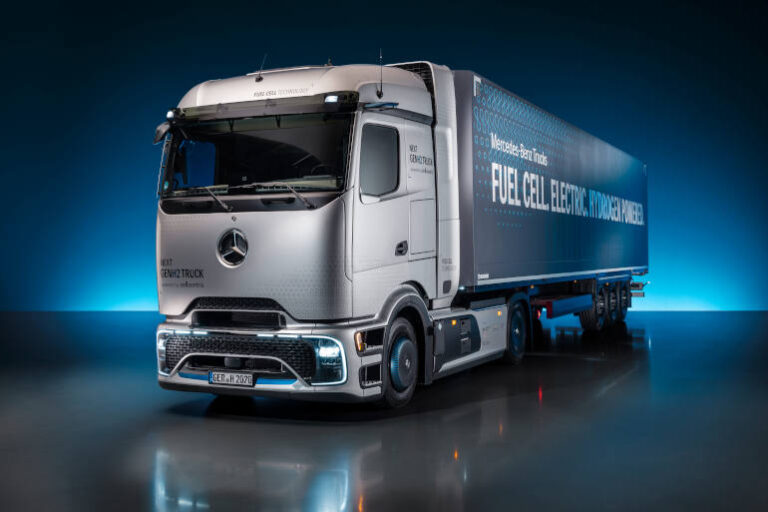
Daimler Truck says its new Mercedes-Benz NextGenH2 Truck will enter small-series production from the end of 2026, with 100 trucks planned for customer operations. Daimler says the liquid hydrogen truck is designed for ranges well over 800 miles on a single fill and uses components shared with its battery-electric eActros 600, including safety systems and digital cockpit architecture. That matters because it suggests the future may not be electric or hydrogen, but electric and hydrogen depending on route logic.
That same dual-path logic is why truckmakers are hedging across both technologies. Nikola, despite its damaged reputation and corporate instability, has still pushed hydrogen fuel cell trucks into commercial trials. The technology itself should not be dismissed because one company handled it badly. Hydrogen trucks offer compelling advantages where time-sensitive freight, high utilization and diesel-like refueling rhythms still matter.
There is a catch, of course. Hydrogen is only as clean as the way it is made. If it comes from fossil gas without meaningful carbon capture, the climate case weakens. If it comes from renewable electrolysis, the case improves dramatically. The same critique applies to battery-electric trucks. They are only as green as the grid charging them. If fossil fuels are running the battery charging stations, the whole point becomes ridiculous. We need an all-systems effort here. But even when it’s not green, electric drivetrains and fuel cells shift freight away from combustion at the point of use, which is still a major health and air quality gain for the roads cities around them.
Why safety may be the strongest argument of all
This is not only a climate story. It is a safety story, and trucking badly needs one. According to the Federal Motor Carrier Safety Administration, there were about 503,000 police-reported crashes involving large trucks in the United States in 2022, including 5,279 fatal crashes. The agency also notes that 82% of fatalities in fatal large-truck crashes were not occupants of the large truck. The Insurance Institute for Highway Safety has repeatedly shown that large trucks create disproportionate danger for people in smaller vehicles.
That is the context in which electric and hydrogen trucks need to be judged. Not against some fantasy of perfect roads, but against the current freight system, which still depends too heavily on fatigue, weak oversight, inconsistent training and vehicles operating under deadline pressure.
Advanced safety systems are already proving useful. IIHS has reported that forward collision warning and automatic emergency braking reduce rear-end crash rates for large trucks. These are not distant future gains. They are available gains. Battery-electric and hydrogen trucks are both well positioned to integrate these systems more deeply because they are increasingly software-first platforms. Their cameras, sensors, telemetry, braking logic and route controls can be managed at fleet level rather than left to the limits of human judgment alone.
That is where the promise lies. A truck that is digitally supervised from depot to destination is harder to fake, easier to monitor and easier to discipline. Its speed, route, braking behavior, maintenance events and charging or fueling cycles can all be tracked. It is not a moral solution to human failure, but it is a technical one, and freight needs more of that.
The dirty secret of freight is not just diesel
There is another reason the trucking sector is ripe for change: too much of it is held together with bad labor conditions, training shortcuts and dangerous corner-cutting. Canada has become a cautionary example. Ontario authorities suspended truckers’ licences after uncovering dishonest testing and training practices, according to TruckNews. Alberta also shut down unsafe truck driver training schools and targeted carriers linked to poor safety practices, again reported by TruckNews. A few years ago, a trucker from India killed an entire hockey team when he was driving on a suspended license from infractions. He should not have been on the road. But lack of government oversight with unsustainable immigration goals have put Canadian roads at risk. Make it electric!
This is where the public conversation often goes off the rails. The issue is not “foreign drivers” as a lazy culture-war talking point. The issue is licensing integrity, labor exploitation, poor oversight and freight systems that reward cost-cutting until people die. If electric and hydrogen trucks are managed through better software, better route discipline and better oversight, they can help reduce those failure points. They will not erase human corruption, but they can make dangerous operations more visible and easier to regulate.
The next road train may move at night
One of the least discussed advantages of electric and hydrogen freight is when it can move. The future of long-haul logistics is not just about propulsion. It is about timing of the drive.
Night freight may become one of the biggest advantages of automated and electrified trucking. Roads are less congested at night. Temperatures are lower. Delivery windows are easier to manage. Noise is lower with electric drivetrains. Human fatigue has always made night trucking dangerous, but digitally managed freight corridors, better sensors, automatic braking and lane support change that equation. A future fleet of trucks moving quietly between depots after midnight may turn out to be one of the safest ways to keep cities and supply chains functioning.
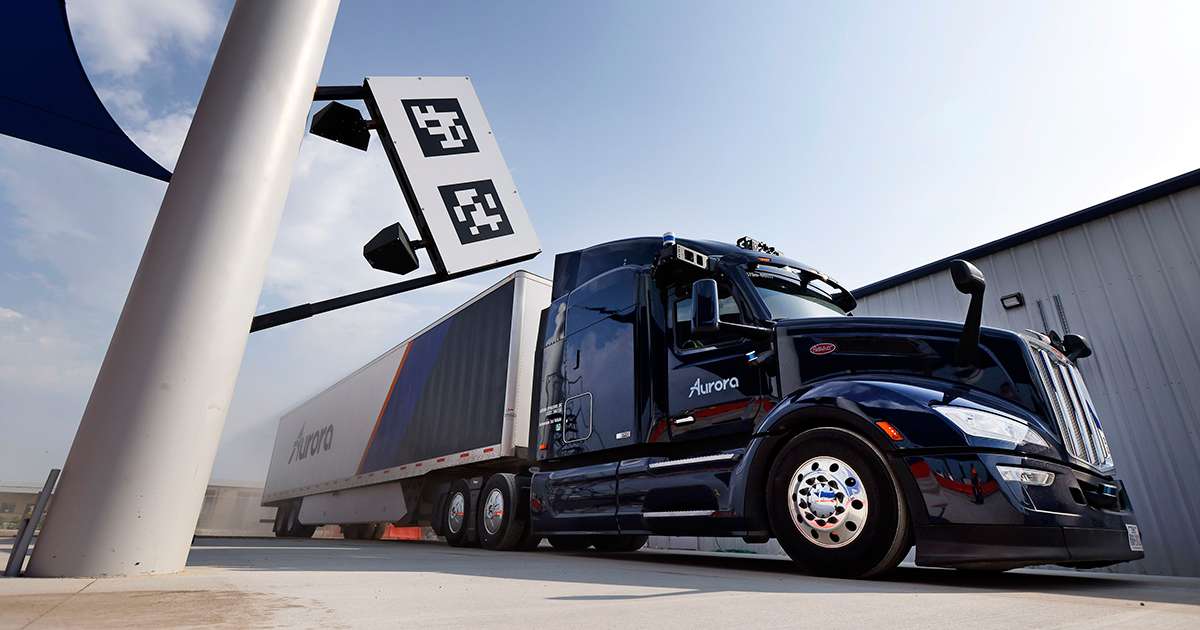
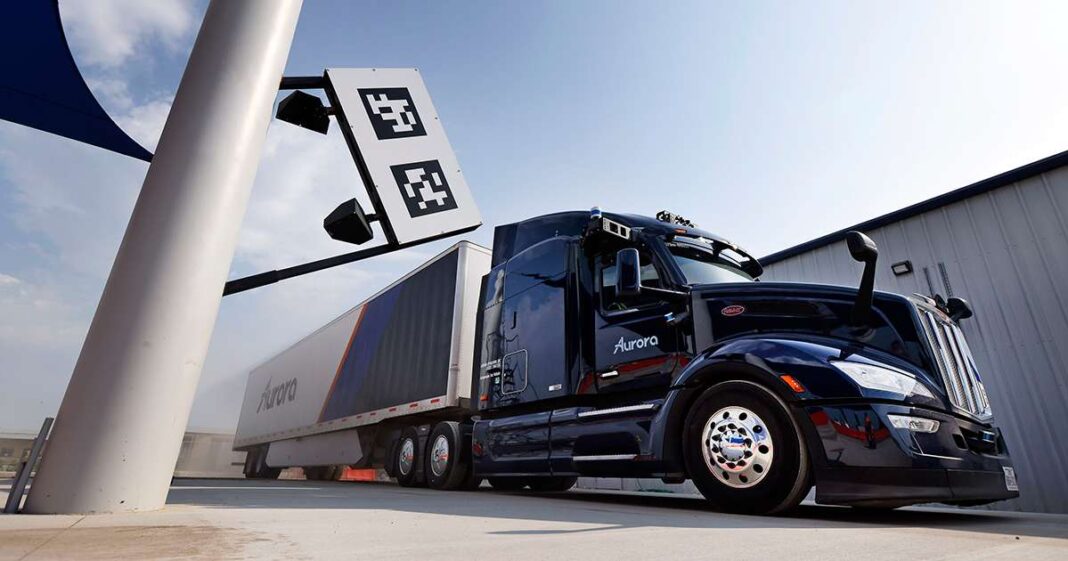
This is also where autonomy enters the picture. Companies like Aurora are already running driverless freight routes in Texas and have expanded their network as confidence in the systems grows. That does not mean human drivers disappear tomorrow, and it certainly does not mean the technology is risk-free. But it does suggest that the future freight vehicle may be less like a cowboy truck and more like a rolling logistics node, with the human gradually shifting from driver to supervisor.
The Middle East should care more than most
For the Gulf and other regions exposed to oil-route instability, this transition is not just environmental. It is strategic. Green Prophet recently reported how Etihad Rail is using solar power at a freight terminal, a small but important signal that logistics is beginning to decouple from diesel. Rail, electric trucking, hydrogen corridors and distributed renewable energy can begin to work together as one freight architecture.
That is the real post-oil freight future. Not a single silver bullet, but a layered system: electric trucks on predictable routes, hydrogen trucks on heavier and longer hauls, autonomous convoying where it makes sense, rail where possible, and maybe even tunnels where cities become too congested to keep pretending surface freight is enough.
That last idea sounds absurd until you look at what Elon Musk’s Boring Company is trying to do. Green Prophet recently covered its proposed Dubai Loop. Most of the discussion focuses on passenger transport, but the freight implications may be more important. Underground logistics corridors for high-value goods, airport freight, port distribution and urban delivery are no longer science fiction. They are expensive, yes, but so are crashes, congestion, diesel pollution, road wear and lost time.
What could go wrong
There are real pitfalls and they should not be brushed aside.
Charging infrastructure is still thin for heavy trucks. Hydrogen refueling infrastructure is even thinner. Grid readiness is uneven. Green hydrogen is still expensive. Battery weight remains a payload issue. Autonomous regulation is inconsistent across jurisdictions. Public trust can collapse after a single bad crash.
And then there are jobs. Better electric and hydrogen logistics will almost certainly mean fewer traditional long-haul driving jobs over time, especially on repetitive corridor freight. Some of those jobs will shift into fleet management, charging and fueling infrastructure, maintenance, software operations and remote supervision. Some will not. Governments and unions should be preparing for that reality now, not pretending it will sort itself out.
The real promise
The real promise of electric and hydrogen long-haul trucks is not that they are trendy. It is that they make freight less stupid.
They offer a path away from a system built on diesel dependency, poor air quality, avoidable crashes, labor strain and geopolitical fragility. They will not replace every truck overnight. They do not need to. Freight changes corridor by corridor, depot by depot, terminal by terminal. That is how this transition will happen too.
The old diesel model gave us pollution, fatigue, noise, vulnerability and too many deaths on the road. The next freight era should be quieter, cleaner, more disciplined and harder to destabilize. Battery-electric and hydrogen trucks are not a fantasy anymore. They are beginning to look like the most practical answer we have.