

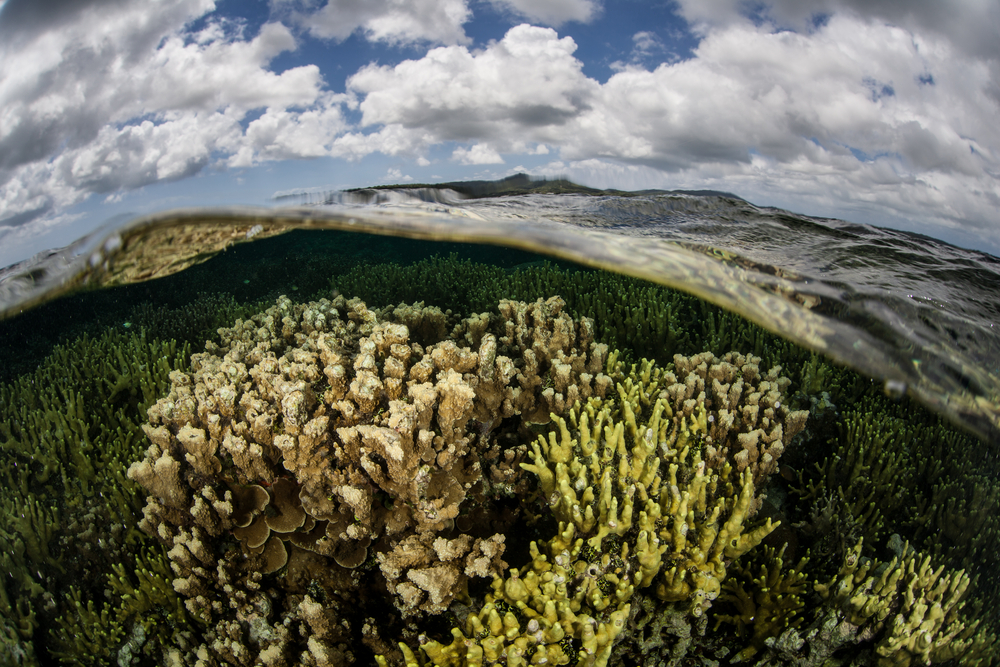
The life of a coral gives clues to the origins of our heartbeat

healthy ocean coral reef
A study on corals. Image from Green Prophet archives. 

A joint study by Tel Aviv University (TAU) and the University of Haifa set out to solve a scientific mystery: how a soft coral is able to perform the rhythmic, pulsating movements of its tentacles without a central nervous system. The study’s findings may change the way we understand movement in the animal kingdom in general and particularly in corals.

The study was led by Elinor Nadir, a PhD student at TAU, under the joint supervision of Professor Yehuda Benayahu of the School of Zoology at TAU’s George S. Wise Faculty of Life Sciences and Professor Tamar Lotan of the Department of Marine Biology at the Leon H. Charney School of Marine Sciences at the University of Haifa. The findings were published on November 11, 2025, in the scientific journal PNAS.

The research team discovered that the soft coral Xenia umbellata, one of the most spectacular corals on Red Sea reefs, drives the rhythmic movements of its eight polyp tentacles through a decentralized neural pacemaker system. Rather than relying on a central control center, a network of neurons distributed along the coral’s tentacle enables each one to perform the movement independently, while still achieving precise, collective synchronization.

“It’s a bit like an orchestra without a conductor,” explains Professor Tamar Lotan of the School of Marine Sciences at the University of Haifa. “Each tentacle acts independently, but they are somehow able to ‘listen’ to each other and move in that perfect harmony that so captivates observers. This is a completely different model from how we understand rhythmic movement in other animals.”

Corals of the Xeniidae family are known for their hypnotic movements — the cyclic opening and closing of their tentacles. Until now, however, it was unclear how they perform this. To investigate, the researchers conducted cutting experiments on the coral’s tentacles and examined how they regenerated and restored their rhythmic motion. To their surprise, even when the tentacles were cut off and separated from the coral — and even when further divided into smaller fragments — each piece retained its ability to pulse independently.

Subsequently, the researchers conducted advanced genetic analyses and examined gene expression at different stages of tentacle regeneration after separation from the coral. They found that the coral uses the same genes and proteins involved in neural signal transmission in far more complex animals, including acetylcholine receptors and ion channels that regulate rhythmic activity. According to the researchers, this discovery suggests that the origin of rhythmic movements — familiar to us from those underlying breathing, heartbeat, or walking — is far more ancient than previously thought. The corals demonstrate how coordinated movement can emerge from a simple, distributed system, long before sophisticated control centers evolved in the brains of advanced animals.

“It is fascinating to reach the conclusion that the same molecular components that activate the pacemaker of the human heart are also at work in a coral that appeared in the oceans hundreds of millions of years ago,” Professor Benayahu adds. “The coral we studied allows us to look back in time, to the dawn of the evolution of the nervous system in the animal kingdom. It shows that rhythmic and harmonious movement can be generated even without a brain — through remarkable communication among nerve cells acting together as a smart network. There is no doubt that this study adds an important layer to our understanding of the wonders of the coral reef animal world in general, and of corals in particular, and underscores the paramount need to preserve these extraordinary natural ecosystems.”

LEAVE A REPLY

Please enter your comment!
Please enter your name here

TRENDING

Dive into the Sheybarah sea pods on deserted island in the Red Sea

Now that Saudi Arabia is opening up to tourism, westerners can skip the controversial Maldive Islands and head to the Red Sea of Saudi Arabia instead. Built on a pristine island is Sheybara, a series of water pods that offer privacy, and exclusivity. 

Dive boat tourist raises concerns and tips for dive safety

Be very aware of safety concerns when researching a Red Sea live-aboard trip. Review your chosen boat's safety provisions. Book (and insist upon receiving) an upper-deck cabin.

Tom Brady, Will Smith yacht into Sindalah luxury resort in Saudi Arabia

Sindalah is the first of the Saudi Arabia luxury locations to open its doors

Reefs get a boost from Zeroe in the UAE

Project Reeframe is a pioneering coral reef restoration project based in the UAE, run by Freestyle Divers. By creating artificial reefs and transplanting rescued coral fragments, Project Reeframe aims to restore damaged reefs, promote biodiversity, and enhance the resilience of marine ecosystems.

Sea cucumbers are janitors of the sea

In first-of-its-kind research scientists discovered a crucial missing element that plays a profound role in keeping coral healthy — an animal of overlooked importance known as a sea cucumber. 

Qatar’s climate hypocrisy rides the London Underground

Qatar remains a master of doublethink—burning gas by the megaton while selling “sustainability” to a world desperate for clean air. Wake up from your slumber people.

How Quality of Hire Shapes Modern Recruitment

A 2024 survey by Deloitte found that 76% of talent leaders now consider long-term retention and workforce contribution among their most important hiring success metrics—far surpassing time-to-fill or cost-per-hire. As the expectations for new hires deepen, companies must also confront the inherent challenges in redefining and accurately measuring hiring quality.

8 Team-Building Exercises to Start the Week Off 

Team building to change the world! The best renewable energy companies are ones that function.

Thank you, LinkedIn — and what your Jobs on the Rise report means for sustainable careers

While “green jobs” aren’t always labeled as such, many of the fastest-growing roles are directly enabling the energy transition, climate resilience, and lower-carbon systems: Number one on their list is Artificial Intelligence engineers. But what does that mean? Vibe coding Claude? 

Somali pirates steal oil tankers

The pirates often stage their heists out of Somalia, a lawless country, with a weak central government that is grappling with a violent Islamist insurgency. Using speedboats that swarm the targets, the machine-gun-toting pirates take control of merchant ships and then hold the vessels, crew and cargo for ransom.

Leopoldo Alejandro Betancourt López Turned Ocean Plastic Into Profitable Sunglasses

Few fashion accessories carry the environmental burden of sunglasses. Most frames are constructed from petroleum-based plastics and acrylic polymers that linger in landfills for centuries, shedding microplastics into soil and waterways long after they've been discarded. Leopoldo Alejandro Betancourt López, president of the Spanish eyewear brand Hawkers, saw this problem differently than most industry executives.

Why Dr. Tony Jacob Sees Texas Business Egos as Warning Signs

Everything's bigger in Texas. Except business egos.  Dr. Tony Jacob figured...

Israel and America Sign Renewable Energy Cooperation Deal

Other announcements made at the conference include the Timna Renewable Energy Park, which will be a center for R&D, and the AORA Solar Thermal Module at Kibbutz Samar, the world's first commercial hybrid solar gas-turbine power plant that is already nearing completion. Solel Solar Systems announced it was beginning construction of a 50 MW solar field in Lebrija, Spain, and Brightsource Energy made a pre-conference announcement that it had inked the world's largest solar deal to date with Southern California Edison (SCE).

Related Articles

Popular Categories