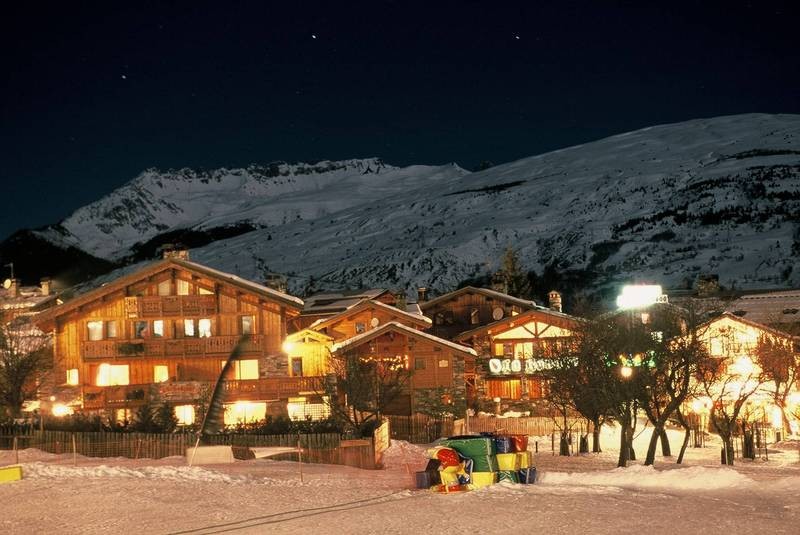
Montchavin, a small alpine village in Savoie, in the French Alps
Researchers found that this French ski village was known for eating this one thing
Amyotrophic lateral sclerosis (ALS) is often described as a cruel mystery: it’s a neurodegenerative disease that appears without warning, progresses relentlessly, and in most cases has no clear genetic cause. But research over the past decade has increasingly suggested that ALS may be shaped as much by environment as much or maybe even more than biology.
Investigations identified 14 cases by 2021, with some reports extending this to 16 people affected by ALS in the area between 1990 and 2019. These numbers are too high to be a coincidence.
Related: is working with artificial now, or Snomax, a health concern?
One of the most compelling examples comes from a small mountainous village in the French Alps, where scientists documented an unusually high number of ALS cases concentrated within a single community. A 2024 study published in eNeurologicalSci revisits this cluster and offers new insight into what may have contributed to it: the long-term consumption of certain wild mushrooms.
The researchers examined medical histories, dietary habits, preserved mushroom specimens, and metabolic genetics of people diagnosed with ALS in the village. A consistent pattern emerged. Many of those affected had regularly eaten foraged wild fungi known as false morels collected locally over many years.
At the time, the mushrooms had been identified as a relatively less toxic species. But when mycologists re-examined dried samples using modern techniques, they discovered the fungi were actually members of the Gyromitra esculenta group, including species known to contain far higher concentrations of gyromitrin.
Why false morels raise concern
Gyromitrin is not just a cause of acute mushroom poisoning. Once metabolized in the body, it breaks down into monomethylhydrazine, a compound with well-documented neurotoxic and genotoxic effects. Monomethylhydrazine can damage DNA and interfere with cellular repair processes, mechanisms increasingly suspected to play a role in neurodegenerative disease.
In this Alpine village, which is home to a ski resort, false morels were not eaten once or twice. They were consumed seasonally, often year after year, prepared according to traditional methods believed to reduce toxicity but not fully eliminate it. The study suggests that this pattern of repeated low-dose exposure may be particularly relevant.
One of the most important conclusions of the research is what it does not support. ALS in this community does not appear to be primarily genetic.
The vast majority of ALS cases worldwide are classified as sporadic, meaning they are not caused by inherited mutations. This study reinforces that understanding. However, genetics still played a role in how individuals responded to environmental toxins.
Many ALS patients in the village were found to have slow- or intermediate-acetylator profiles, linked to variations in the NAT2 gene. People with these metabolic traits process certain toxins more slowly, allowing harmful byproducts to persist longer in the body. This helps explain why some individuals became ill while others, exposed to similar environments, did not.
Rather than genetics causing ALS directly, the findings point to a gene–environment interaction, where biology influences vulnerability to external exposures.
A pattern beyond one village
The French findings are not isolated. Similar concerns about hydrazine-containing mushrooms have been documented in North America, including a recent long-term assessment of mushroom poisonings in Michigan. Earlier studies in France also identified ALS clusters linked to genotoxic fungi, reinforcing the idea that repeated dietary exposure deserves serious attention.
Researchers are careful not to claim that false morels alone cause ALS. Toxin levels vary widely between species and even within individual mushrooms. Still, the accumulating evidence suggests that some traditional foraging practices may carry neurological risks that were previously underestimated.
Other factors that could have contributed to the onset of disease is high levels of athleticism, tobacco smoking, and exposure to chemicals (like Snomax used for snowmaking) were mentioned in the study.
Public discussion of ALS often centers on genetics or well-known figures living with the disease, including Israeli-American entrepreneur Jon Medved, who has spoken openly about his diagnosis. Like most ALS cases, Medved’s is not genetic, underscoring how urgently researchers need to understand environmental contributors. Some of the companies he’s help find as an early stage investor might help solve the questions.
Recent studies increasingly frame ALS as an exposome-related disease, shaped by a lifetime of interactions with chemicals, pollutants, dietary compounds, and naturally occurring toxins. These influences may accumulate silently for decades before symptoms appear. That’s why we need to avoid pesticides and microplastics as much as possible from an early age.
What the Alpine village teaches us
The French Alpine study does not offer a simple explanation or a single culprit. What it offers instead is something more valuable: a realistic picture of how everyday exposures, cultural practices, and biological vulnerability can intersect.
ALS may not arise from one dramatic event, but from many small ones over time. In that sense, the story of this village is less about mushrooms alone, and more about how closely human health is tied to the environments we inhabit, harvest from, and trust.
___
In the scientific literature the French village is often referred to as Montchavin (Tarentaise Valley) rather than being named prominently in headlines, but this is the community where researchers identified the ALS cluster linked to repeated consumption of false morels (Gyromitra species) in multiple studies by Lagrange, Vernoux, Camu, and colleagues.