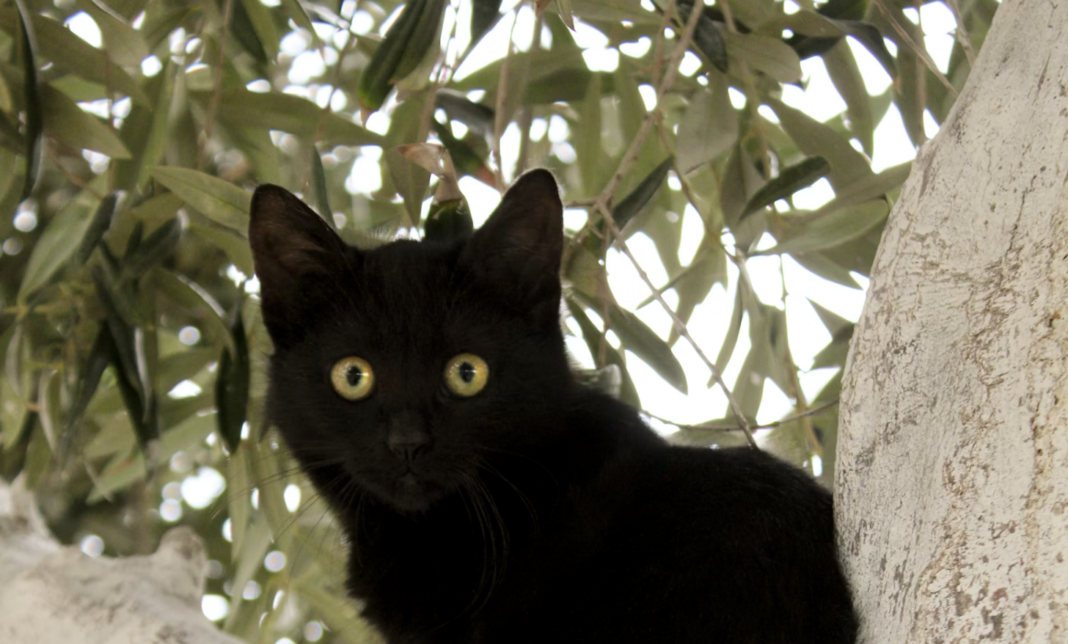


In early October, the Spanish town of Terrassa, north of Barcelona, made headlines for taking an unusual step to protect its feline population. From October 1 to November 10, all adoptions and fostering of cats — particularly black ones — have been suspended. The local animal welfare service said the measure was taken “to prevent possible risk … derived from superstitions, rituals, or irresponsible uses” during the Halloween period.
The announcement, made on October 6, echoes a growing concern among animal-welfare groups in Europe and North America: that black cats face abuse, abandonment, or death around Halloween. The folklore that links them to witches and bad luck still casts a long, dangerous shadow.
According to Noel Duque, Terrassa’s councillor for animal welfare, adoption requests for black cats tend to spike each October. Some people, he told the local Diari de Terrassa, want them “for ritual purposes” or “as decoration because it’s cool.”
On his own Facebook page, Duque sits next to a ginger cat — a small sign of solidarity with the animals he’s sworn to protect.
In previous years, Spanish shelters reported disturbing incidents: cats adopted as “Halloween mascots” and later abandoned, and others used in occult ceremonies. While many of these claims are difficult to verify, the risk is real enough for Terrassa to take precautionary action. “We cannot look the other way when faced with a grim topic,” Duque said.
The stereotype of the black cat as an omen of death dates back to medieval Europe, when cats were believed to be witches’ familiars. Despite centuries of scientific progress, superstition still dictates their fate each October. Social-media trends have made matters worse: black cats are sometimes adopted as props for Halloween photo shoots, only to be discarded afterward.
Terrassa’s policy is not absolute. “Exceptions will be duly justified and assessed by the technical team of the centre, where there is a full safety guarantee and a reliable history of the applicant,” the municipal welfare office said. Regular adoption procedures will resume after November 10, though the city hasn’t ruled out making the seasonal ban permanent.
Terrassa is home to more than 9,800 cats, according to municipal data — a population that lives quietly among its 220,000 residents. The temporary ban forces the town, and perhaps the rest of us, to confront a deeper contradiction. How can a culture that loves animals and fills social media with cat memes still tolerate cruelty in the name of tradition or aesthetics?
Halloween began as Samhain, the Celtic festival marking the boundary between life and death — a time to honor ancestors, not harm the living. Terrassa’s decision reminds us that compassion, not superstition, should guide how we celebrate.
So when the candles flicker this Halloween and black cats cross your path, consider it not a curse but a challenge — to outgrow our ghosts and protect those still paying for them.