
Fossil Fuels in Modern Day America
“The inflation crisis was caused by massive overspending and escalating energy prices, and that is why today I will also declare a national energy emergency. We will drill, baby, drill. America will be a manufacturing nation once again, and we have something that no other manufacturing nation will ever have — the largest amount of oil and gas of any country on earth — and we are going to use it.”
This excerpt from Donald Trump’s Inaugural Address on January 20, 2025, amplified the fire already lit in me to double down on my company’s commitment to hemp and the natural fiber industry. Anact, a premier producer of hemp and cotton towels, is putting the brakes on fossil fuels in the textile industry and is, instead, fueling the growth of renewable supply chains.
While human consumption of fossil fuels for expendable energy—whether in the form of oil and gas, natural gas, or coal—constitutes the largest category of fossil fuel products in the US, there is one category that often slips under the radar of public consciousness: the use of petroleum-derived synthetic fibers in textiles.
Reimagining the Textile Industry
Despite this cognitive dissociation, there is no beating around the math (or hemp stalk) any longer. The textile industry is one of the biggest contributors to the climate crisis, and is largely driven by the petroleum industry, as synthetic petroleum-derived textiles are cheap to produce as a byproduct of fossil fuel extraction. The fossil fuel industry’s depletion and contamination of natural resources like water, and the increased incidents of climate-driven, supply chain-disrupting, catastrophic weather incidents has created a critical problem that we need to collectively address.
However, there is a positive path forward. Currently, the global hemp fiber market is experiencing remarkable expansion, expected to reach more than $30 billion in less than 10 years. The textile industry is the main driver of this market expansion, according to a recent global market research report, presenting consumers and businesses a viable sustainable alternative to petroleum-derived fiber.
From financial investors to climate activists, we need all hands on deck, while not letting perfection be the enemy of good. The textile industry is one in which 80 percent of textile workers are women and where the buying power is made up mostly of women. By redirecting the capital, energy, and conviction that is needed to usher in industries like hemp textiles, instead of bending over backwards for the oil industry, we have the opportunity to reduce harm and generate value, today and for future generations.
Hemp Offers A Solution: Decarbonizing the Textile Supply Chain
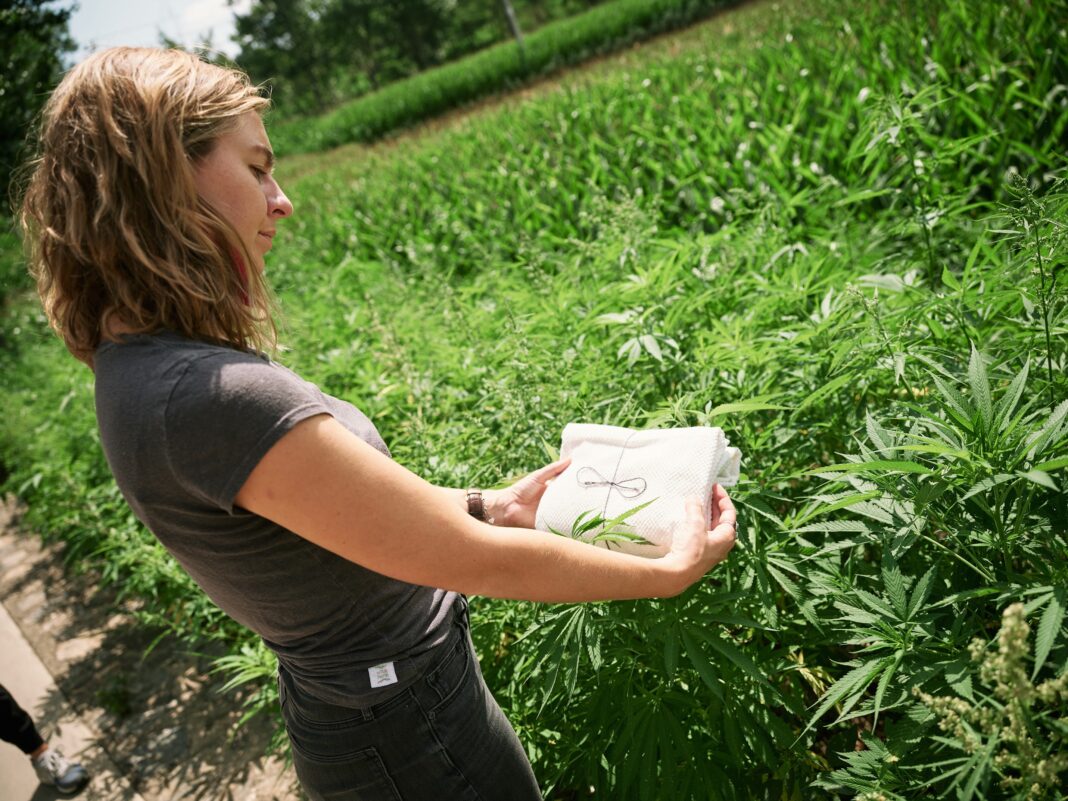
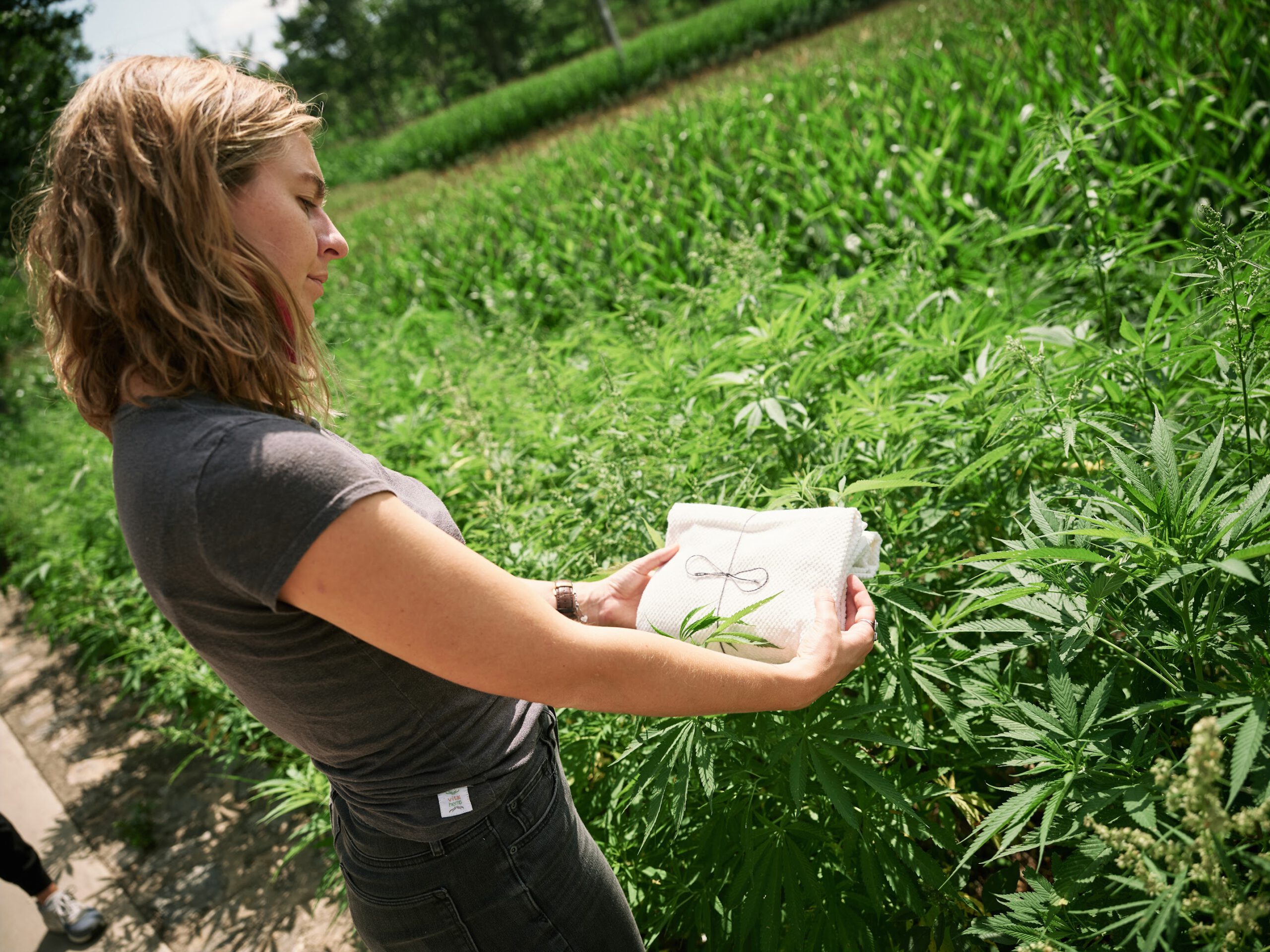
Hemp is an industrial fiber crop better compared to flax (grown for food and linen), that can grow up to ten feet tall and uses little water to cultivate. It was grown by the Romans, used by Henry Ford to create automobile prototypes, and was the textile fiber of choice for Betsy Ross to sew the American flag, to name just a few of hemp’s applications. At Anact, we love hemp because it’s incredibly durable, resists the growth of bacteria, and is very breathable. Hemp is also one of the fastest growing biomasses in the world: when you grow one acre of hemp compared to one acre of conventional cotton, you get two-to-three times the yield at a fraction of the cost, which saves money and resources while increasing profit margins.
Hemp was made illegal in 1937 in the US under the Marijuana Tax Act and re-legalized for commercial use in 2018 under the Farm Act. Hemp is more sustainable than popularized bamboo textiles because bamboo fiber requires a chemical solvent to turn it into a yarn, thereby making it synthetic.
Our focus on re-introducing hemp as a major economic contributor to the food, fiber, and fuel industries is not only because of its fantastic performance features and increased profit margins, but also because hemp sequesters carbon at rates similar to a young forest, but with a far shorter growth cycle. Hemp offers a solution rather than a compromise.
* Please note that I do think there is value in the recycled synthetic industry but due to the increasing temperatures and rising sea levels, the prioritization of investment in regenerative agriculture industries takes precedence at Anact.
By investing in alternative textile crops like hemp, we can have the following impact:
- Hemp needs 90 percent less water than conventional crops and doesn’t require pesticides
- Hemp restores our soil while it grows, improves water retention, biodiversity, and organic carbon, and pulls out pollution
- Hemp sequesters carbon in soil, whereas petroleum-derived synthetic fibers release carbon into the atmosphere
Anact’s Vision

We have the opportunity at Anact, as a nimble and emerging brand, to set the standard for how things should be. This is the beauty of being a start-up in an industry that has great potential to impact sustainability with hemp and regenerative practices. We are creating an ecosystem that is value-added for farmers, employees, customers, banks, and more, which will only be made possible with capital investment and supportive policy.
Anact has successfully helped pass legislation to grow hemp in Florida, pitched the opportunity that hemp presents to various investment partners, and built a small but mighty group of angel investors, employees, customers, and advisors who believe in the vision and opportunity in front of us.
In addition to the harmful lessons we’ve learned from fossil fuels, Trump’s current tariff war is providing consumers a baseline education on supply chains and the global product manufacturing landscape. It’s spotlighting how underpriced many products have been for too long. It’s finally catching the attention of the investment communities, whose hyper-fixation on investing in AI and tech-based startups have prevented them from paying attention to other industries and solving real world problems like the textile industry, which is valued at $2 trillion and is a space ripe for disruption. As the Founder and CEO of Anact, I believe that there has never been a better time (especially for women) to lead and reimagine the textile industry. It’s our only option.
::Anact
Brianna Kilcullen is the founder and CEO of Anact, a producer of sustainable towels made from hemp and organic cotton. Brianna is a symbol of how small choices can spark systemic change, and is a leading voice advocating for regenerative, localized manufacturing and the opportunity of hemp to revolutionize the textile supply chain. Her mission is to challenge the outdated systems of the industry and inspire others to act by creating products, policies, and partnerships that prioritize people and the planet. Prior to starting Anact, Brianna worked in the apparel industry for prAna, a subsidiary of Columbia Sportswear and Under Armour. She is a proud citizen in the US and Ireland, and has traveled to more than 40 countries, working in factories on almost every continent. Brianna has appeared on numerous podcasts and in online publications like Politico. Brianna has authored opinion pieces and writes her own blog.