The Future of Energy: Nuclear Realism vs. Solar Idealism

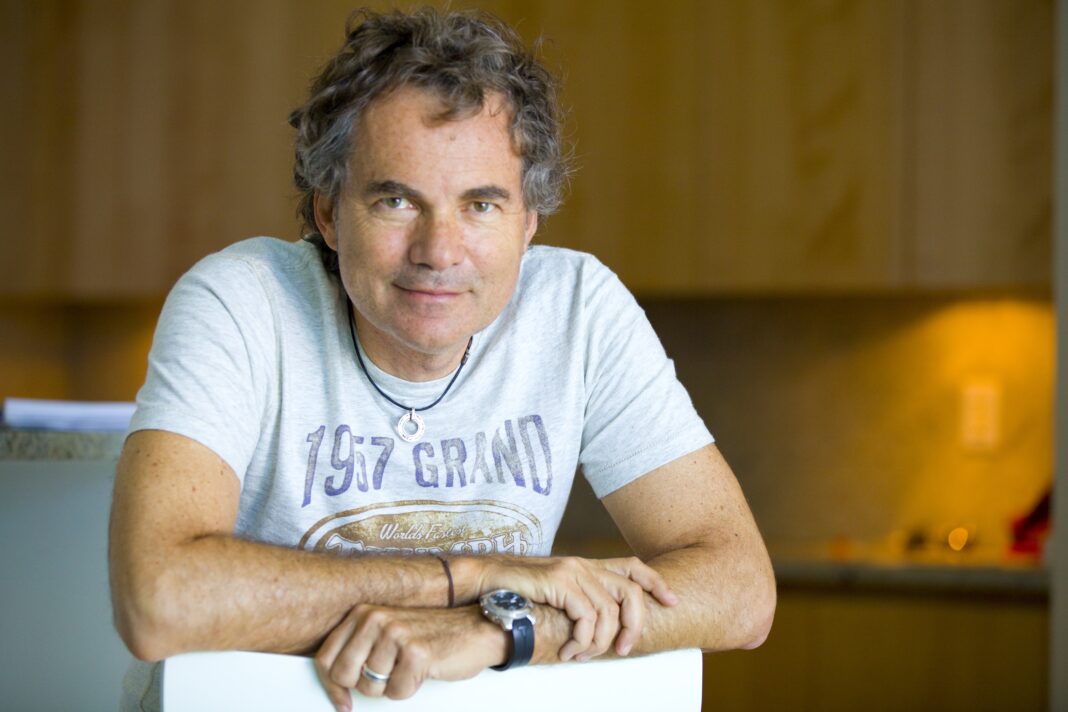
Martin Varsavsky
Martin Varsavsky says he was wrong after peddling solar and millions. Nuclear is the way to go.

Martin Varsavsky, a seasoned entrepreneur behind billion-dollar clean energy exits, says he’s lost faith in the renewable energy paradigm. Moshe Luz, director at Ivanpah, the world’s largest solar thermal power tower project in California’s Mojave Desert, believes just the opposite.

This is more than a disagreement between two experts. It is a flashpoint in a global conversation about how we transition to a clean energy future—whether through sweeping centralized infrastructures or distributed, ecological innovations.

Varsavsky is a Spanish-Argentine entrepreneur known for founding several successful technology and infrastructure ventures, including in the renewable energy sector. He co-founded Eolia Renovables, a large-scale wind and solar power company in Spain, which was sold for €1.1 billion. After Eolia, he went on to co-found Barter Energy, which focused on solar energy communities and rooftop solar installations. Barter Energy was also successfully exited, with the sale announced in May 2025.

From the heights of Spain’s energy revolution, Varsavsky watched solar and wind power go from vision to reality—only to become, in his view, a cautionary tale. In his May 9th post on X, Varsavsky (after cashing out billions, no less) criticized the high environmental cost of large-scale renewables: olive groves uprooted, landscapes marred, ecosystems disrupted. He condemned the dependence on government subsidies, the inefficiency of intermittent sources, and the fragility of Europe’s energy grid.

To Varsavsky, rooftop solar paired with battery storage is the only renewable worth keeping. His newfound allegiance? New nuclear—compact, clean, and capable of delivering baseload power without scarring the Earth. Environmentalists know that nuclear is a dangerous path forward because the local and environmental risks are too great. The Fukushima disaster in Japan was only just in 2011!

He also blasts what he calls “climate alarmism”, suggesting that exaggerated doomsday predictions of the early 2000s justified energy policies that have “impoverished” Europeans while failing to significantly reduce emissions. Germany’s green push, he argues, has become an industrial suicide note. The same alarmism also caused suicide. 

David Anthony, founder of 21Ventures, was a pioneering American investor in Israeli solar energy startups during the late 2000s, partnering with groups like the Quercus Trust to fund early-stage cleantech. He played a key role in shaping Israel’s solar innovation scene but tragically died by suicide in 2012 after what was reported as personal family trauma. His death came at a time when optimism around solar peaked—before global investment slowed and many early-stage companies struggled to scale amid policy uncertainty and falling technology costs. We interviewed David on Green Prophet and he gave us some great tips on how to find innovation to invest in before the rest step in.

But at Ivanpah, Moshe Luz sees a different story unfolding than Varsavsky.

In our recent Green Prophet interview, engineer Moshe Luz emphasized solar thermal’s promise not only for emissions reduction, but for empowering local resilience and economic opportunity. Luz doesn’t pretend Ivanpah is perfect—it has faced challenges, from initial bird mortality to integration issues—but he sees it as a living laboratory, showing how we can move toward decarbonization without waiting decades for nuclear fusion or succumbing to fossil fallback plans.

Where Varsavsky sees environmental destruction, Luz points to carefully managed desert ecosystems, job creation in rural areas, and the profound symbolism of powering millions of homes with focused beams of sunlight. He emphasizes hybrid systems, storage innovation, and smarter grid planning—not abandoning renewables, but evolving them. And government roles in supporting this evolution is important.

Varsavsky’s critique of large-scale renewables as land-hungry and subsidy-dependent is not new. Nor is his appeal to nuclear energy as a clean, scalable alternative. What’s striking is that someone who once built these systems is now disavowing them, adding weight to long-standing criticisms from environmentalists concerned about industrial-scale “green” projects that harm more than they help.

But to lump Ivanpah, or the global community solar movement, into the same basket as Spain’s bulldozed olive groves misses nuance. Ivanpah did not destroy forests. It sits in the Mojave, a place Luz argues is uniquely suited for solar concentration. Its storage and dispatch capabilities, evolving since launch, challenge the very “intermittency” Varsavsky condemns.

And while new nuclear has promise, it remains years away from scale, with unresolved issues around waste, cost, and political will. Even the smallest modular reactors are deeply controversial and the human and environmental cost can be catastrophic when systems fail.

Rather than pit nuclear against solar, or rooftop against grid-scale, what if we designed an energy ecosystem with layers?

Rooftop solar like Powerwall’s home backup reduce grid stress and democratize energy.

Large-scale renewables, thoughtfully deployed, can replace coal and gas at scale.

Next-generation nuclear, if and when it arrives, can fill in the baseload gaps.

The real danger isn’t solar or nuclear—it’s polarization, where each camp is so convinced of its own truth that collaboration becomes impossible.

Varsavsky ends his piece by urging a shift from fear-based policymaking to pragmatic energy design. It’s a sentiment Luz would likely echo. But where Varsavsky sees solar as the problem, Luz sees it as part of the solution. Both are right. Both are wrong. The future will likely need the sun, the atom, the battery, and the commonsense human decision-making.


Karin Kloosterman
Karin Kloostermanhttp://www.greenprophet.com
Karin Kloosterman is an award-winning journalist, innovation strategist, and founder of Green Prophet, one of the Middle East’s pioneering sustainability platforms. She has ranked in the Top 10 of Verizon innovation competitions, participated in NASA-linked challenges, and spoken worldwide on climate, food security, and future resilience. With an IoT technology patent, features in Canada’s National Post, and leadership inside teams building next-generation agricultural and planetary systems — including Mars-farming concepts — Karin operates at the intersection of storytelling, science, and systems change. She doesn’t report on the future – she helps design it. Reach out directly to [email protected]

LEAVE A REPLY

Please enter your comment!
Please enter your name here

TRENDING

Astro uses AI to help procure land for renewable energy

For oil-rich, environmentally vigilant Gulf states, Astro isn’t just another startup story. It is a blueprint for accelerating an energy transition that is now existential, not optional.

How Renewable Energy is Revolutionizing the Way We Power Our World

Solar has become the star of the transition thanks to modular hardware and straightforward installation. It fits dense cities and remote towns alike. Many companies are turning to rooftop arrays and carport systems - and exploring commercial solar installation as a practical way to lock in future savings.

Leading Through a Dual-Energy Transition: Balancing Decarbonisation with Energy Security

Experience in one area of the energy industry isn't enough to guarantee readiness across all the others. That's where a structured program like an MBA in energy can come in. Today's advanced curricula explore energy economics, finance, policy, and strategic management alongside the technical subjects. And when pursuing an energy MBA online, professionals can skill up and retrain without having to step out of the labor market -- an important perk at a time when skilled professionals are already in short supply.

M2PV Capital Targets the American Southwest as Its Launchpad for Off-Grid EV Growth

In the American Southwest, electric vehicles face extreme heat, long travel distances, and limited grid access that expose the real infrastructure gaps behind the EV transition. M2PV Capital is building off-grid charging and power systems designed to operate independently in the region’s most demanding conditions.

What Renewable Energy Means for Long-Term Environmental Planning

In the context of American energy policy (setting the stage for the world as oil prices are in USD), the relevance of renewable energy planning is increasingly evident. Federal agencies are preparing final biofuel blending mandates under the Renewable Fuel Standard, with decisions expected early in 2026 after delays that have left investors and producers in limbo.

Qatar’s climate hypocrisy rides the London Underground

Qatar remains a master of doublethink—burning gas by the megaton while selling “sustainability” to a world desperate for clean air. Wake up from your slumber people.

How Quality of Hire Shapes Modern Recruitment

A 2024 survey by Deloitte found that 76% of talent leaders now consider long-term retention and workforce contribution among their most important hiring success metrics—far surpassing time-to-fill or cost-per-hire. As the expectations for new hires deepen, companies must also confront the inherent challenges in redefining and accurately measuring hiring quality.

8 Team-Building Exercises to Start the Week Off 

Team building to change the world! The best renewable energy companies are ones that function.

Thank you, LinkedIn — and what your Jobs on the Rise report means for sustainable careers

While “green jobs” aren’t always labeled as such, many of the fastest-growing roles are directly enabling the energy transition, climate resilience, and lower-carbon systems: Number one on their list is Artificial Intelligence engineers. But what does that mean? Vibe coding Claude? 

Somali pirates steal oil tankers

The pirates often stage their heists out of Somalia, a lawless country, with a weak central government that is grappling with a violent Islamist insurgency. Using speedboats that swarm the targets, the machine-gun-toting pirates take control of merchant ships and then hold the vessels, crew and cargo for ransom.

Leopoldo Alejandro Betancourt López Turned Ocean Plastic Into Profitable Sunglasses

Few fashion accessories carry the environmental burden of sunglasses. Most frames are constructed from petroleum-based plastics and acrylic polymers that linger in landfills for centuries, shedding microplastics into soil and waterways long after they've been discarded. Leopoldo Alejandro Betancourt López, president of the Spanish eyewear brand Hawkers, saw this problem differently than most industry executives.

Why Dr. Tony Jacob Sees Texas Business Egos as Warning Signs

Everything's bigger in Texas. Except business egos.  Dr. Tony Jacob figured...

Israel and America Sign Renewable Energy Cooperation Deal

Other announcements made at the conference include the Timna Renewable Energy Park, which will be a center for R&D, and the AORA Solar Thermal Module at Kibbutz Samar, the world's first commercial hybrid solar gas-turbine power plant that is already nearing completion. Solel Solar Systems announced it was beginning construction of a 50 MW solar field in Lebrija, Spain, and Brightsource Energy made a pre-conference announcement that it had inked the world's largest solar deal to date with Southern California Edison (SCE).

Related Articles

Popular Categories