

Ethiopia has built a dam on the Nile to meet 60% of its power needs. Downstream countries Sudan and Egypt are furious as this threatens their water supply. They are asking for UN intervention –– or war?
The Nile River as we know it is the large river that floods wide areas of Egypt, allowing for the farming of wheat, beans, cotton and fruit –– and tourism. But the Nile is one of the longest rivers in the world, and one of the two major sources of the mighty Nile starts in Ethiopia at what is known as the Blue Nile at Lake Tana. The Blue Nile is the source of 85% of the Nile water. The second source starts lower down in Uganda and passes through Sudan.
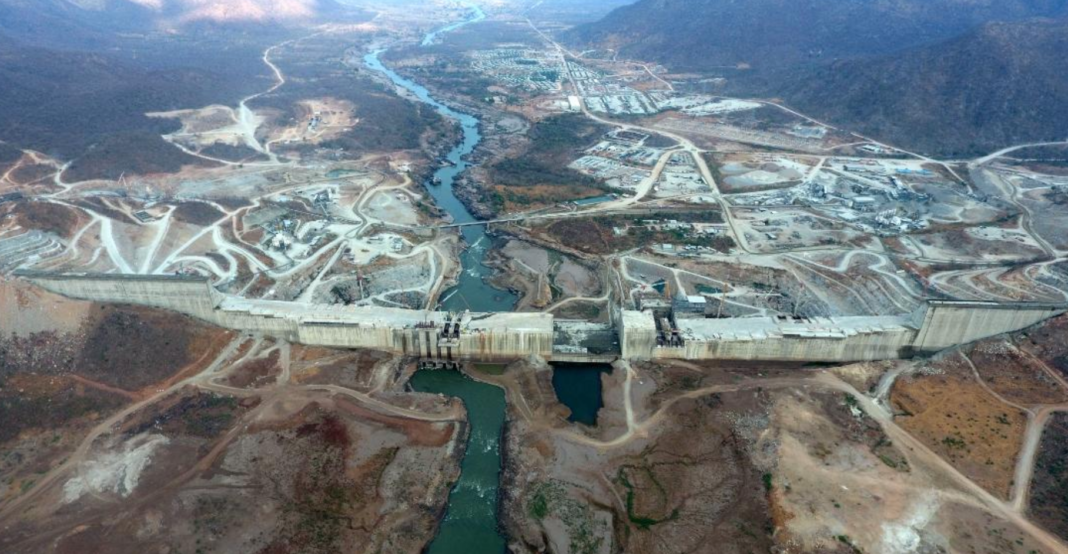
Over the years Ethiopia has been building a dam called the Grand Ethiopian Renaissance Dam (GERD) about 10 miles east of Sudan to supply its energy needs. Ethiopia has been building Africa’s largest hydro-electric dam since 2011. The landlocked country, which I visited this year, has one of the lowest rates of access to modern energy services, with its energy supply primarily based on biomass, followed by oil (5.7%) and hydropower (1.6%).
The main purpose of the GERD in Ethiopia is power generation, and its 13 turbines are expected to produce about 16,000 GWh of electricity annually which will double Ethiopia’s previous output of electricity and provide power to 60% of the country’s population. If you have ever visited Ethiopia you will understand how meaningful this is.

In 2023, Ethiopia filled the GERD reservoir to completion and Egypt, opposed to the GERD project, announced this was a violation of international law.
In the image below via the US Government site USGS you will see the area of GERD before the dam was built, and then a second photo of the water it required to fill the dam area near completion.
Related: this mystery discovery could explain how the pyramids were built
The GERD reservoir is in a deep gorge, so its surface area is relatively small compared to its volume. This means less water will be lost to evaporation than in desert reservoirs. The lake’s capacity is about twice the volume of Lake Mead formed by the Hoover Dam in the United States.
Including the Aswan High Dam in Egypt, which forms Lake Nasser and has the capacity of four times the volume of Lake Mead, two of the world’s largest dams are now on the Nile River system, in two different countries.


But Egypt is not happy about the Ethiopian dam, despite it building its own dam on the Nile: “We are ready to exercise our right to defend and protect the rights and interests of the Egyptian people, in accordance with the UN Charter,” said a warning letter issued to the Ethiopian government, addressed to the President of the UN Security Council and signed by the Egyptian Minister of Foreign Affairs, Badr Abdelatty this month.
Egypt calls for the intervention of the UN in regards to filling of the GERD. Egypt says that Ethiopia is violating previous international agreements: “Egypt is almost entirely dependent on the Nile River for its renewable water resources, that are indispensable for the vital human needs and fundamental rights of Egyptians,” the letter states.
“Even though the Nile River has witnessed consecutive above-average flood seasons in recent years, which has relatively protected Egypt from major harm, the continuation of Ethiopian policies, as announced by the Ethiopian Prime Minister on 26 August 2024, could result in an existential threat to Egypt as well as the rights and interests of the 150 million citizens of both downstream countries, and would consequently jeopardize regional and international peace and security.”
For this reason, Egypt declares that after “having exhausted all amicable means, including those repeatedly resorting to the Security Council, in hopes of persuading Ethiopia to desist from its unlawful unilateral policies and accept any of the existing compromise solutions that balance the interests and rights of all parties, the Government of Egypt, therefore stands ready to exercise its rights to defend and protect the rights and interests of the Egyptian people, in accordance with the United Nations Charter.
“Egypt urges the Security Council to assume its responsibilities under Article 24 of the UN Charter, by taking appropriate measures to ensure that Ethiopia cease its unlawful unilateral practices in the Nile Basin,” the letter concludes.
Egypt recently signed a military agreement with the Somali governments to deploy Egyptian troops in the Horn of Africa which borders Ethiopia.
“Such policies are at odds with the aspiration of most regional countries to enhance cooperation and integration among themselves, instead of sowing seeds of strife and differences between peoples bound by ties of brotherhood and common destiny,” Abdelatty said addressing the UNSC president.
Related: This Turkish dam The Tuzluca Dam threatens biodiversity
Abdelatty said the dam will have “serious negative effects on the two downstream countries” which are Egypt and Sudan.
Is Egypt the pot calling the kettle black? Egypt built the Aswan Dam or the Aswan High Dam, as one of the world’s largest embankment dams, built across the Nile in Aswan, Egypt, between 1960 and 1970. It is about 600 miles from the Sudan border.
Like many other dams in the world, the Aswan dam had negative effects leading to water-borne disease, a rising water table that damaged urban sewer systems, damaging ancient monuments, and it deteriorated agricultural fields. The lack of rich sediment in the water drove high artificial fertilizer use and wiped out fish populations.
Egypt is not an angel in other ecological ways: It disregards the effects of the Suez Canal which is destroying ecosystems in the Mediterranean Sea despite the man-made canal bringing in an estimated $9.4 billion USD (2023) in revenue. Egypt was not abiding by UN law when it allowed for billions of dollars of terror money to siphon into its borders through to Gaza over the last 15 years. And it easily allowed Hamas terrorists to cross into Egypt and fly out of its sovereign borders to countries like Turkey and Qatar.
Egypt’s human rights violations against its people and lower class societies are well-documented.