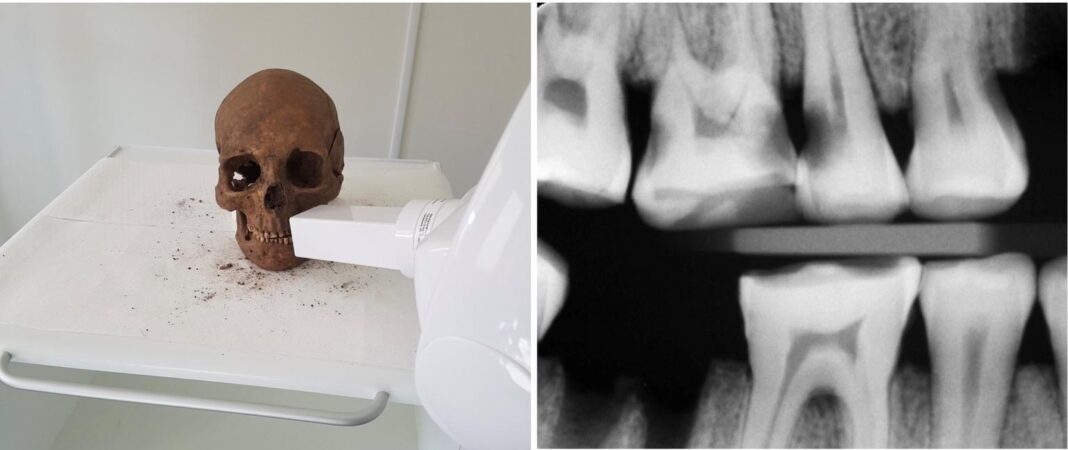


A new study on ancient Viking teeth showed that they modified their teeth for status and possibly beauty. There are signs of advanced dentistry, after scientists study X-rays of Viking teeth
When we sit back and open wide when we visit the dentist, one has to wonder: surely our ancient ancestors didn’t have to do this. Teeth that ached must have been pulled, plain and simple. But research shows something else: teeth found in Viking populations from Sweden showed advanced signs of dental work and modification.
This is according to the University of Gothenburg’s Institute of Odontology. While Vikings did have widespread caries and signs of toothaches, they had dental work and filing in the front of their teeth.
The study looked at 3,293 teeth from 171 individuals among the Viking Age population of Varnhem in Västergötland, Sweden. This particular site is known for extensive excavations of Viking and medieval settlements, including tombs where skeletons and Viking teeth have been preserved well in favorable soil conditions.
The researchers looked at the teeth using today’s dentistry tools and X-rays were performed on the teeth held in an intact skull.
Read Also: 9 ways to make your dental practice green
The results published in the journal PLOS ONE, showed that 49% of the Viking population had one or more cavities. Of the adults’ teeth, 13% were affected by caries – often at the roots. Children with milk teeth – or with both milk and adult teeth – were cavity-free, suggesting the diet then didn’t erode their teeth.

But Vikings showed advanced and new ways of modifying their teeth: “There were several signs that the Vikings had modified their teeth, including evidence of using toothpicks, filing front teeth, and even dental treatment of teeth with infections,” says Carolina Bertilsson, a dentist and Associate Researcher, and an author in the study.
The researchers found molars with filed-down holes, from the crown of the tooth down into the pulp to relieve pressure and alleviate toothaches from infection.

Bertilsson added: “This is very exciting to see, and not unlike the dental treatments we carry out today when we drill into infected teeth. The Vikings seem to have had knowledge about teeth, but we don’t know whether they did these procedures themselves or had help.”