
Diamonds can be made in a lab so perfectly that jewellers can’t tell the difference between a real and a fake. But a new cache of gemstones has been identified out of this world, on Mars, and these might be a kind of opal that only the red planet can produce. And the promise of opal, could mean water for future Martians.
A research team discovered the opals on the Martian surface using new methods from old data collected by NASA’s Curiosity rover. They verified opal, potentially serving as an important resource for human exploration.
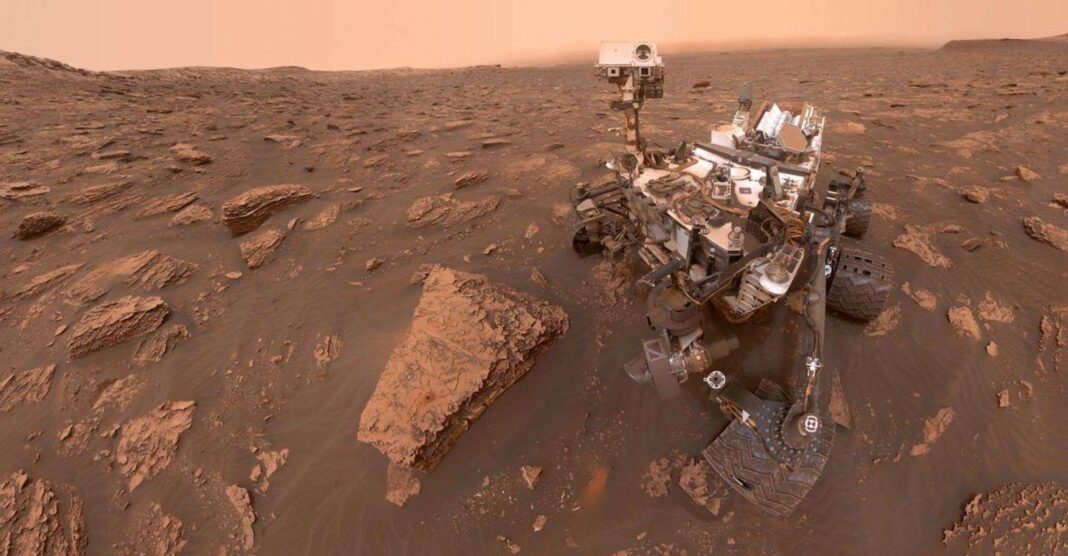
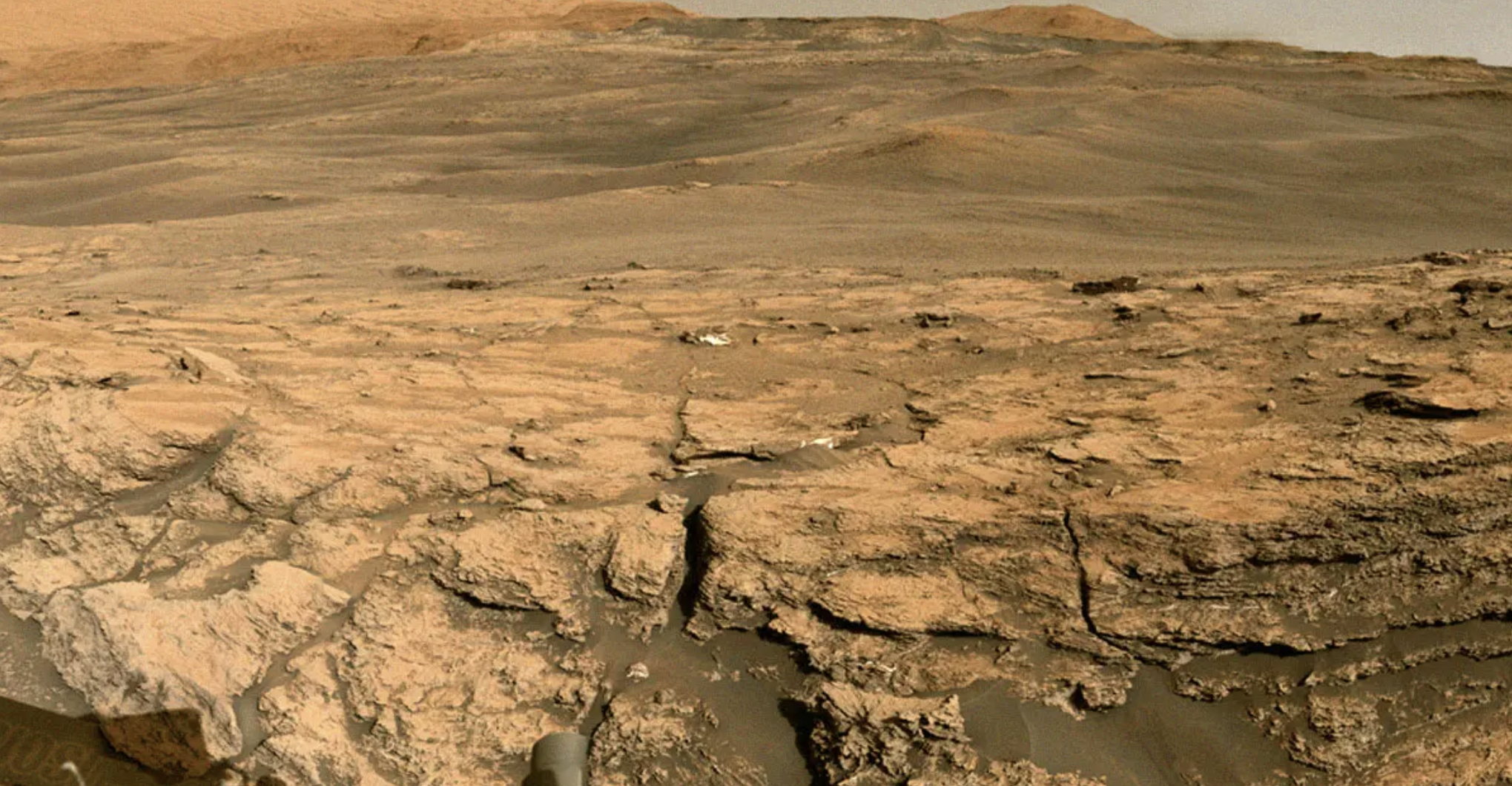
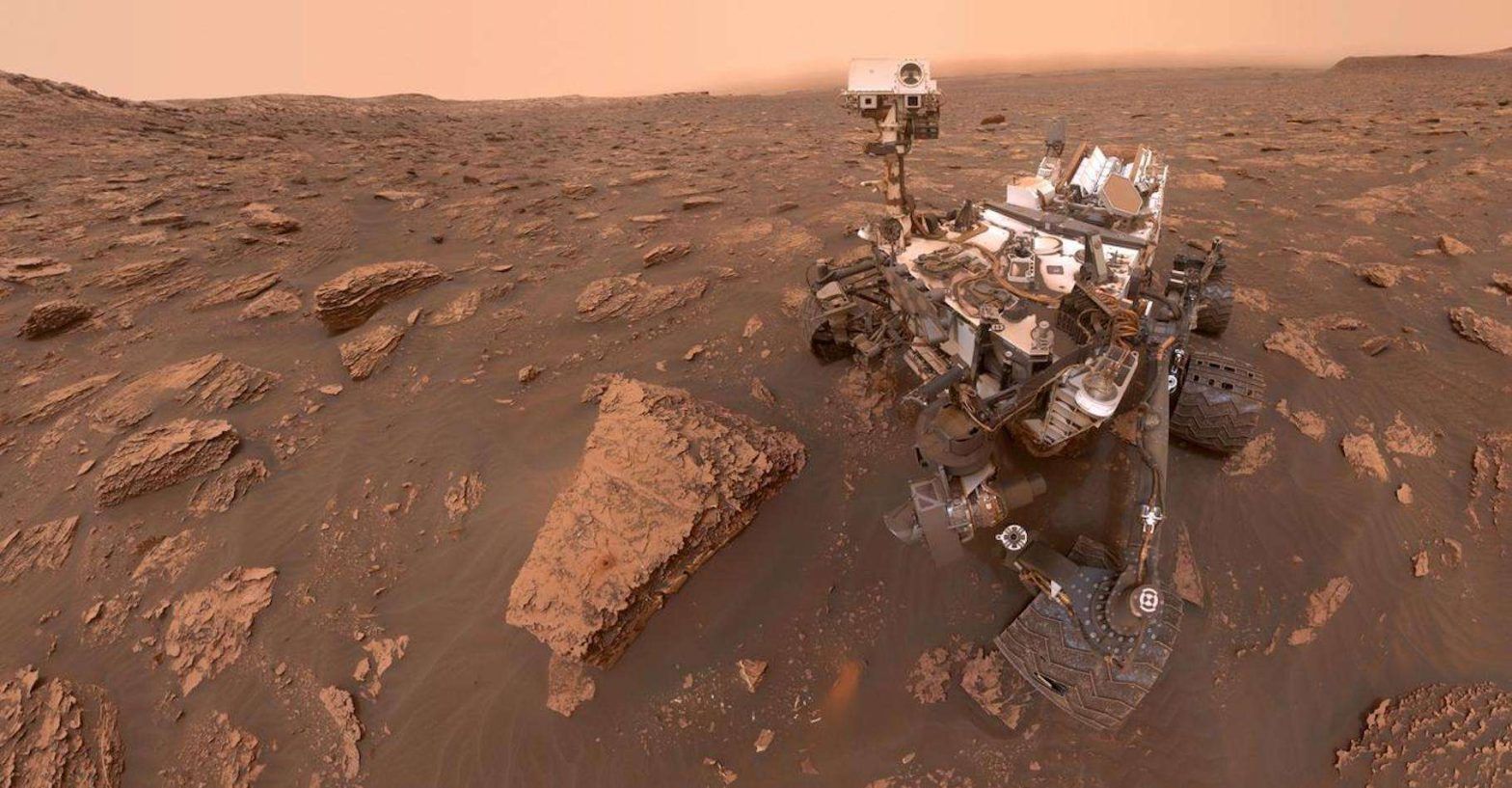
In 2012, NASA sent the Curiosity rover to Mars to explore Gale Crater, a large impact basin with a massive, layered mountain in the middle. As Curiosity has traversed along the Mars surface, researchers saw light-toned rocks surrounding fractures that criss-cross certain parts of the Martian landscape, sometimes extending out far into the horizon of rover imagery.

Recent research into these rocks finds that these widespread halo networks served as one of the last, if not the last, water-rich environments in a modern era of Gale Crater. This water-rich environment in the subsurface would have also provided more habitable conditions when conditions on the surface were likely much more harsh.
As part of a new study published in the Journal of Geophysical Research: Planets, led by former Arizona State University NewSpace Postdoctoral Fellow Travis Gabriel, now a research physicist at the U.S. government, archival data from several instruments were examined and showed considerable anomalies near light-toned rocks earlier in the traverse.
Curiosity rover drove right over one of these fracture halos many years ago, long before Gabriel and ASU graduate student and co-author Sean Czarnecki joined the rover team.
“Our new analysis of archival data showed striking similarity between all of the fracture halos we’ve observed much later in the mission,” Gabriel said. “Seeing that these fracture networks were so widespread and likely chock-full of opal was incredible.

The path of opals on Mars
Gabriel and his team of researchers studied the composition of light-colored rocks surrounding the fractures on the ground, or fracture halos, in Gale Crater. Previous studies Gabriel was involved in used the rover’s laser-induced breakdown spectrometer, Chemistry and Camera, or ChemCam, to show that these halos may be composed of opal, a material that has important implications for the history of Gale Crater.
Opal itself contains a large amount of water, which produced a strong signal in another instrument on the rover: the DAN spectrometer.
Observing drill cores taken at the Buckskin and Greenhorn drill sites many years into the mission, scientists confirmed that these light-toned rocks were very unique compared to anything the team had seen before.
“These light-toned rocks were lighting up in our neutron detector, producing anomalously high thermal neutron count rates,” Gabriel said.
In addition to looking back through archival data, Gabriel and his team went searching for opportunities to study these light-toned rocks again. Once they arrived at the Lubango drill site, a bright-toned fracture halo, Gabriel led a dedicated measurement campaign using the neutron spectrometer, confirming the opal-rich composition of fracture halos.
The discovery of opal is noteworthy as it can form in scenarios where silica is in solution with water, a similar process to dissolving sugar or salt in water. If there is too much salt, or conditions change, it begins to settle at the bottom. On Earth, silica falls out of solution in places like lake and ocean bottoms and can form in hot springs and geysers, somewhat similar to the environments at Yellowstone National Park.
Water-rich environments in the subsurface of Mars could have provided a safe haven from the harsh conditions on Mars’ surface, which is rather inhospitable compared to Earth. In Gale Crater, temperatures can go below minus 100 degrees Fahrenheit in the winter night time, reaching only up to roughly 30 degrees Fahrenheit in the warmest of afternoons. Gale crater also experiences far more radiation than the surface of Earth due to our much thicker atmosphere. Every day spent in Gale crater would expose you to a cosmic-source radiation dose that roughly equates to a daily pelvis X-ray.
Since scientists expect that this opal in Gale Crater was formed in a modern Mars era, these subsurface networks of fractures could have been far more habitable than the harsh modern-day conditions at the surface.
“Given the widespread fracture networks discovered in Gale Crater, it’s reasonable to expect that these potentially habitable subsurface conditions extended to many other regions of Gale Crater as well, and perhaps in other regions of Mars,” Gabriel said. “These environments would have formed long after the ancient lakes in Gale Crater dried up.”
The significance of finding opal on Mars will have advantages for future astronauts, and exploration efforts could take advantage of these widespread water resources. Opal itself is made up of predominantly two components: silica and water, with minor amounts of impurities such as iron. Since opal is not a mineral, the water is not bound as tightly within a crystal structure. This means that if you grind it down and apply heat, the opal releases its water. In a previous study, Gabriel and other Curiosity rover scientists demonstrated this exact process.
Although Gabriel and his team aren’t able to perform an exhaustive assessment of the water content in all halos, the dedicated neutron experiments they performed over two of these halos demonstrate that a single-meter halo could house roughly one to 1.5 gallons of water in the top foot of the surface.