Trojan Male Mosquitoes Created by Science to Wipe Out Disease

trojan mosquito
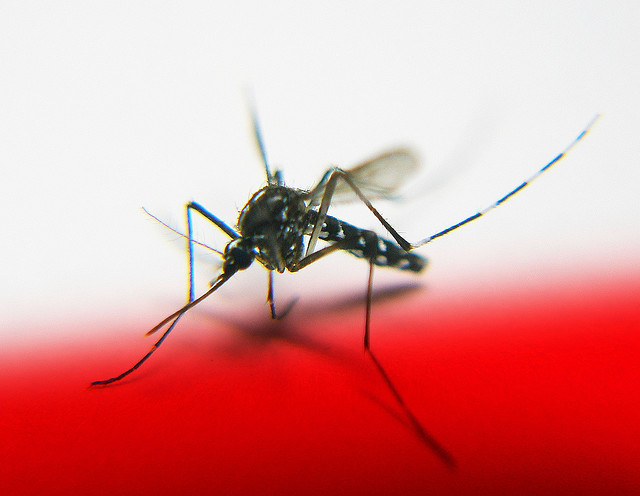
Mosquitoes. Those pesky creatures that suck your blood and if you are lucky, just make you scratch. They do have one major negative role, however, – as airborne carriers of serious diseases from malaria to Zika. They congregate around water, from little puddles to large lakes.
 
Since covering our water sources in pesticides is not possible anymore (we know about the health effects) eradication is difficult. Scientists from Israel’s Ben-Gurion University who call themselves FlyGEM, has come up with a genetically engineered solution – have the males transfer a bacteria to the females which produces a poison that kills mosquito larvae shortly after birth. The team and their advisors have filed a patent on the idea after competing for a solution to presentat the the iGEM Competition – an international team competition to promote synthetic biology held annually in Boston.
 
The meeting is a good motivator for getting a group of undergraduate students to brainstorm and then experiment with unique out-of-the-box ideas on a tight one-year deadline. Past teams have focused on the plastic problem, on ALS and other diverse topics.
 
FlyGEM decided to tackle the problem of mosquitoes. During their literature review, the young scientists  found that there is a bacteria in the mosquito’s gut called BTI, which, when activated, produces a poison that only kills mosquito larvae. The problem was how to get it to the larvae. Infecting female mosquitoes was out of the question – it’s illegal to release female mosquitos into the wild in Israel, as it is in most countries, because they’re airborne disease vectors.
 
So, the team was faced with how to get the poison to the larvae through the males. They tweaked the male mosquito’s gut microbiome to express BTI and then sent it on its way to find and mate with the females. The females then put the bacteria on the eggs, and when the larvae are born, most of them die. What’s more, the other larvae eat the dead ones, the team discovered, and then die themselves.
 
Since the poison comes from the mosquito’s own gut and is only lethal to other mosquitos, the students feel they have discovered a delivery mechanism that far surpasses current human-orchestrated ones based on pesticides.
 
The team is advised by Prof. Lital Alfonta and Dr. Ramon Birnbaum of the Department of Life Sciences. The students also consulted Prof. Uri Abdu and Prof. (Emer.) Arieh Zaritsky of the Department of Life Sciences and Dr. Ido Tzurim and Prof. Eitan Ben-Dov of Achva College.
 
Team leader Mey Tal Banar, “After an incredible year, I am a great believer in the project and the product that we will present: a targeted, innovative method that could replace the current methods of global mosquito control. I want to thank the project’s executive team, our advisors and the teaching assistants. Without their guidance and support, we would not have gotten this far. And our thanks to the department and to the University for the opportunity to participate in this challenging international competition.”
 
Prof. Lital Alfonta, one of the project’s advisors, “The students’ progress over a single year has been impressive and unusual. After a further pilot project in urban areas to test out our method, there is a good chance that this will become humanity’s next biological pest control method. For now, we have focused on a single type of mosquito, Aedes aegypti, [that can spread dengue fever, chikungunya, Zika fever, Mayaro and yellow fever], but we have the ability to target other disease-carrying mosquitoes.”
 
Karin Kloosterman
Karin Kloostermanhttp://www.greenprophet.com
Karin Kloosterman is an award-winning journalist, innovation strategist, and founder of Green Prophet, one of the Middle East’s pioneering sustainability platforms. She has ranked in the Top 10 of Verizon innovation competitions, participated in NASA-linked challenges, and spoken worldwide on climate, food security, and future resilience. With an IoT technology patent, features in Canada’s National Post, and leadership inside teams building next-generation agricultural and planetary systems — including Mars-farming concepts — Karin operates at the intersection of storytelling, science, and systems change. She doesn’t report on the future – she helps design it. Reach out directly to [email protected]

LEAVE A REPLY

Please enter your comment!
Please enter your name here

TRENDING

Astro uses AI to help procure land for renewable energy

For oil-rich, environmentally vigilant Gulf states, Astro isn’t just another startup story. It is a blueprint for accelerating an energy transition that is now existential, not optional.

The Science Behind How Elite Marathon Runners Train

Discover the science behind elite marathon training. Explore techniques, nutrition, and mental strategies that propel top runners to success.

Earth building with Dead Sea salt bricks

Researchers develop a brick made largely from recycled Dead Sea salt—offering a potential alternative to carbon-intensive cement.

The Christ’s thorn (sidr tree) is also a well-known folk medicine

Christ’s thorn jujube (Ziziphus spina-christi) also known as the sidr tree is a real, identifiable tree native to the Middle East, and it appears—directly or indirectly—in Islam, Judaism, and later Christian tradition. The connections between the three faiths are not theological agreements but overlapping uses, names, and symbolic associations rooted in the same landscape.

Farm To Table Israel Connects People To The Land

Farm To Table Israel is transforming the traditional dining experience into a hands-on journey.

Qatar’s climate hypocrisy rides the London Underground

Qatar remains a master of doublethink—burning gas by the megaton while selling “sustainability” to a world desperate for clean air. Wake up from your slumber people.

How Quality of Hire Shapes Modern Recruitment

A 2024 survey by Deloitte found that 76% of talent leaders now consider long-term retention and workforce contribution among their most important hiring success metrics—far surpassing time-to-fill or cost-per-hire. As the expectations for new hires deepen, companies must also confront the inherent challenges in redefining and accurately measuring hiring quality.

8 Team-Building Exercises to Start the Week Off 

Team building to change the world! The best renewable energy companies are ones that function.

Thank you, LinkedIn — and what your Jobs on the Rise report means for sustainable careers

While “green jobs” aren’t always labeled as such, many of the fastest-growing roles are directly enabling the energy transition, climate resilience, and lower-carbon systems: Number one on their list is Artificial Intelligence engineers. But what does that mean? Vibe coding Claude? 

Somali pirates steal oil tankers

The pirates often stage their heists out of Somalia, a lawless country, with a weak central government that is grappling with a violent Islamist insurgency. Using speedboats that swarm the targets, the machine-gun-toting pirates take control of merchant ships and then hold the vessels, crew and cargo for ransom.

Leopoldo Alejandro Betancourt López Turned Ocean Plastic Into Profitable Sunglasses

Few fashion accessories carry the environmental burden of sunglasses. Most frames are constructed from petroleum-based plastics and acrylic polymers that linger in landfills for centuries, shedding microplastics into soil and waterways long after they've been discarded. Leopoldo Alejandro Betancourt López, president of the Spanish eyewear brand Hawkers, saw this problem differently than most industry executives.

Why Dr. Tony Jacob Sees Texas Business Egos as Warning Signs

Everything's bigger in Texas. Except business egos.  Dr. Tony Jacob figured...

Israel and America Sign Renewable Energy Cooperation Deal

Other announcements made at the conference include the Timna Renewable Energy Park, which will be a center for R&D, and the AORA Solar Thermal Module at Kibbutz Samar, the world's first commercial hybrid solar gas-turbine power plant that is already nearing completion. Solel Solar Systems announced it was beginning construction of a 50 MW solar field in Lebrija, Spain, and Brightsource Energy made a pre-conference announcement that it had inked the world's largest solar deal to date with Southern California Edison (SCE).

Related Articles

Popular Categories