

While everyone is entitled to their own opinions, we are not entitled to our own facts—and the facts strongly support the thesis that we are destroying the environment and jeopardizing the well-being of future generations. However, this massive level of ignorance about the ecosystem is not an accident; it is engineered. Due to vested corporate interests, the public has been routinely misinformed about a large spectrum of sustainability issues.
As someone working in the green industry, whether as a scientist or a business person, your biggest challenge when it comes to championing the idea of creating a sustainable future is the high level of ignorance you face when you propose your academic ideas or your green projects. As a result, you must do your research for whatever green idea or project you are working on. The only way that you will be able to be heard is if you can back up your ideas with hard evidence.
Here, then, are 4 ideas to help you get better at researching green topics:
- Solicit the support of eco-friendly corporations.
Many corporations are sensitive to environmental issues and are doing their part to help create a sustainable future. Using a resource like CorporateOfficeHQ, you can find their phone numbers, addresses, and other contact information. These corporations may be willing to support your project.
- Reference well-known publications to drive your point home.
Let’s suppose your project involves decreasing the use of plastic bags and increasing the use of biodegradable materials for everyday packing needs. Your challenge is that despite the fact that the global ocean plastic problem has now become a serious threat to oceanic life, grocery stores throughout the United States continue to hand out plastic bags regularly to their customers. Neither the store owners nor the customers appear to be aware that these plastic bags often end up in landfills or getting dumped into the oceans where they fail to disintegrate. So, how do you dissuade people from using plastic bags? Reference credible sources like National Geographic that have articles about how there is now a plastic garbage patch larger than the country of Mexico floating in the Pacific ocean.

- Use visuals to illustrate your quantitative data.
It’s not enough to make your case using only qualitative information, you must also quantify your research. However, simply talking about numbers isn’t going to get through to your audience. So start making numbers easier to understand through the use of pie charts, bar graphs, and other ways of “illustrating” quantities. Visuals will allow you to get your point across.

- Interview authorities in your field.
While you can theoretically get all your data through the Internet and through the libraries, your research will have the quality of seeming more authentic if you do more than simply have a long list of citations. By talking to people who are authorities in the field you are researching, your audience will be far more receptive to your ideas.
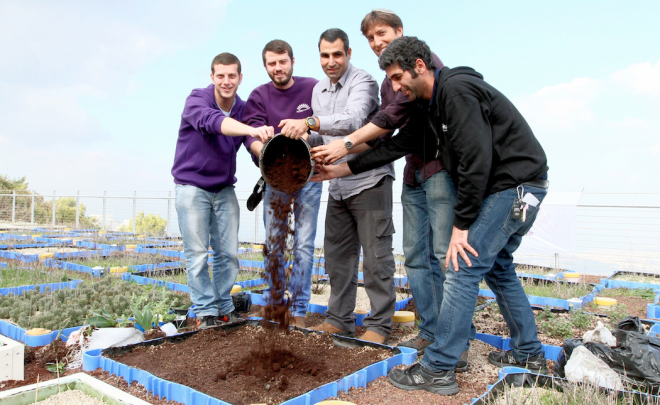
For instance, let’s suppose you wanted to start a green roofing business. One way to sell your business idea to clients would be to simply list out your researched list of benefits. However, you would really drive your point home if you discussed how the University of Haifa is researching green roof technology in the Middle East where temperatures are high and water is scarce. But instead of simply referencing the literature about the University’s project, you would have more of an impact on your target audience if were to interview a few of the professor’s in charge of researching the efficacy of green roofs in the Middle East and quote them in your presentations.
- Present your findings in plain English.
Since the ultimate purpose of your research is to deliver a convincing presentation, either in the form of a white paper, a book, or a talk, you have to communicate your ideas in the clearest way possible. In order to reach a broader audience, you will have to simplify your language. According to the Clear Language Group, the average American adult reads at a 7th to 8th-grade level. Consequently, you will have to limit your vocabulary and length of sentence structure in both your written and oral communication. This can be quite a challenge for you if you are someone who thinks, reads, and writes at a university level.
In conclusion, it’s not enough to simply express your ideas when involved in educating the general public about your green project. You also have to back up your ideas with research, even though the truth about how we are systematically wrecking our world is hiding in plain sight.




[…] Read More… […]