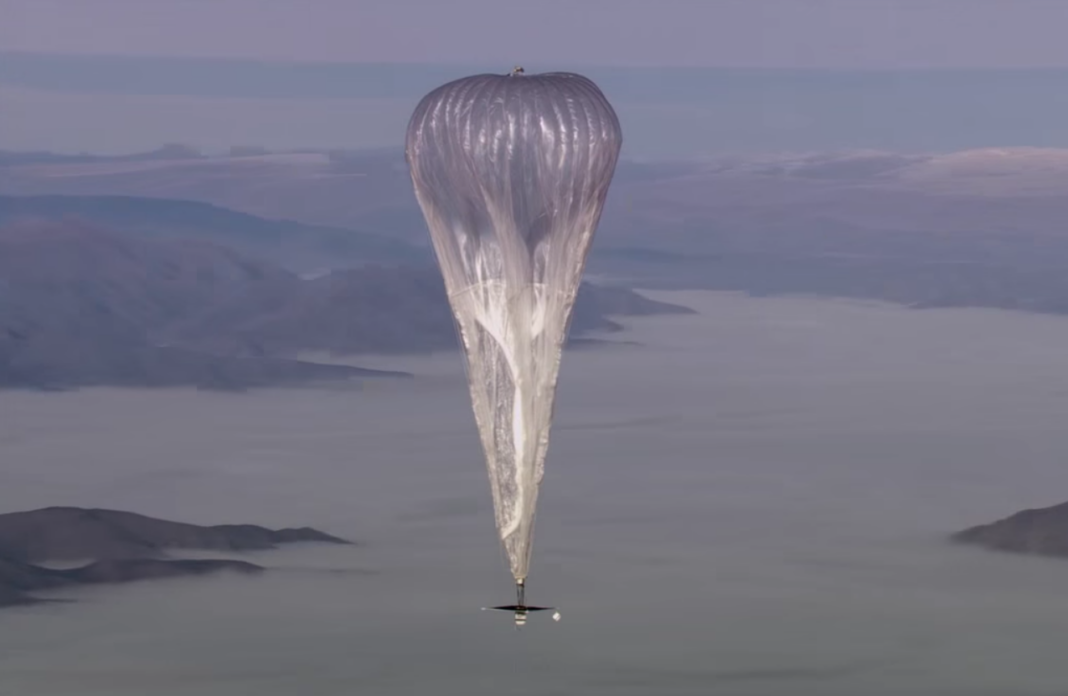
Project Loon launches balloon-based internet into the stratosphere

project loon brings internet to people all over the world

Two of three people in the world don’t have internet access. That means 2 out of 3 people can’t Google whatever they imagine. They can’t connect to Facebook, they can’t use Instagram and then there are the basics like banking, education, healthcare. Imagine doing anything today without internet?

project loon brings internet to people all over the world

High altitude balloons invented by Google’s elite Alphabet group and named Project Loon will do just that. The company is building high altitude balloons that fly in the stratosphere to deliver Internet to all.

project loon brings internet to people all over the world

Project Loon balloons are designed and manufactured at scale to survive the conditions in the stratosphere, where winds can blow over 100 km/hr and the thin atmosphere offers little protection from UV radiation and dramatic temperature swings which can reach as low as -90°C.
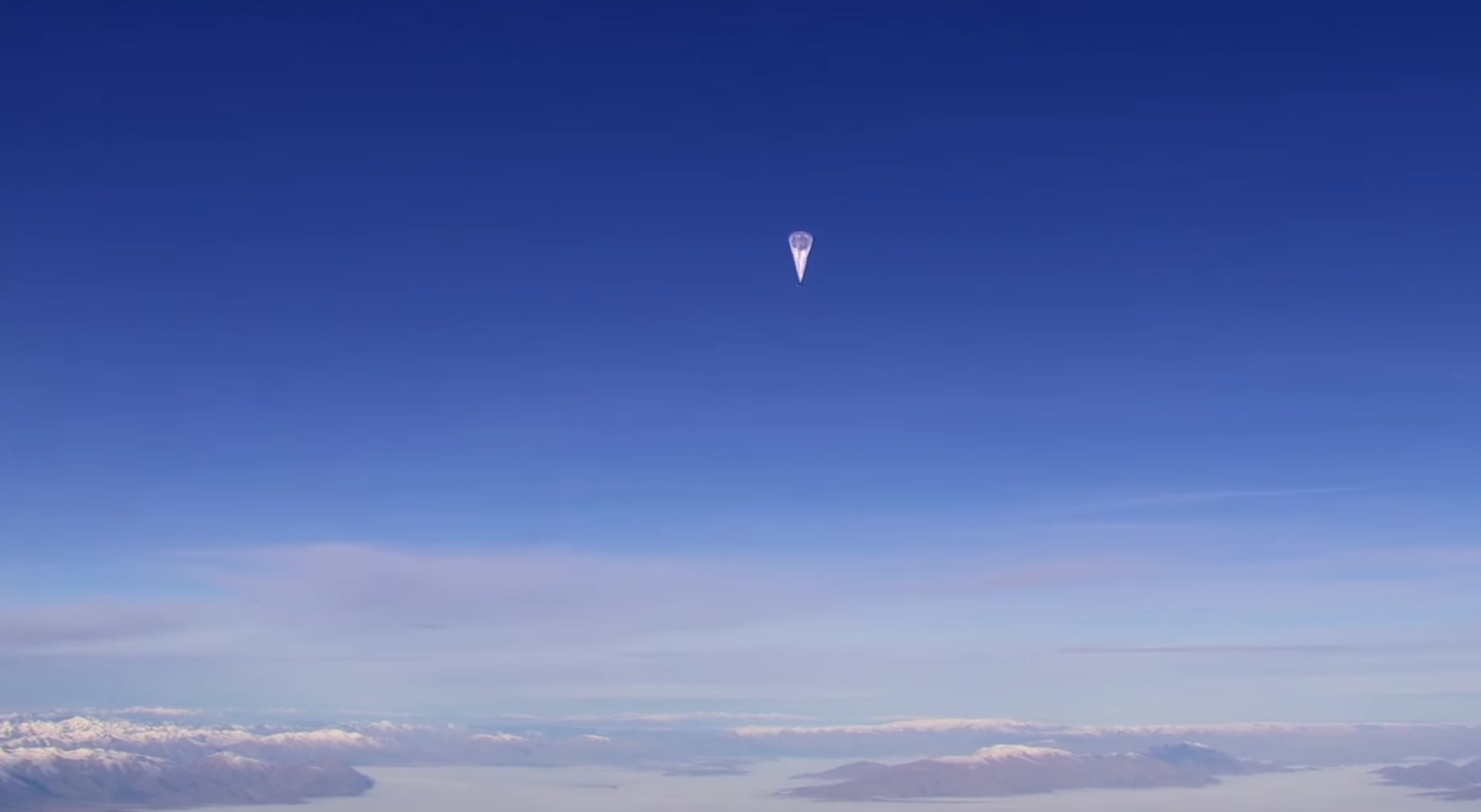
project loon brings internet to people all over the worldMade from sheets of polyethylene, each tennis court sized balloon is built to last more than 100 days in the stratosphere before returning to the ground in a controlled descent.

https://www.youtube.com/watch?v=HOndhtfIXSY

Project Loon has taken the most essential components of a cell tower and redesigned them to be light enough and durable enough to be carried by a balloon 20 km up in the stratosphere. All the equipment is highly energy-efficient and is powered entirely by renewable energy – with solar panels powering daytime operations and charging a battery for use during the night.

Their custom-built Autolaunchers are designed to launch Loon balloons safely and reliably at scale. Huge side panels provide protection from the wind as the balloon is filled and lifted into launch position, and then the crane is pointed downwind to smoothly release the balloon up into the stratosphere. Each crane is capable of filling and launching a new balloon into the Loon network every 30 minutes.

The signals are like Wi-Fi boosters that pass the internet signals from one balloon to the next.

https://www.youtube.com/watch?v=gwkmOE8dkvw

In New Zealand they are working with Vodaphone to pilot the technology. Project updates suggest that progress is being made despite Google cutting back on the idea.

From TechCrunch: “When Google launched Project Loon a few years ago, the plan was to provide internet access to underserved areas with the help of a series of balloons that would constantly circumnavigate the earth. When one balloon moved out of range, another would move in behind it. Today, Google is still Google but it’s also Alphabet — and as Alphabet’s “Captain of Moonshots” at X Astro Teller explained today, the team recently found a way to keep the Loons in one spot for an extended time, and that will likely be how the company will operate its Loon-based internet service in the future.

“That means Project Loon will be able to work with significantly fewer balloons in flight at any given time. According to Teller, the team hit upon the algorithm that makes this work almost by accident.

“By early 2016, the team was seeing a few balloons behave in a slightly weird way: lingering in an area rather than sailing away,” he writes in today’s announcement. “In the weirdness, they saw opportunity. They asked themselves the once-impossible question: could our algorithms help the balloons to stay much closer to the location they were already in?””


Karin Kloosterman
Karin Kloostermanhttp://www.greenprophet.com
Karin Kloosterman is an award-winning journalist, innovation strategist, and founder of Green Prophet, one of the Middle East’s pioneering sustainability platforms. She has ranked in the Top 10 of Verizon innovation competitions, participated in NASA-linked challenges, and spoken worldwide on climate, food security, and future resilience. With an IoT technology patent, features in Canada’s National Post, and leadership inside teams building next-generation agricultural and planetary systems — including Mars-farming concepts — Karin operates at the intersection of storytelling, science, and systems change. She doesn’t report on the future – she helps design it. Reach out directly to [email protected]

Hot this week

Why Health Systems Are Reaching a Turning Point

Health emerges from a continuous energy and material flow from water through food to human physiology. Technical energy systems support this cycle through water treatment, agriculture, and infrastructure.

Sustainability That Sells: How Profit and Purpose Come Together in the Hive

Whether you are a commercial grower, hobbyist beekeeper or retail equipment supplier, this system opens a new income stream with minimal environmental impact.

The Fitness App Revolution: Building the Future of Wellness Through Strategic Development

In an era where smartphones are ubiquitous and health consciousness is at an all-time high, the fitness industry has undergone a radical digital transformation. Fitness applications have moved far beyond simple pedometers, evolving into comprehensive wellness platforms that serve as personal trainers, nutritionists, and community hubs right in our pockets.

A Brief History of Basil From India to Italy

Beloved, fortunate, sweet, and royal; an herb with a long and storied history in Asia and across the world. Called by many names, basil has featured in previous Green Prophet articles, so enjoy another serving, a brief history of basil.

How Renewable Energy is Revolutionizing the Way We Power Our World

Solar has become the star of the transition thanks to modular hardware and straightforward installation. It fits dense cities and remote towns alike. Many companies are turning to rooftop arrays and carport systems - and exploring commercial solar installation as a practical way to lock in future savings.

Topics

Why Health Systems Are Reaching a Turning Point

Health emerges from a continuous energy and material flow from water through food to human physiology. Technical energy systems support this cycle through water treatment, agriculture, and infrastructure.

Sustainability That Sells: How Profit and Purpose Come Together in the Hive

Whether you are a commercial grower, hobbyist beekeeper or retail equipment supplier, this system opens a new income stream with minimal environmental impact.

The Fitness App Revolution: Building the Future of Wellness Through Strategic Development

In an era where smartphones are ubiquitous and health consciousness is at an all-time high, the fitness industry has undergone a radical digital transformation. Fitness applications have moved far beyond simple pedometers, evolving into comprehensive wellness platforms that serve as personal trainers, nutritionists, and community hubs right in our pockets.

A Brief History of Basil From India to Italy

Beloved, fortunate, sweet, and royal; an herb with a long and storied history in Asia and across the world. Called by many names, basil has featured in previous Green Prophet articles, so enjoy another serving, a brief history of basil.

How Renewable Energy is Revolutionizing the Way We Power Our World

Solar has become the star of the transition thanks to modular hardware and straightforward installation. It fits dense cities and remote towns alike. Many companies are turning to rooftop arrays and carport systems - and exploring commercial solar installation as a practical way to lock in future savings.

How does one start prepping?

Faced with an extreme winter storm this year, Americans wonder how to be prepared for catastrophe. Miriam has lived through wars in the Middle East - so she's prepared on giving you a guide to prepping.

Fishermen sue tire manufacturers on behalf of the salmon

A federal trial in San Francisco has brought US tire manufacturers, fishing groups, and environmental scientists into court over a chemical most drivers have never heard of — but which scientists say may be silently reshaping aquatic ecosystems.

Listening to Water: Tarek Atoui’s Next Work for Tate Modern

Born in Beirut, Lebanon in 1980 and now living in Paris, Atoui has spent years building instruments that don’t sit comfortably in concert halls. Many of them involve water, glass, and ceramics — materials that react to sound instead of simply producing it.

Related Articles

Popular Categories