

 Ever have a salad that was out of this world?
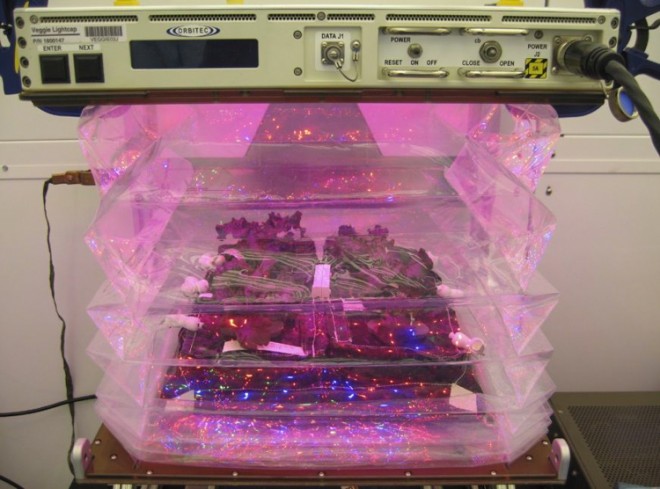
Astronauts aboard International Space Station (ISS) Expedition 44 have. They just dined on the only lettuce ever cultivated without an atmosphere. The produce grew inside “Veggie”, a tiny greenhouse about the size of a computer monitor. Specifically designed for microgravity environments, the technology can potentially benefit food production across the Middle East.
“This is huge!,” said Paul Zamprelli, spokesman for Wisconsin-based Orbitec, the tech company responsible for the unit. Their climate-controlled Veg-01 space farm, which uses a system of multicolored LED lights to stimulate growth, gives astronauts on future deep space missions a means to grow their own food.
Veggie has been on ISS 44 for more than a year. The seeds floated in orbit for 15 months before being planted in July, but first harvests were off-limits for human consumption. The first lettuce leaves returned to Earth for testing for contaminates and to allow scientists to study root distribution for larger scale application. When analysis found no problems, the greens were green-lighted as food.
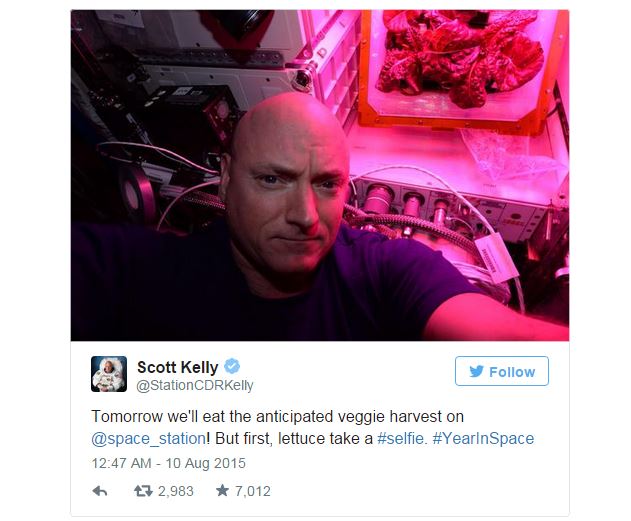
“The plants were…cleaner than those purchased at a grocery store,” NASA spokeswoman Stephanie Schierholz said in a press conference. The latest crop took 33 days to grow. Half the harvest was frozen to be sent back to Earth for more testing. NASA is also experimenting with plant production techniques to grow tomatoes and peppers.
[youtube]https://youtu.be/c1Gxn_nfgWA[/youtube]
The ISS is 200 to 220 miles from Earth. Consider that the moon is more than 225,000 miles away and Mars is a 140 million mile journey; a round-trip to the Red Planet could take three years. “We need to be able to … reduce our reliance on Earth in terms of supplies,”said Schierholz, “At the same time, “if you’re on a three-year trip, having something like home-grown food is important, both nutritionally and psychologically.”
Space tech can transfer to Middle East food production.
Orbitec is working on a larger, more advanced plant habitat for NASA, scheduled to be working before 2017. “We’ve got a full dietary plan (including) lettuce, radishes and tomatoes. Most everything we grow on Earth, we can grow up there,” Zamprelli said. The company, which develops products for space use, is expanding its research to flowers, with a focus on how they pollinate within a zero-gravity state. New findings will be applied to future fruit cultivation in space.
(Related: flux gadget uses crowd wisdom to grow better food)
As with most NASA research, these new discoveries will apply to life on Earth too. Zamprelli anticipates that advancements in space farming will help with terrestrial gardening, specifically with agriculture in inhospitable earth climates. As example, Dubai imports nearly 99 percent of all its fruits and vegetables, statistics shared by many Arab nations.
Burying growth units deep below ground will mitigate punishing heat conditions, while allowing greenhouses to tap into abundant regional sunshine and desalinated water supplies. It’s technology that could be applied to Gulf nations from Qatar to Saudi Arabia.
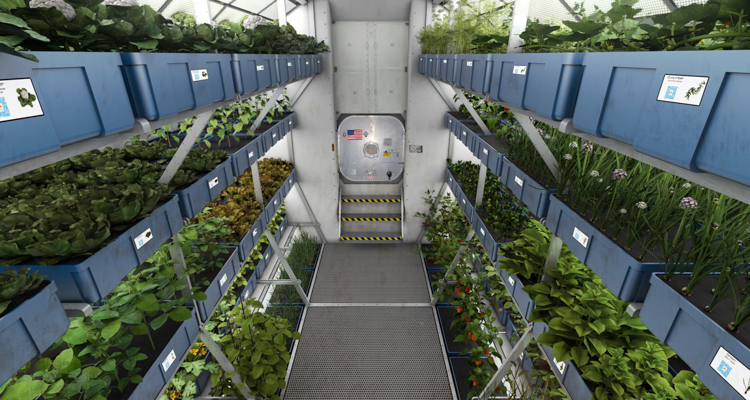
NASA asserts that fresh green produce helps protect humans against radiation in space, and could also significantly improve their mental health. Gardening could also improve well-being by giving astronauts a hobby with strong ties to Earth.
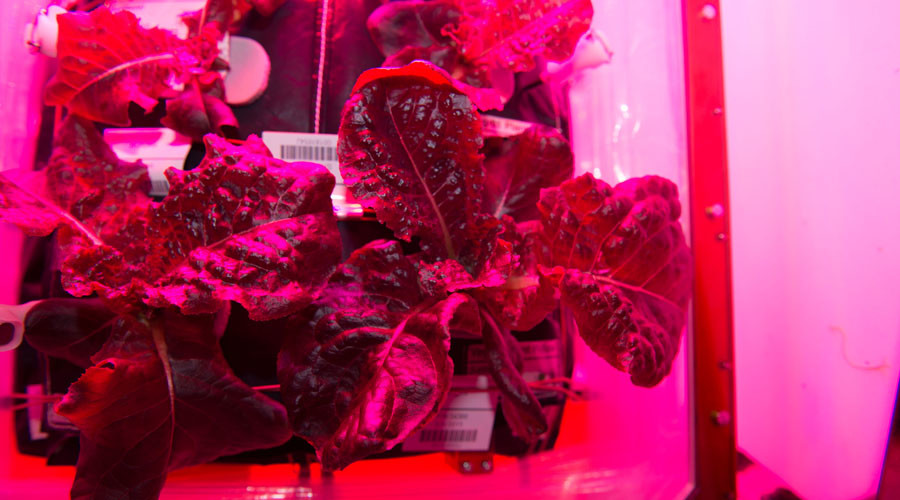
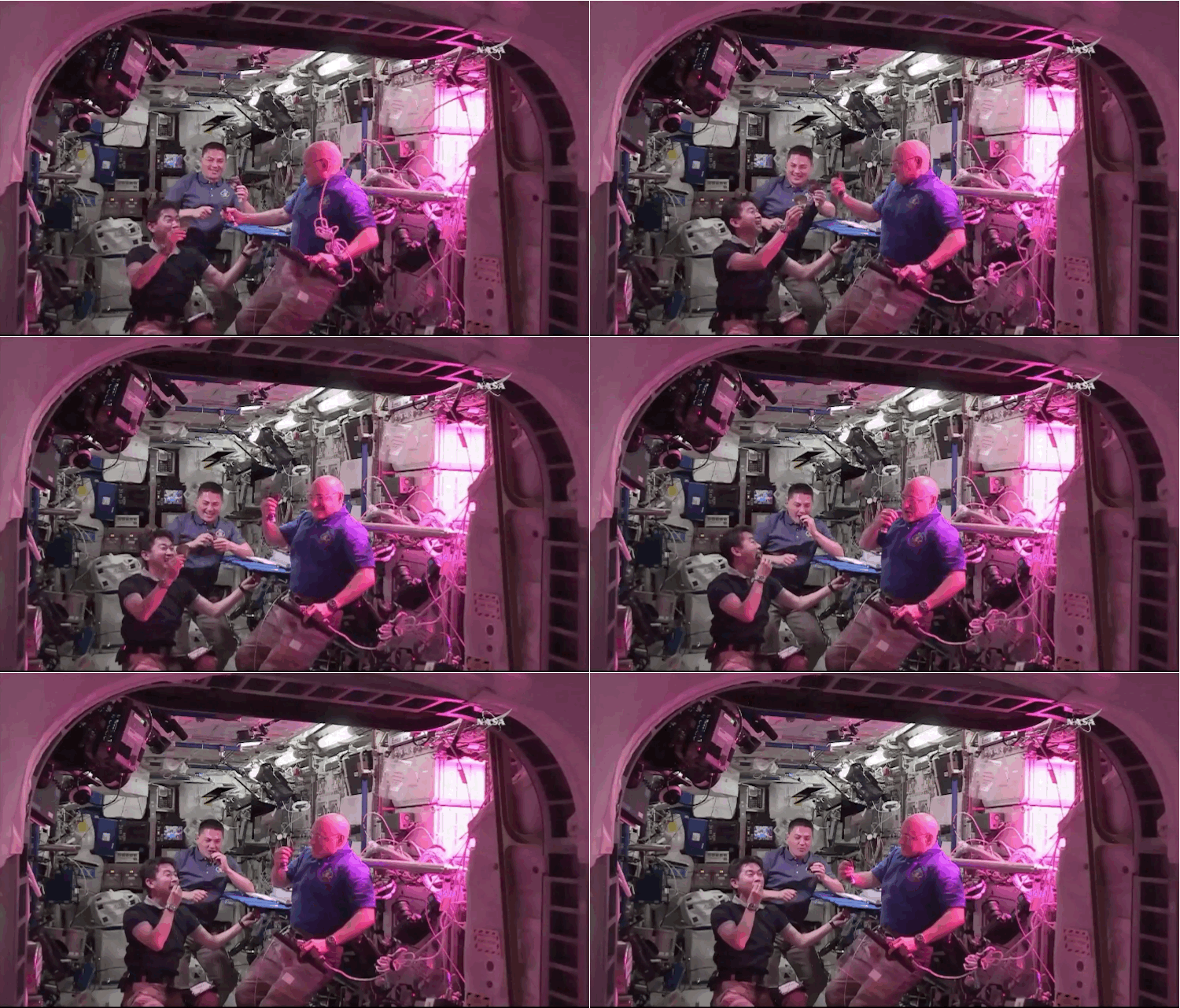 This image shows crew members Scott Kelly, Kjell Lindgren and Japanese astronaut Kimiya Yui toasting with their leaves of “Outredgeous” red romaine, a variety chosen because it “is known to be a very tasty variety,” according to Schierholz – an important characteristic because space travel dulls the taste buds.
As one NASA Twitter account put it, “That’s one small bite for a man, one giant leaf for mankind.”
Images from NASA


Comments are closed.