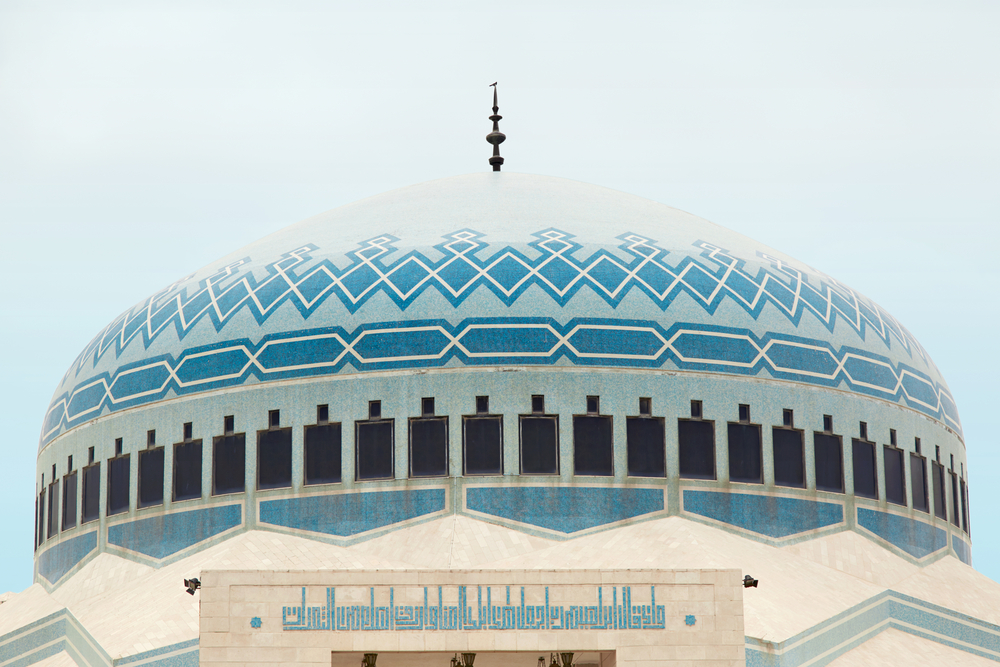

 Jordan’s Ministry of Energy and Mineral Resources announced a new initiative that will convert all 6,000 of the kingdom’s mosques to solar generated power beginning this year. It’s part of a five-year program to decrease the nation’s reliance on crude oil while diversifying its energy portfolio to include more renewable energy sources, such as wind and solar power.
Mosques are major electricity consumers as five prayer times throughout the day keep their doors open predawn to well after sundown. They require artificial lighting and often feature mechanically heated and cooled air to keep worshipers comfortable. The Jordanian government spends over US$70 million annually to run and maintain its existing inventory and construct a yearly average of 150 new mosques too.
“Mosques use large amounts of electricity and the project will help to significantly reduce their electricity bills as around 300 days in the year are sunny,” Ahmad Abu Saa, a spokesman for Jordan’s energy ministry, told The Jordan Times.
Samer Zawaydeh, a Jordan-based freelance engineering consultant, told PV Magazine, “The Renewable Energy and Efficiency Law 13 (REEL 13), issued 2012, allows any electricity consumer to cover 100% of their electricity needs by installing net-metering solar PV systems.”
Payback on investment is roughly 30 to 36 months in Jordan, depending on system components.
Reducing the amount spent on electricity would free up funds for other social programs and enable mosques to generate revenue through a net metering program which allows solar energy producers to sell excess energy they produce back to the government.
The project is financed by grants and zakat contributions (zakat is one of the five pillars of Islam that requires the faithful to give to charity). Donate zakat to an Islamic charity like this one. In Jordan, the new projects will start with tenders to retrofit 120 mosques with PV systems, then expand across the nation.
Jordan imports more than 95 percent of its energy needs, spending as much as 16 percent on energy, or more than 40 percent of the nation’s budget. The country aims to secure 10 percent of its energy needs from renewable sources by 2020 and expects 1,800 megawatts to be linked to its national power grid by 2018. To that end, a 117 megawatt wind farm is under construction in Tafila, a public-private partnership that includes Abu Dhabi’s Masdar as one of its investors.
Last year, Al-Wifaq mosque became Jordan’s first clean-energy place of worship when it installed 10 kWp solar PV system on its rooftop. One of the mosque’s neighbors paid for the work.
Jordan’s decision to remove the kingdom’s mosques off grid could be an answer to environmentalists’ prayers.
Image of King Abdullah Blue Mosque in Amman from Shutterstock