Heat hackers breach computer systems by “breathing” data whispers

air-gap-security-research

How can the environment around computers be used to hack data? Computer scientists have now determined that it’s possible to send data or “steal” data by using heat transfer between computers – those typically used as servers in high profile institutions like banks and police. Their exercise in hacking heat points out vulnerabilities in today’s computer systems so security experts can build walls around them.

The researchers from Ben Gurion University developed what they are calling BitWhisper to breach into computer systems that use air gapped cooling. This breach lets the computers talk to one another through heat. Wow or what?

According to the researchers, “The scenario is prevalent in many organizations where there are two computers on a single desk, one connected to the internal network and the other one connected to the Internet. BitWhisper can be used to steal small  chunks of data (e.g. passwords) and for command and control.

Stealing with a breath of warm air

“These properties enable the attacker to hack information from inside an air-gapped network, as well as transmit commands to it,” the BGU researchers explain. “Only eight signals per hour are sufficient to steal sensitive information such as passwords or secret keys. No additional hardware or software is required. Furthermore, the attacker can use BitWhisper to directly control malware actions inside the network and receive feedback.”

The research, conducted by Mordechai Guri, a Ph.D. student is part of an ongoing focus on air-gap security. Computers and networks are air-gapped when they need to be kept highly secure and isolated from unsecured networks, such as the public Internet or an unsecured local area network.

Typically, air-gapped computers are used in financial transactions, mission critical tasks or military applications.

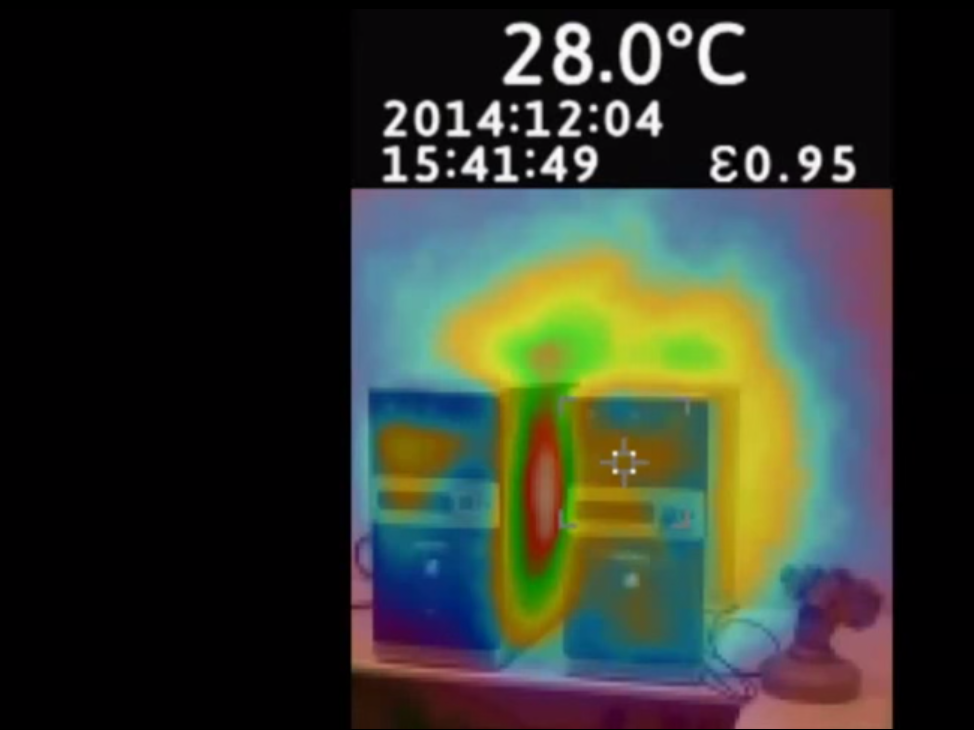
The new development of BitWhisper bridges the air-gap between the two computers, approximately 15 inches (40 cm) apart that are infected with malware by using their heat emissions and built-in thermal sensors to communicate.

It establishes a covert, bi-directional channel by emitting heat from one PC to the other in a controlled manner. By regulating the heat patterns, binary data is turned into thermal signals. In turn, the adjacent PC uses its built-in thermal sensors to measure the environmental changes.

These changes are then sampled, processed, and converted into data. Scary. Hackers stealing through heat. Let’s put minds like this on cracking bee colony collapse disorder and we’ll have started a revolution in bio hacking.


Karin Kloosterman
Karin Kloostermanhttp://www.greenprophet.com
Karin Kloosterman is an award-winning journalist, innovation strategist, and founder of Green Prophet, one of the Middle East’s pioneering sustainability platforms. She has ranked in the Top 10 of Verizon innovation competitions, participated in NASA-linked challenges, and spoken worldwide on climate, food security, and future resilience. With an IoT technology patent, features in Canada’s National Post, and leadership inside teams building next-generation agricultural and planetary systems — including Mars-farming concepts — Karin operates at the intersection of storytelling, science, and systems change. She doesn’t report on the future – she helps design it. Reach out directly to [email protected]
1 COMMENT
  1. […] Heat hackers breach computer systems by “breathing” data whispers Computer scientists have now determined that it's possible to send data or “steal” data by using heat transfer between computers – those typically used as servers in high profile institutions like banks and police. Their exercise in hacking heat points … Read more on Green Prophet […]

Comments are closed.

TRENDING

Israel’s Separation Barrier Could Disrupt Ancient Way of Farming Since Roman Times

Water from natural springs burbles in the ancient Roman...

Water Scarcity Leads More to Peace Than War (Interview)

Geoffrey Dabelko at the 12th National Conference on Science,...

Climate, Migration and Why the Security Agenda Just Doesn’t Help

Framing climate-influenced migration as a threat is dangerous and...

Egypt Suffers When Israelis Spend Passover Elsewhere

Hundreds of Israelis used to spend Passover in Sinai but...

See how Iran’s Lake Urmia with Nasa photos

The most recent satellite image of Iran's Lake Urmia...

Should You Invest in the Private Market?

startustartup Unlike public stock exchanges, which offer daily trading, strict...

How to build a 100-year-company

Kongō Gumi is a Japanese construction company, purportedly founded in 578 A.D., making it the world's oldest documented company. What can we learn about building sustainable businesses from them?

From Pilot Plant to Global Stage: How Aduro Clean Technologies’ 2026 Expansion Signals a Turning Point for Chemical Recycling Investors Like Yazan Al Homsi

The company's Next Generation Process (NGP) Pilot Plant in London, Ontario, has officially moved into initial operating campaigns, generating the kind of structured, repeatable data that separates laboratory promise from commercial viability.

How AI Helps SaaS Companies Reduce Repetitive Customer Support Work

SaaS products are designed for large numbers of users with different levels of experience, and also in renewable energy.

Pulling Water from the Air

Faced with water shortage in Amman, Laurie digs up...

Turning Your Energy Consultancy into an LLC: 4 Legal Steps for Founders in Texas

If you are starting a renewable energy business in Texas, learn how to start an LLC by the books.

Tracking the Impacts of a Hydroelectric Dam Along the Tigris River

For the next two months, I'll be taking a break from my usual Green Prophet posts to report on a transnational environmental issue: the Ilısu Dam currently under construction in Turkey, and the ways it will transform life along the Tigris River.

6 Payment Processors With the Fastest Onboarding for SMBs

Get your SMB up and running fast with these 6 payment processors. Compare the quickest onboarding options to start accepting customer payments without delay.

Related Articles

Popular Categories