


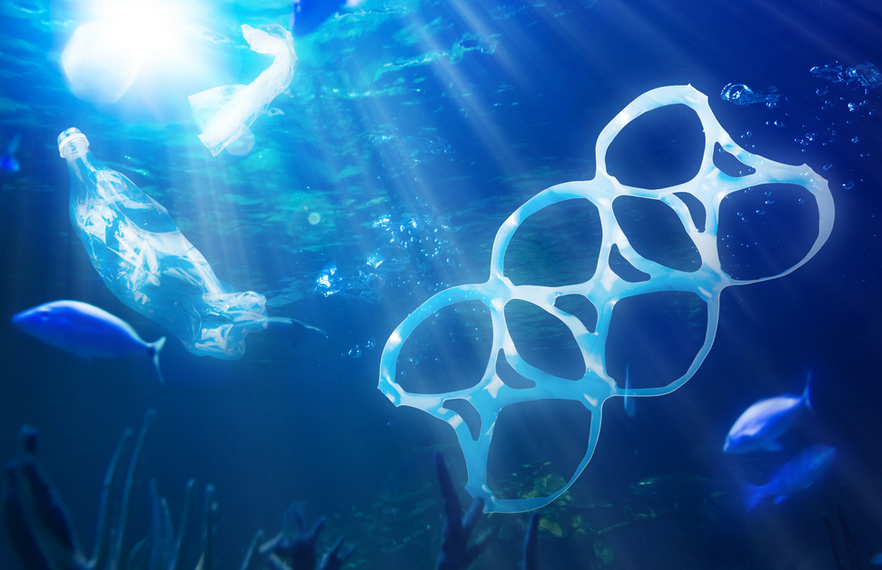
Major changes in how the planet’s marine resources are managed and used are needed to safeguard global food security and ensure the wellbeing of coastal and island countries, the United Nation’s FAO Director-General José Graziano da Silva told a group of high level policymakers meeting today in Abu Dhabi.
“We cannot keep using marine and aquatic resources as if they were endless. And we cannot keep using our oceans as a waste pool,” he said in remarks made at the Blue Economy Summit (19-20 January, Abu Dhabi), attended by heads of state, environment and fisheries ministers, and other key stakeholders.
Serious threats to ocean health such as pollution, overfishing, and altered weather and rising sea levels resulting from climate change must be tackled in earnest – starting now — argued FAO’s chief executive.
“The health of our planet itself, our health and food security, depends on how we treat the blue world,” he said.
Time to act
On average, nearly 17 percent of animal protein consumed worldwide comes from fisheries and aquaculture, and in many small island developing states the figure is much higher.
At the same time, the livelihoods 12 percent of the world’s population depend on fisheries and aquaculture, mainly in the developing world.
But 30 percent of world fish stocks are estimated to be overexploited, depleted or recovering from depletion, with economic losses in marine fisheries resulting from poor management, inefficiencies, and overfishing adding up to $50 billion per year, FAO studies show.
And now climate change is posing new challenges to populations who rely on the oceans, by modifying the distribution and productivity of marine and freshwater species, affecting biological processes, and altering food webs.
Weather changes due to climate change are also taking a toll on many ocean-reliant communities, while the threat of rising sea levels is poised to have major impacts, in particular for small island developing states (SIDS). (Learn more about the challenges facing small island developing states, and how they are organizing to meet them.)
The last thirty years have seen some 80 different commitments on dealing with various ocean threats promulgated at the global level, Graziano da Silva noted, adding: “We not only need to commit, we need to act.”
A blue economy
The concept of a “blue economy” that came out of the 2012 Rio+20 Conference will have an important role to play in achieving the post-2015 global sustainable development goals, Graziano da Silva said during his remarks.
The blue economy model emphasizes conservation and sustainable management, based on the premise that healthy ocean ecosystems are more productive and represent the only way to ensure sustainable ocean-based economies. It also aims to ensure that small island developing states and developing world coastal states equitably benefit from their marine resources.
To support a shift to this new approach, FAO is establishing a new Blue Growth Initiative, through which the Organization will assist countries in developing and implementing blue economy and growth agendas.
The initiative will aim to foster partnerships and act as a catalyst for policy development, investment and innovation in support of food security, poverty reduction, and the sustainable management of aquatic resources.



[…] Stop using oceans as waste pool: UN’s FAO at Abu Dhabi’s Blue Economy Summit […]
They are very late as climate change is about to escalate beyond control. The only hope is to safely recycle 100% of human-generated waste materials, and gently reduce the population with family planning programs around the World. But we humans are addicted to the growing yet ecocidal power of money.
I think it is time they stop talking and start acting. I’m not sure which heads of state the article is referring to but it would be interesting to see a list of who attended and from what countries. The big players (big polluters) need to be at the table for starters. Of course, they all live in a world of denial and finger pointing and are sadly willing to let their citizens be poisoned.
I wonder if they discussed the current and future effects of The Fukushima Daiichi nuclear disaster.