

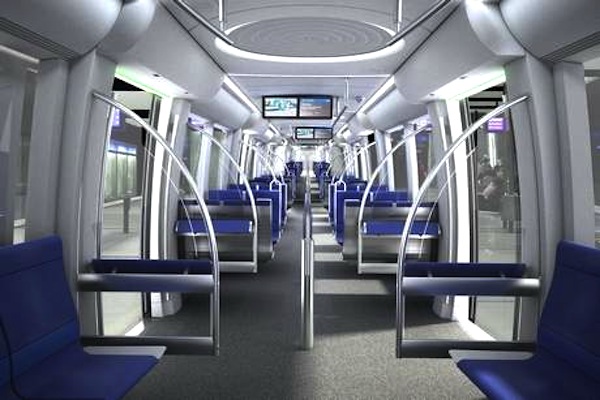
Abu Dhabi is Phasing Out Cars and Siemens Wants to Help

Abu Dhabi Metro, public transportation, Siemens, green transportation, cutting pollution, Abu Dhabi reduces dependence on carsDubai’s metro started running in 2009 (don’t fall asleep though) but Abu Dhabi, the wealthier Emirate, is only now reducing its dependence on cars with a swanky new rail and tram system. And Siemens hopes to hop on board.

The National reports that Abu Dhabi’s Executive Council approved a plan to develop a multibillion dollar, state-of-the art public transportation system.

Mostly they are motivated by the money lost when residents stay stuck in traffic for hours every day, but there are a host of other benefits associated with public transportation including greater happiness and productivity, and less pollution.

Still, the $1.61 billion dollar savings estimated by Abu Dhabi’s Department of Transportation by 2030 is nothing to scoff at, so the National Transport Authority will oversee five different rail projects worth $22.41 billion over the next several years.

And Siemens, the German multinational engineering and electronics conglomerate company headquartered in Munich and Berlin, has expressed an interest in working on the first phase.

“Abu Dhabi has pumped a lot of efforts in the last years to build highways, tunnels,” Joerg Scheifler, the chief executive for infrastructure and cities at Siemens in the Middle East, told The National in a recent interview.

“When your population reaches 1 million, you should start building things like metros and trams. They have been talking about metro and trams for many years, but now they are serious.”

For the first phase, 18 kilometers of rail will connect Zayed Sports City and Mina Port. Of that, five kilometers will be installed underground.

Siemens has joined other companies to undergo a pre-qualification process. Once that is complete, which is expected to occur in the fourth quarter, the firm will be able to participate in a tender process that is expected to take place next year.

This phase of the project will set Abu Dhabi back $7 billion and should be up and running by 2020.

Several Gulf states are preparing to reduce their dependence on cars. In the lead up to the 2022 World Cup in Qatar, for example, that emirate is planning to build 158 miles worth of metro and rail lines both within Doha and beyond.

The emir recently chose the “vaulted spaces” design, which incorporates many traditional Islamic principles such as the arch, for the metro stations.

Unfortunately, many of these infrastructural developments are built on the backs of foreign workers who often endure conditions akin to modern day slavery. Hopefully this will not be the case in Abu Dhabi, which we have come to consider a leader in more responsible development.
Tafline Laylin
Tafline Laylinhttp://www.greenprophet.com
As a tour leader who led “eco-friendly” camping trips throughout North America, Tafline soon realized that she was instead leaving behind a trail of gas fumes, plastic bottles and Pringles. In fact, wherever she traveled – whether it was Viet Nam or South Africa or England – it became clear how inefficiently the mandate to re-think our consumer culture is reaching the general public. Born in Iran, raised in South Africa and the United States, she currently splits her time between Africa and the Middle East. Tafline can be reached at tafline (at) greenprophet (dot) com.

TRENDING

How Virtual Jobs Are Helping the Environment

Did you know that virtual working helps reduce lots...

Renewable energy will triple in the Middle East, says Siemens

A new report published by Siemens predicts that the...

Glowing highways make it look like we’re driving through eco-fairytales

Glow-in-the-dark roads recently debuted on a 500 meter stretch...

Amtrak is a dinosaur next to Kénitra’s high speed railway station in Morocco

The train system runs like clockwork in Morocco. It's...

Driverless car partnership emerges between Tesla and Israel’s Mobileye

A decade from now, Tesla is expected to have...

Should You Invest in the Private Market?

startustartup Unlike public stock exchanges, which offer daily trading, strict...

How to build a 100-year-company

Kongō Gumi is a Japanese construction company, purportedly founded in 578 A.D., making it the world's oldest documented company. What can we learn about building sustainable businesses from them?

From Pilot Plant to Global Stage: How Aduro Clean Technologies’ 2026 Expansion Signals a Turning Point for Chemical Recycling Investors Like Yazan Al Homsi

The company's Next Generation Process (NGP) Pilot Plant in London, Ontario, has officially moved into initial operating campaigns, generating the kind of structured, repeatable data that separates laboratory promise from commercial viability.

How AI Helps SaaS Companies Reduce Repetitive Customer Support Work

SaaS products are designed for large numbers of users with different levels of experience, and also in renewable energy.

Pulling Water from the Air

Faced with water shortage in Amman, Laurie digs up...

Turning Your Energy Consultancy into an LLC: 4 Legal Steps for Founders in Texas

If you are starting a renewable energy business in Texas, learn how to start an LLC by the books.

Tracking the Impacts of a Hydroelectric Dam Along the Tigris River

For the next two months, I'll be taking a break from my usual Green Prophet posts to report on a transnational environmental issue: the Ilısu Dam currently under construction in Turkey, and the ways it will transform life along the Tigris River.

6 Payment Processors With the Fastest Onboarding for SMBs

Get your SMB up and running fast with these 6 payment processors. Compare the quickest onboarding options to start accepting customer payments without delay.

Related Articles

Popular Categories