Summer Solstice Wattage Waste Watch

daytime outdoor lights waste energy
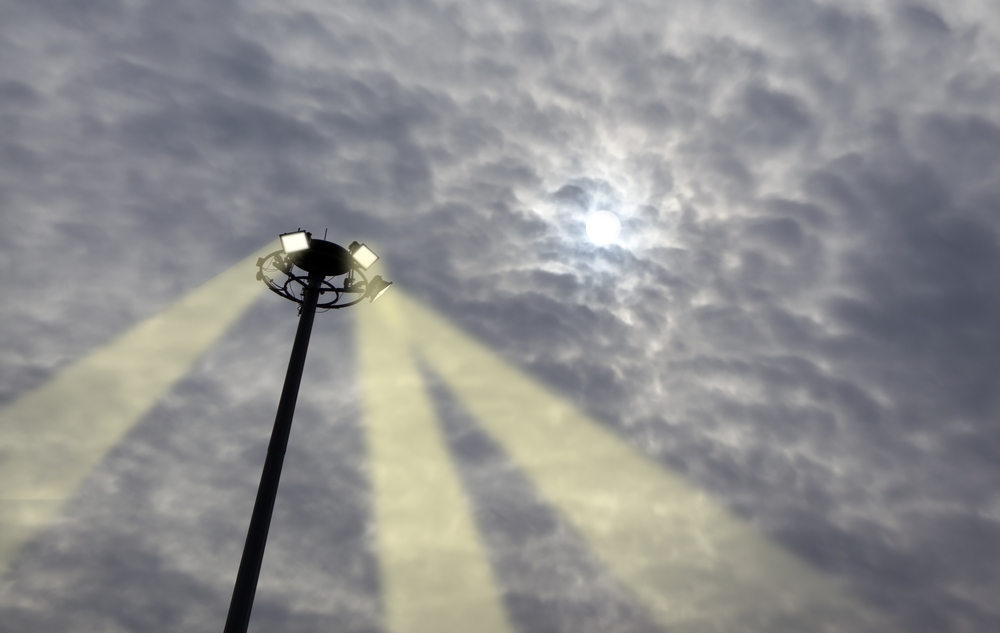
Here is a summer solstice challenge for northern hemisphere Green Prophet readers. How many outdoor electric lights are shining at the sunny sky during the longest days of your summer? For a bonus, let us know whether you were able to contact their owners and ask why these lights are uselessly burning energy and polluting our planet. For the ultimate kudos, let us know how you were able to convince the owners to turn the lights off.

Someday peak oil or environmental impacts will force us to change our energy consumption patterns. When this happens, it may take a long time to undo a century of cheap-energy lifestyles and infrastructure development. But if you happen to live in a truly wasteful land, you will find maddening examples of waste that can be resolved overnight… or sooner.

Green Prophet has already discussed light pollution and Earth hour, the sixty minutes per year when thousands of people try to make a difference in the simplest way possible, by switching off a light.

light_switch_off_to_save_power
But unless you’re an astronomy buff or someone old enough to remember the glory of a star-speckled night sky, light pollution might not rank high on your priority list.

If the cost and environmental impacts of electricity weren’t considerations, many people would be quite happy to do away with the stars altogether and let the night sky fill with laser-billboard advertising and glare.

Some people overlook the wildlife and health effects and consider outdoor lighting to be a trade-off against crime, even though careful studies have failed to demonstrate that more light equals less crime. So there is some debate over whether outdoor electric lights are an unnecessary environmental hazard and nuisance or a necessary– dare I say natural effect of human progress.

But what about daytime outdoor electric lights? Can we agree that these serve no useful purpose and therefore we can consider their environmental impact without weighing it against any positive value they provide?

Suppose we ignore all of the daytime electric lights which illuminate the CEO’s sun-drenched window offices because he never thought to put his lights on a separate switch from those overhanging his minion’s windowless cubicles. How many outdoor electric lights are pumping kilowatts into a blue daytime sky in a hopeless attempt to beat the sun at its own game?

How many wasteful examples of useless twenty-four hour per day, three hundred sixty-five day per year outdoor lighting can you find during the longest day of the year? Let’s multiply the wattage by the number of lights and number of solstice daylight hours and try to calculate how much energy humanity is wasting on the purest form of stupidity. And let’s shame the businesses, corporations and individuals who have allowed this to happen.

Photo of wasteful daylight outdoor lights from Shutterstock

Brian Nitz
Brian Nitzhttp://www.greenprophet.com
Brian remembers when a single tear dredged up a nation's guilt. The tear belonged to an Italian-American actor known as Iron-Eyes Cody, the guilt was displaced from centuries of Native American mistreatment and redirected into a new environmental awareness. A 10-year-old Brian wondered, 'What are they... No, what are we doing to this country?' From a family of engineers, farmers and tinkerers Brian's father was a physics teacher. He remembers the day his father drove up to watch a coal power plant's new scrubbers turn smoke from dirty grey-back to steamy white. Surely technology would solve every problem. But then he noticed that breathing was difficult when the wind blew a certain way. While sailing, he often saw a yellow-brown line on the horizon. The stars were beginning to disappear. Gas mileage peaked when Reagan was still president. Solar panels installed in the 1970s were torn from roofs as they were no longer cost-effective to maintain. Racism, public policy and low oil prices transformed suburban life and cities began to sprawl out and absorb farmland. Brian only began to understand the root causes of "doughnut cities" when he moved to Ireland in 2001 and watched history repeat itself. Brian doesn't think environmentalism is 'rocket science', but understanding how to apply it within a society requires wisdom and education. In his travels through Europe, North America, Asia and the Middle East, Brian has learned that great ideas come from everywhere and that sharing mistakes is just as important as sharing ideas.

TRENDING

Mantle8 uses AI to pinpoint natural hydrogen in French mountain

In the misty folds of the French Pyrenees, something quietly extraordinary is happening. At a remote site called Comminges in France, Mantle8, a pioneering natural hydrogen exploration company, has unearthed a breakthrough that could shift the balance of Europe’s energy landscape.

The Eco Benefits of Radcom: Pioneering a Greener Future in Telecommunications

As the world moves toward a more connected future, and self-driving cars, the transition from 4G to 5G standalone (SA) networks is inevitable and essential. This evolution is not just about faster speeds and lower latency—it also brings significant environmental benefits.

7 Ways Businesses Can Reduce Their Environmental Impact

Environmental pollution and degradation have become a significant source of concern as the latest climate change reports forecast a grim future for the planet. Unfortunately, manufacturing industries and businesses are some of the most significant contributors to environmental pollution.

Tips for Choosing a More Sustainable Physician

People typically drive to see their doctors, using up more gas and creating a higher emissions output when they do. However, when physicians offer telehealth options to their patients, this helps everyone make more sustainable choices. 

How cryptocurrency damages the planet

The way the crypto miners produce currency is through an energy-intensive process requiring vast computing resources. According to recent estimates, over the course of a year, cryptocurrency consumes around 64 TWh (terawatt hours) of energy.

Should You Invest in the Private Market?

startustartup Unlike public stock exchanges, which offer daily trading, strict...

How to build a 100-year-company

Kongō Gumi is a Japanese construction company, purportedly founded in 578 A.D., making it the world's oldest documented company. What can we learn about building sustainable businesses from them?

From Pilot Plant to Global Stage: How Aduro Clean Technologies’ 2026 Expansion Signals a Turning Point for Chemical Recycling Investors Like Yazan Al Homsi

The company's Next Generation Process (NGP) Pilot Plant in London, Ontario, has officially moved into initial operating campaigns, generating the kind of structured, repeatable data that separates laboratory promise from commercial viability.

How AI Helps SaaS Companies Reduce Repetitive Customer Support Work

SaaS products are designed for large numbers of users with different levels of experience, and also in renewable energy.

Pulling Water from the Air

Faced with water shortage in Amman, Laurie digs up...

Turning Your Energy Consultancy into an LLC: 4 Legal Steps for Founders in Texas

If you are starting a renewable energy business in Texas, learn how to start an LLC by the books.

Tracking the Impacts of a Hydroelectric Dam Along the Tigris River

For the next two months, I'll be taking a break from my usual Green Prophet posts to report on a transnational environmental issue: the Ilısu Dam currently under construction in Turkey, and the ways it will transform life along the Tigris River.

6 Payment Processors With the Fastest Onboarding for SMBs

Get your SMB up and running fast with these 6 payment processors. Compare the quickest onboarding options to start accepting customer payments without delay.

Related Articles

Popular Categories