
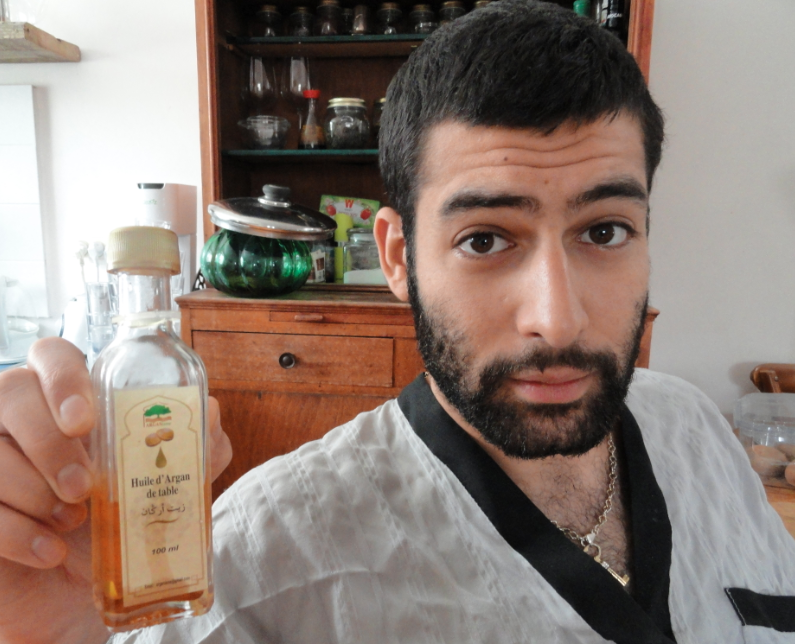


Argan oil is a delicacy and fair trade product from Morocco. The best passes through the gut of a goat
Returning home from Morocco last month with a bundle of treasures including indigo dye, jewelry made by the Tuareg Tribe, indigenous music with the craziest break beats you could ever imagine, fish skins for drums, pointy shoes made from lemon yellow leather, henna, eye kohl, and massive Moroccan castanets (qaraqib), one little treasure gave us a lot to talk about: the argan oil. It’s the staple oil in the famous hair care product Moroccan oil. But you can eat it too!
A small bottle of it, which my husband says comes from the bum of a goat.
According to the people he’d bought it from, the argan oil is made from a nut off the argan tree. In order for the villagers in Morocco to grind the nuts into oil, it must first pass through the intestinal tract, and then the butt of a goat. Some people, he says, on religious grounds will not touch the stuff.
But I’ve had it on a Sabbath dinner table with religious Moroccan Jews, who love to eat the precious, nutty oil, drizzled over tomatoes. It’s very special, and I am enjoying our own little bottle which cost a fortune in Moroccan standards, about $10 USD.
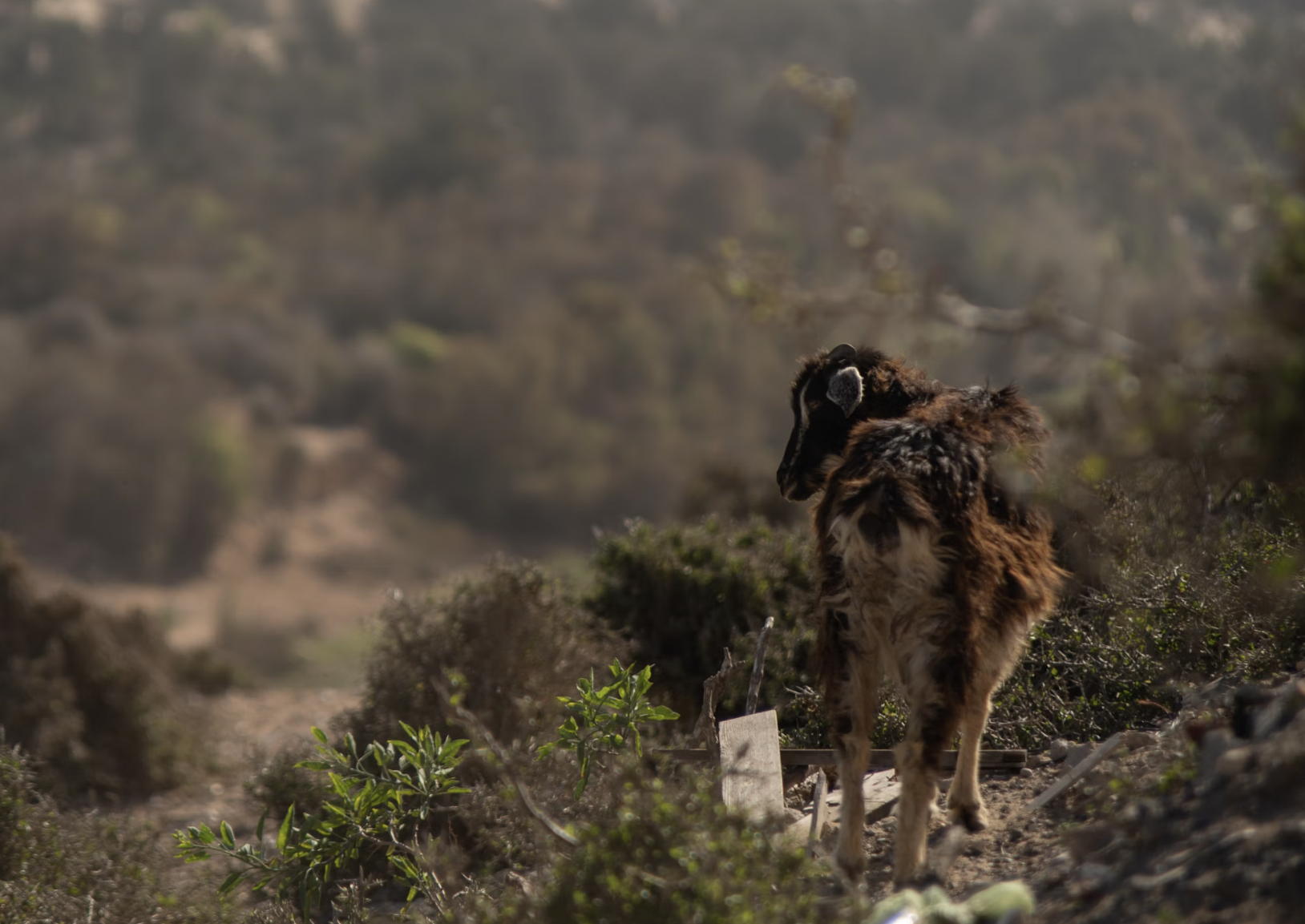
Argan oil, I would learn is a precious natural commodity from Morocco, and some villagers are building a cottage industry around it, while UNESCO is working to protect the argan tree. It can probably protect you from hijab hair if you wear a Muslim head scarf.

Sources I have read have mentioned that the nuts can be processed without the goat intervention, news which makes me sigh with relief, because I can just imagine what will happen to the world’s goats: being forced to eat argan nuts like foie gras geese who get feed pumped down their throats to enlarge their livers.
Apparently there are two kinds of argan oil: one kind is good for your skin, and the other, the kind I have, is argan oil suitable for eating. Wikipedia points out that the traditional methods of collecting argan oil are no longer in practice (well most likely not in practice):
Before modern times, the Berbers or Amazighs (indigenous people of Morocco) of this area would collect undigested argan pits from the waste of goats which climb the trees to eat their fruit. The pits were then ground and pressed to make the nutty oil used in cooking and cosmetics. However, the oil used in cosmetic and culinary products available for sale today has most likely been harvested and processed with machines in a verifiably clean and sanitary way.
The oil was sold in Moroccan markets even before the Phoenicians arrived, yet the hardy argan tree has been slowly disappearing. Overgrazing by goats and a growing, wood-hungry local population have whittled the number of surviving trees down to less than half of what it was 50 years ago.
Growing only in a few places in the world, efforts are being made to protect the argan tree, and along with it, the argan’s nutritious oil, which comes with a very good story.


 of this area would collect undigested argan pits from the waste of goats which climb the trees to eat their fruit. The pits were then ground and pressed to make the nutty oil used in cooking and cosmetics.)
Hi, very helpful blog! Moroccan Argan Oil has amazing benefits for hair, you just want to make sure you are buying the real stuff. It should absorb instantly leaving hair shiny and soft without weighing it down or leaving it oily. Pro Naturals has an Argan Oil that does this.
Argan oil is extremely hard to get, that’s why, when it’s original, it’s so expensive. I use the pro naturals products, made from it, for my hair, and they are amazingly good!
I am guessing this is why argan oil smells like goat poo then!
And tastes like it too?
Love this. 🙂 Yeah Goats!
I’ve seen argan oil for sale at a fancy Western condiments shop (Vom Fass) in Singapore and Malaysia. L’Oreal shampoo and conditioner also have it as an ingredient. I guess some of the sources for argan oil in commercial products that don’t cost an arm and a leg, have not been eaten by goats as Xoussef described. Like the difference between normal coffee and civet coffee (kopi luwak).
Let’s create a union for them, and put more goats to work then!
Actually, Argan trees are thorny (and not very decorative), which makes harvesting the fruit very hard. Thick skinned, thick lipped goats don’t care though, and climb the trees to eat the stuff. It digests the exocarp and mesocarp and poops the hard shell of the endocap. It’s then collected, washed and dried in the sun. The shells will have to be felled one by one to extract the seed inside, which is then either cooked and pressed to make edible oil, or pressed raw to make cosmetic oil. I’m skipping several steps here, but it’s uberhard work.
However nowadays the fruits are harvested by hand, mainly to stop the goats from damaging the trees, a machine extracts the nuts, but the goats still enjoy the pulp and peels separately. I’m not sure, but the shells still have to be felled by hand though.