2011 Global Water Awards Go to MENA Nations

israel desalination ide

Unsurprisingly, since water scarcity is at the forefront of the cause of most of the troubles in the Middle East, MENA nations dominated the 2011 Global Water Awards held in Berlin this week.

Almost half of the international winners were from the Middle East, but surprisingly, traditional fossil-fueled water projects dominated the awardees.

Advanced cleantech water companies that genuinely hold the promise of a sustainable water development, such as the many innovators that Israel’s Kinrot has incubated (GE Partnership With Kinrot Ventures Takes Clean Water Innovation Global) were not represented among the global winners. Nor were any of the many international solar companies now innovating sustainable desalination.

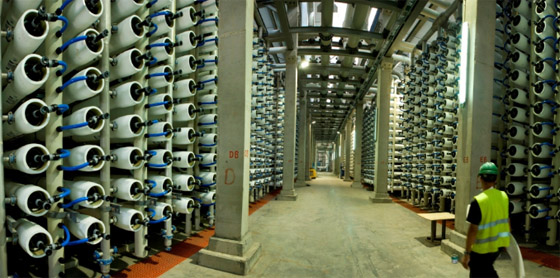
Israel’s 50 year old IDE Technologies, owned by big polluters Delek and Israel Chemicals, was selected as the winning desalination company of the year, for “complete mastery of both membrane and thermal desalination” (“thermal” means fossil-fueled.)

Two awards were won by tiny Oman. Salalah IWPP funding won for the desalination deal of the year, for its $1 billion 445 MW gas-fired power and water plant, and the Nimr reed beds in Oman won for industrial water project of the year.

Dubai’s Electricity and Water Authority won the award for public water agency of the year for its  “fluctuating charge showing customers how much their bills are affected by the change in oil and gas costs. Realistic billing has made the authority free to act on an independent financial footing.”

Saudi Arabia’s Jeddah Sewage Lake cleanup won for water reuse project of the year. The water performance initiative was won by SEEAL from Algiers.

Former UN secretary general Kofi Annan was keynote speaker at the prestigious ceremony, which attracted hundreds of the top figures from the global water market.

Israel has long spearheaded the incubation of sustainable water technologies, and its start-ups nurtured by Kinrot Technologies are now being bought out by global companies like GE, which was another winner of the Global Water Awards: for its GE Water division (not one of GE’s more clean tech divisions).

For water to become a sustainable resource, you have to get the fossil fuels out. However, even among more traditional giant water companies, the MENA nations dominated the awards.

Image: IDE Technologies

Related stories:

Saudi Arabia to Replace Oil with Sun Power for Desalination Plants

Clean Tech Incubators from Israel and California Sign Water Deal

How Israel’s NewTECH Is Watering The Economy

LEAVE A REPLY

Please enter your comment!
Please enter your name here

TRENDING

Astro uses AI to help procure land for renewable energy

For oil-rich, environmentally vigilant Gulf states, Astro isn’t just another startup story. It is a blueprint for accelerating an energy transition that is now existential, not optional.

EU Ports Still Power Russia’s Arctic Gas Exports Despite Phase-Out Pledge

The findings suggest that rather than declining, Europe’s reliance on Yamal LNG intensified in 2025. Yamal cargoes accounted for 14.3% of the EU’s total LNG imports, equivalent to roughly one in every seven LNG ships arriving at European terminals.The findings suggest that rather than declining, Europe’s reliance on Yamal LNG intensified in 2025. Yamal cargoes accounted for 14.3% of the EU’s total LNG imports, equivalent to roughly one in every seven LNG ships arriving at European terminals.

10 Proven Israeli Technologies to Help Somaliland Build Food, Water, and Energy Security

Israel’s water and agricultural technologies didn’t emerge from ideal conditions. They were developed under pressure: low rainfall, saline water, political isolation, lack of energy resources, and the constant need to feed a growing population with limited land. Over the years, I’ve written about many of these companies not as miracle-makers, but as problem-solvers. That’s what makes them relevant to places like Somaliland. Israel was the first country in the world to recognize Somaliland as an independent state although Ethiopia has been treating the nation as such for decades.

Sink holes from over-watering farmers’ fields

Sinkholes are rapidly appearing in Turkey’s central Anatolian farming region, particularly around Konya and Karapınar. These giant gaping holes in the ground in areas of farmland, known locally as obruk, are not random geological events. They are linked to prolonged drought, climate-driven heat stress, and heavy groundwater extraction for agriculture in one of the country’s most important breadbaskets.

Oil pollution in Basrah’s soil is 1,200% higher than it should be

Soil pollution levels in parts of Basra are 1,200% to 3,300% higher than those typically measured in cities like Toronto or New York, according to new comparative soil data. It's getting into water.

Qatar’s climate hypocrisy rides the London Underground

Qatar remains a master of doublethink—burning gas by the megaton while selling “sustainability” to a world desperate for clean air. Wake up from your slumber people.

How Quality of Hire Shapes Modern Recruitment

A 2024 survey by Deloitte found that 76% of talent leaders now consider long-term retention and workforce contribution among their most important hiring success metrics—far surpassing time-to-fill or cost-per-hire. As the expectations for new hires deepen, companies must also confront the inherent challenges in redefining and accurately measuring hiring quality.

8 Team-Building Exercises to Start the Week Off 

Team building to change the world! The best renewable energy companies are ones that function.

Thank you, LinkedIn — and what your Jobs on the Rise report means for sustainable careers

While “green jobs” aren’t always labeled as such, many of the fastest-growing roles are directly enabling the energy transition, climate resilience, and lower-carbon systems: Number one on their list is Artificial Intelligence engineers. But what does that mean? Vibe coding Claude? 

Somali pirates steal oil tankers

The pirates often stage their heists out of Somalia, a lawless country, with a weak central government that is grappling with a violent Islamist insurgency. Using speedboats that swarm the targets, the machine-gun-toting pirates take control of merchant ships and then hold the vessels, crew and cargo for ransom.

Leopoldo Alejandro Betancourt López Turned Ocean Plastic Into Profitable Sunglasses

Few fashion accessories carry the environmental burden of sunglasses. Most frames are constructed from petroleum-based plastics and acrylic polymers that linger in landfills for centuries, shedding microplastics into soil and waterways long after they've been discarded. Leopoldo Alejandro Betancourt López, president of the Spanish eyewear brand Hawkers, saw this problem differently than most industry executives.

Why Dr. Tony Jacob Sees Texas Business Egos as Warning Signs

Everything's bigger in Texas. Except business egos.  Dr. Tony Jacob figured...

Israel and America Sign Renewable Energy Cooperation Deal

Other announcements made at the conference include the Timna Renewable Energy Park, which will be a center for R&D, and the AORA Solar Thermal Module at Kibbutz Samar, the world's first commercial hybrid solar gas-turbine power plant that is already nearing completion. Solel Solar Systems announced it was beginning construction of a 50 MW solar field in Lebrija, Spain, and Brightsource Energy made a pre-conference announcement that it had inked the world's largest solar deal to date with Southern California Edison (SCE).

Related Articles

Popular Categories