
 We speak to conservationist Mindy Baha El Din about the rise of the environmental movement in post-revolution Egypt, tourism and the challenges ahead
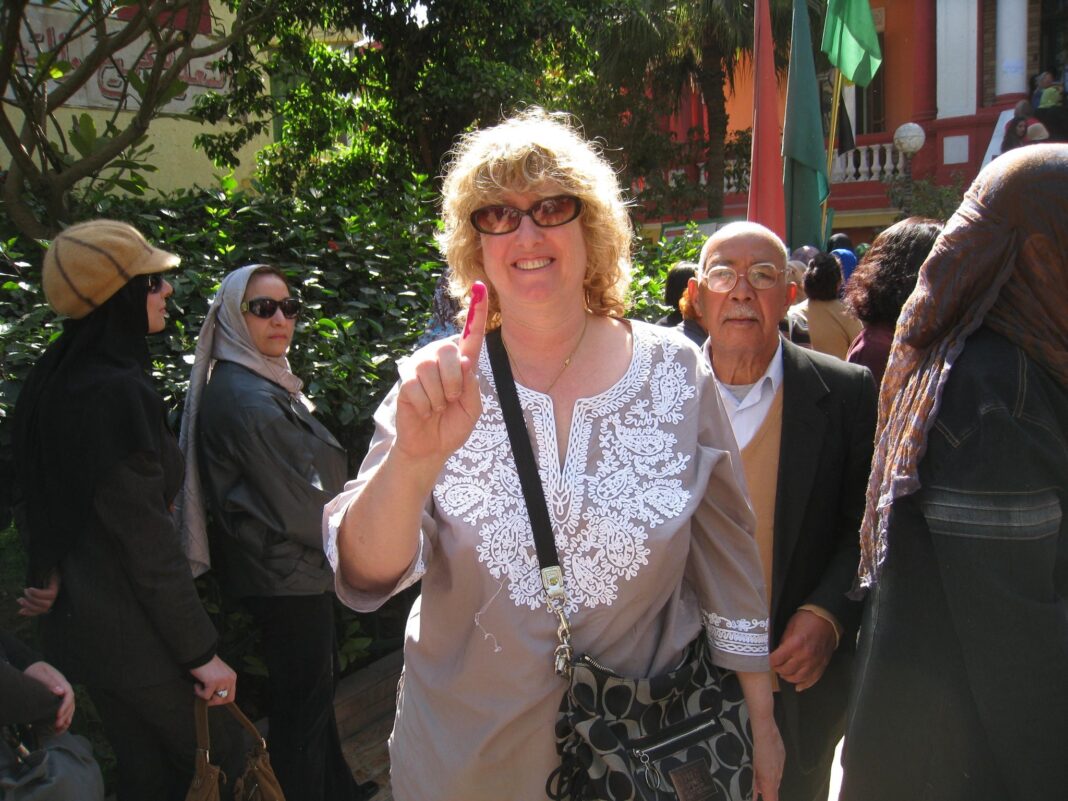
Mindy Baha El Din was born in the US and came to Egypt in 1988 armed with a degree in Arabic and Economics as well as a passion for birdwatching, to establish a conservation education centre at Giza Zoo. Through her work she met Sherif, Egypt’s foremost ornithologist, who she would later marry and together they formed a formidable team campaigning on everything from bird hunting controls, developing Egypt’s protected area networks to ecotourism.
“Over the years, we have witnessed massive changes and degradation to Egypt’s natural heritage,” remarks Mindy. “It’s shocking how one generation’s decisions about natural resources is affecting the present and all future generations of Egyptians. Both Sherif and I have a strong sense of civic duty- we have tried our best to make a difference but it is an uphill struggle.”
Arwa Aburawa: Let’s start off quite broadly to get a sense of the situation on the ground. What are the major concerns for nature conservationists working in Egypt?
Mindy Baha El Din: During the past 30 years, many of the country’s natural resources have been degraded, depleted and destroyed. Whole ecosystems have disappeared or are being transformed through uncontrolled development, pollution, and increasing disturbance. Not a single habitat is left unscathed: coastal, marine, deserts, wetlands, and agricultural land. Protected Areas are not effectively protected. Uncontrolled hunting and trade has decimated our wildlife populations. Our fisheries are collapsing. Exotic species such as the Palm Weevil are spreading and killing our native date palms. Over grazing and harvesting of vegetation is rampant in the desert.
Tourism too will be affected as our tourism assets vanish…divers, birdwatchers, desert safari enthusiasts will go to other countries that protect their resources. Even conventional tourism will be impacted if the overall environment is trashed! The resulting ecological imbalances will also strain our limited resources even further causing more poverty, conflicts and instability. Then there are the “global issues” like climate change…what about sea-level rise, think of our coastlines disappearing under water and all the environmental refuges.
Arwa: Following the revolution, do you feel that issues such as conservation and protecting the environment have taken a backseat?
Mindy: Environment and nature conservation wasn’t given much priority before the revolution so it’s not surprising it has received little attention afterwards. In the final years of Mubarak, we saw the Ministry of Environment systematically weakened (intentionally?) until it became ‘virtually’ powerless. After the revolution, there have been more pressing needs, so once again the environment is sidelined. However, as things stabilize environmentalists are speaking out.
There have been some major campaigns such as the ‘Stop Fishing at Ras Mohammed’, ‘Don’t Kill the Lion for Tourism‘ and a number of individuals came together to launch the ‘Save the Lake Qarun Protected Area’ campaign to highlight the threats to Egypt’s Protected Areas. The animal welfare lobby and nature conservationists are taking the lead… We’re turning into real activists! The Ministry of Environment seems to have ceased functioning, they even cancelled their involvement in World Environment Day, so it’s up to NGOs and the public to speak out.
Arwa: Clearly there has been some progress but how do you think environmental activist can help push nature issues further up Egypt’s agenda?
Mindy: We are new to “environmental activism” as it was not tolerated in the past, although it seems to suit the current atmosphere in the country. But to get the environment on the political agenda, we need to put environmental issues in terms that people can understand. What does it mean for the average man, woman and child? Egypt’s priorities in fact are all related to the environment: food, water, heath, energy, employment and education. Egypt is facing some very serious environmental challenges. The country has limited natural resources and has to decide how to manage these to meet the needs of a growing population.
The former government was patronizing and came to be seen by the people as a parent who takes care of them but the government can’t do everything- the people must contribute. What I remember most about the Jan 25th revolution was seeing the youth cleaning up the streets after the protests. They were taking back responsibility for their country…. “Egypt belongs to us!” I hope this feeling of national pride, ownership and custodianship will continue.
Arwa: There have been various campaigns, like the ones you mention, which show nature and tourism going head to head. What role do you think that tourism plays in nature conservation? Positive or negative?
Mindy: Tourism is very important for Egypt as fewer tourists means fewer jobs! Of course there are positives and negatives from tourism…Tourism is a type of use, if not properly planned and managed it can destroy the very resources that brings the tourists”. No reefs equals no diving, it’s a simple equation. Tourism development has to be appropriate; it is absurd the government wanted to build a huge tourism complex “Porto” style at Lake Qarun Protected Area on top of a highly sensitive site proposed for World Heritage status.
It is also essential we make sure local communities benefit from tourism. We need a more fair distribution of the proceeds from tourism for conservation to succeed. There are a lot of Egyptians who live below the poverty line and are preoccupied with meeting basic needs. Therefore, we have to create tangible benefits from nature conservation. Only through economic incentives will we convince people to protect habitats, wildlife, geological formations, cultural heritage sites, etc. We need local communities to cooperate with us, not against us!
Arwa: Do you think that there are enough organizations and people working in Egypt to protect important nature reserves?
Mindy: No. There are major deficiencies in the existing bodies and new organizations need to be created. And even if we establish new institutions, programs and projects there will be major manpower constraints- considerable time, energy and resources will have to be invested in training people. We also should not forget, those individuals at the front lines, the rangers working in Egypt’s Protected Areas- these guys are the unsung heroes of nature conservation in Egypt. The rangers are underpaid, unappreciated, work in remote and harsh conditions and often don’t even have cars and other essential equipment. It is amazing what some rangers have done like Dr. Gabeli at Lake Qarun, he has shown genuine innovation and commitment in trying to protect the fossils and antiquities there.
Government is also important. If we can successfully lift the stranglehold of bureaucracy and old ways of thinking, we can see some real innovation in biodiversity conservation in Egypt as has occurred elsewhere in the world. It’s the government’s call. If they continue to put people in high-level positions that have no knowledge, experience or even interest in environment, Egypt will not advance. The country has very good national experts so why not use them?
Arwa: Finally, what do you hope for the future of Egypt and it’s natural landscapes following the revolution?
Mindy: The Egyptian people have inherited a mess. Hopefully, we can learn from the past mistakes and improve things. Clearly there is a need for better legislation, monitoring, enforcement, planning, management, coordination and more awareness. We are back again to the need for qualified manpower. We need to strengthen our Protected Areas. We need hunting and fishing management, rangeland management, and control of exotic species. To identify conservation priorities, more fieldwork and research is needed to assess habitats and inventory biodiversity. This all fits well into Egypt’s objective to advance science and technology.
Nature conservation is not a luxury, it is a necessity! It not wise or sensible to continue to destroy your environment if you want to have a sound, stable, healthy and prosperous country whether now or in the future. Also, with better education and affluence there have been more Egyptians interested in nature. There are now more Egyptian divers, desert safari enthusiasts and eoctourists- I know Egyptian who have traveled to Antarctica, Tanzania, South Africa and climbed the Himalayas. Now Egyptians are talking of wanting to explore and see more of their own country. I believe they too will fall in love with Egypt and will want to protect it. The revolution is a process, it will take time, but at least there is hope now!
::Top photo via Mindy Baha El Din. All the other images via JPBennett1/Flickr.
For more on Egypt’s environment see:
The Famous Potters Of El-Qasr, Egypt Got Soul
Egypt May Survive Climate Change Thanks to AUC Students
When Tourism and Nature Collide- Protected Land Under Threat In Egypt


What does she know about the man who plans to kill a lion? (http://www.greenprophet.com/2011/06/planned-lion-fight-in-egypt-takes-a-political-turn/)Is the fact that he wants to make this a statement against Israel a reason to ignore it?
Very Nice Article, Keep up the excellent work!!
Wael – please share the link, and our site, if you like it.
Is it blood on your finger?
No, it’s a bird.
No, it’s an airplane.
No, it’s superman.
No, it’s the ink of honor.
Thank you very much Mindy, you are truly good Egyptian woman.
Yours, Mohamed Elmaghraby, Ashtoum Protectorate