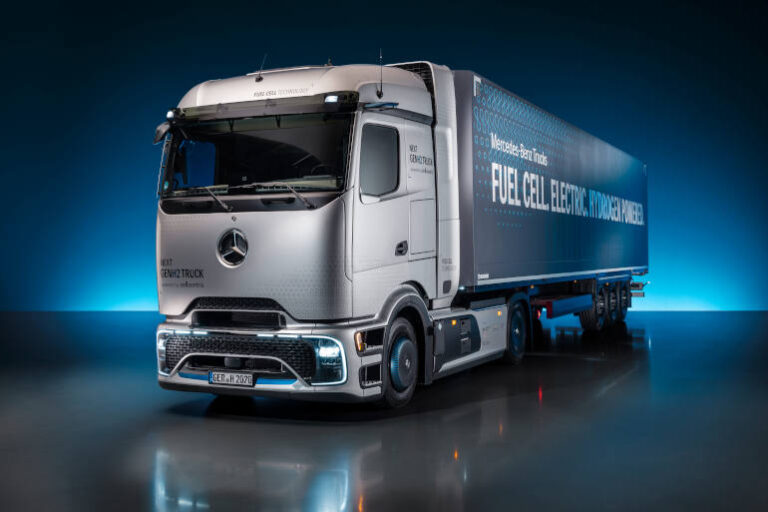

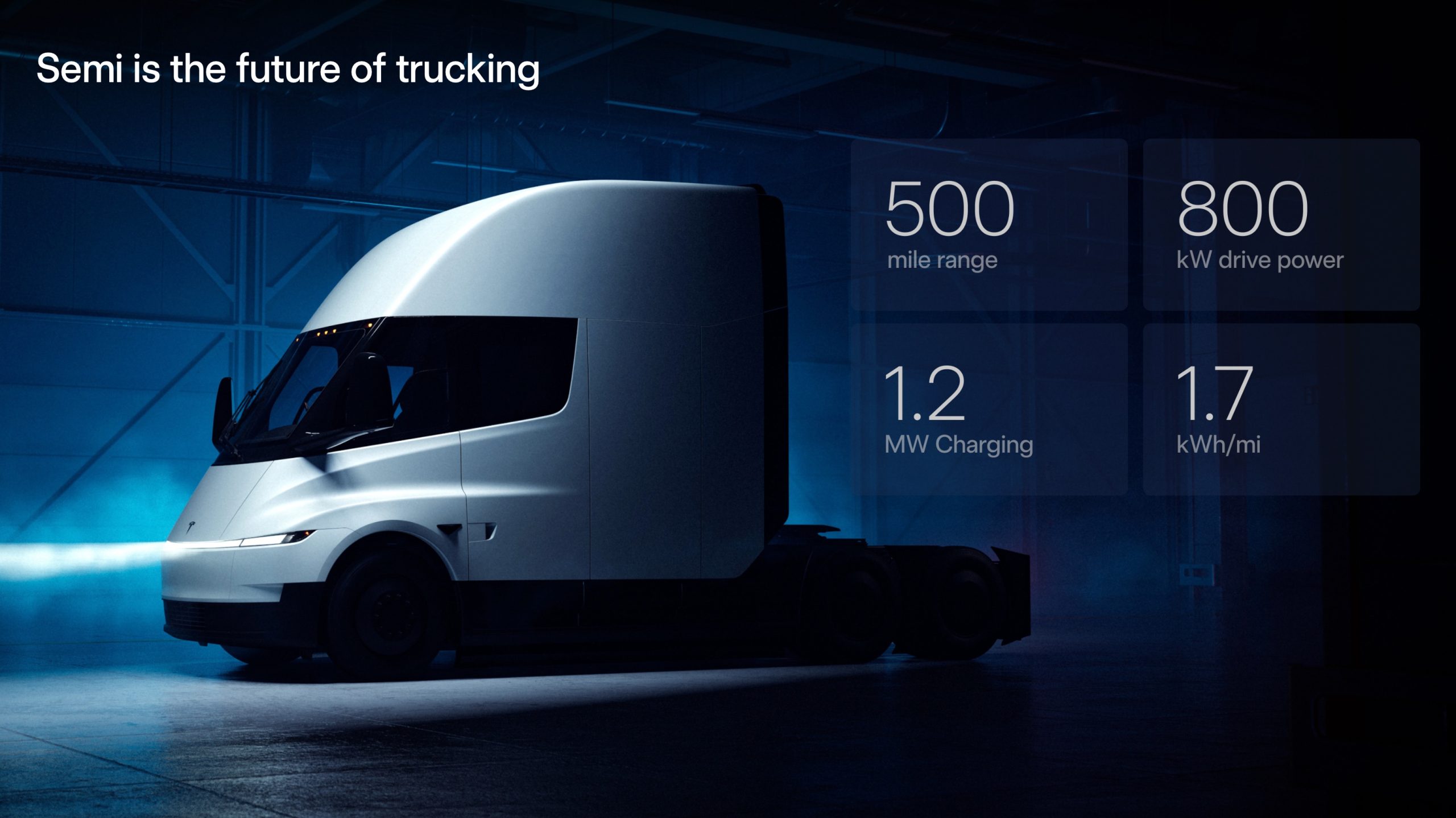
For years the freight industry tried to force a false choice. Battery-electric or hydrogen. Back the right horse. Ignore the rest. Daimler Truck’s new Mercedes-Benz NextGenH2 Truck gives Tesla Semis a run for their money and suggests that the argument is already getting old.
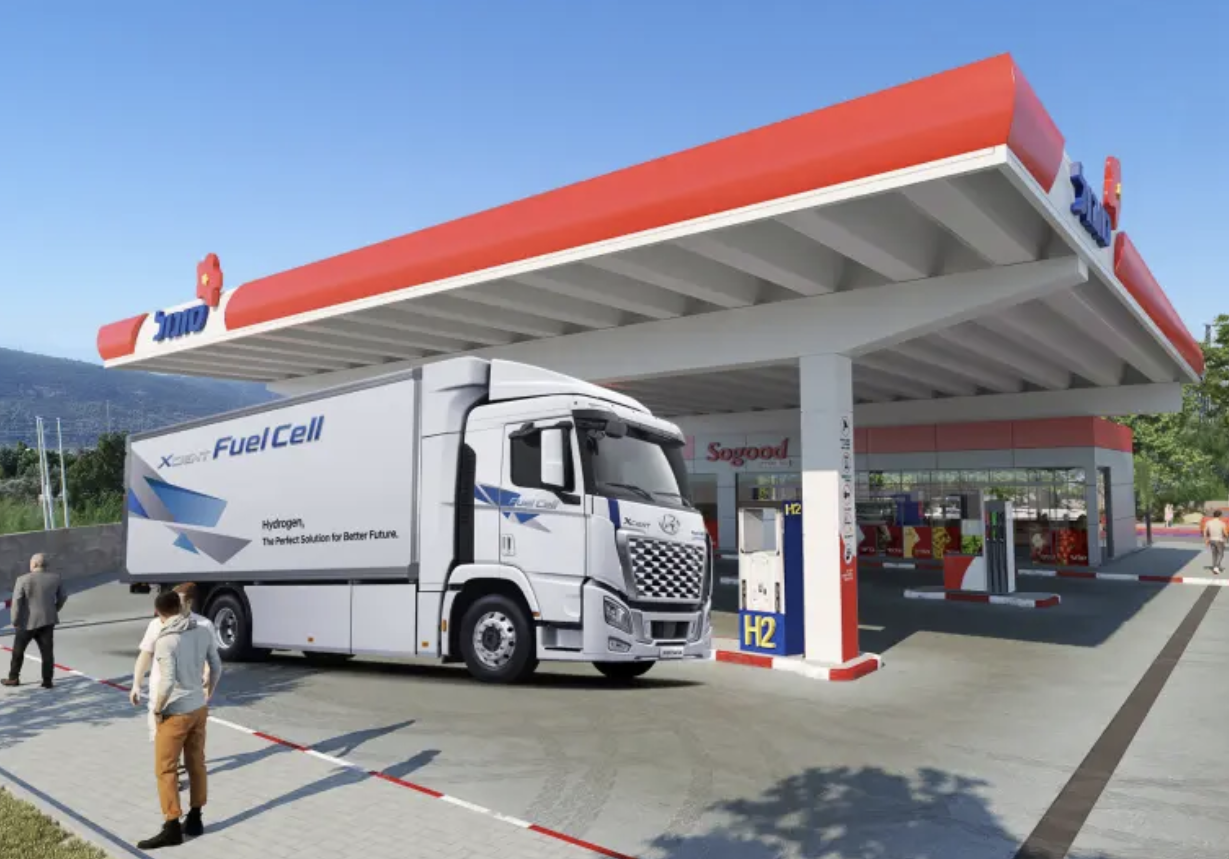
Daimler says its new liquid-hydrogen fuel cell truck will enter small-series production from the end of 2026, with 100 trucks planned for customer operations. The truck is designed for ranges of well over 800 miles on a single fill and borrows major components from the battery-electric eActros 600, including the integrated e-axle, digital cockpit and latest safety systems. That matters because it points to something more realistic than a clean-tech cage match: the future of freight is likely to be electric and hydrogen, depending on route logic, geography, infrastructure and what is actually being hauled.
This is not a small distinction. It changes how ports, logistics firms, governments and even investors should think about decarbonizing freight. A battery-electric truck and a hydrogen truck are not moral rivals. They are tools for different jobs.
Battery-electric trucks are rapidly becoming the better answer for repeatable, corridor-based freight. Think port-to-warehouse routes, retail distribution loops, industrial zones and regional supply chains where trucks can charge during planned dwell times. They are quieter, simpler, mechanically cleaner and increasingly economical where charging can be controlled. That is why Daimler has already been pushing the eActros 600 hard into the market and why other manufacturers are racing to scale their own heavy-duty electric fleets. In those settings, batteries make obvious sense.
Hydrogen comes into its own where the route gets longer, the payload gets heavier and the downtime becomes more expensive. That is exactly the space Daimler is targeting with the NextGenH2. Liquid hydrogen allows the truck to carry more energy on board than compressed gaseous hydrogen, and much more usable long-haul range than many battery systems can currently offer without weight and charging tradeoffs.
Daimler says the truck can be refueled in 10 to 15 minutes using its sLH2 liquid hydrogen standard and that the system is designed to make the vehicle more comparable to diesel in real operations. That is the real benchmark in freight. Not whether the truck is futuristic, but whether it can actually replace a diesel workhorse on the routes that matter.
That also explains why the truck shares so much DNA with the eActros 600. Daimler is not building two completely separate futures. It is building one freight architecture with two energy pathways. The e-axle, digital cockpit, battery buffer, assistance systems and even aerodynamic elements are converging. The truck may store energy differently, but the logic of the vehicle is becoming unified. That is important because the clean freight revolution will not happen if every technology lives in its own expensive silo. It has to become modular, scalable and familiar enough for fleet operators to trust.
Trust is not a small issue in trucking. Freight operators are not early adopters in the consumer-tech sense. They are skeptical for good reason. Their margins are thin and their routes are punishing. Their equipment, which requires a massive upfront investment, like the cost of a house, has to work in the rain, the heat, the cold and the dark, often on deadlines that leave little room for idealism or climate values. The promise of zero-emission trucking only becomes real when it fits the brutal rhythm of actual logistics.
That is why Daimler’s move matters beyond Germany. It arrives at a moment when the global shipping and trucking system looks increasingly exposed. Wars in and around the Middle East, Red Sea disruptions from Houthi pirates, bottlenecks at ports, and the continued vulnerability of the Strait of Hormuz all remind us that diesel is not just dirty. It is geopolitically fragile. A logistics system that can increasingly run on domestic electricity or locally produced hydrogen is not only cleaner. It is harder to destabilize. Saudi Aramco, the world’s richest company, and which controls endless oil reserves knows that the cost of oil can flatten in a minute once local hydrogen fuel production is figured out. That’s why they are investing in it too in Indonesia.
And yes, there is still a serious caveat. Hydrogen is only as green as the way it is made. If it comes from fossil gas without real carbon controls, the emissions story weakens quickly. The same is true of electric trucks charged from dirty grids. A zero-emission vehicle is only truly low-carbon if the energy behind it is also getting cleaner. But that does not make the transition less important. It makes the surrounding energy system more important too.
There is another reason the industry is moving this way, and it has less to do with climate than with safety. Daimler says the NextGenH2 will carry over the latest assistance systems from the eActros 600, including Active Brake Assist 6, Front Guard Assist and Active Sideguard Assist 2. These are not marketing flourishes. Heavy trucks remain among the most dangerous machines on public roads, and any serious upgrade in crash prevention matters. The more freight becomes software-defined, sensor-rich and digitally governed, the more it can move away from the old diesel model built around fatigue, blind spots and brute force.
Battery-electric trucks will likely dominate repeatable routes where charging is easy and economics are already starting to work. Hydrogen trucks will likely serve the heavier, longer and more demanding lanes where batteries still struggle in countries like Australia, Canada, and the US. In the future: Rail will matter more. Ports will become smarter. Road trains and platooning may return in digital form and freight itself will slowly become less about individual vehicles and more about coordinated systems like how airlines collaborate at airports around the world. Everyone has a space and a time for refueling, cleaning, loading, taxi-ing and take-off.
For now, Daimler’s NextGenH2 is not proof that hydrogen has won. It is proof that freight is finally getting more honest. The future was never going to be battery-only or hydrogen-only. The future is electric and hydrogen for shipping.