
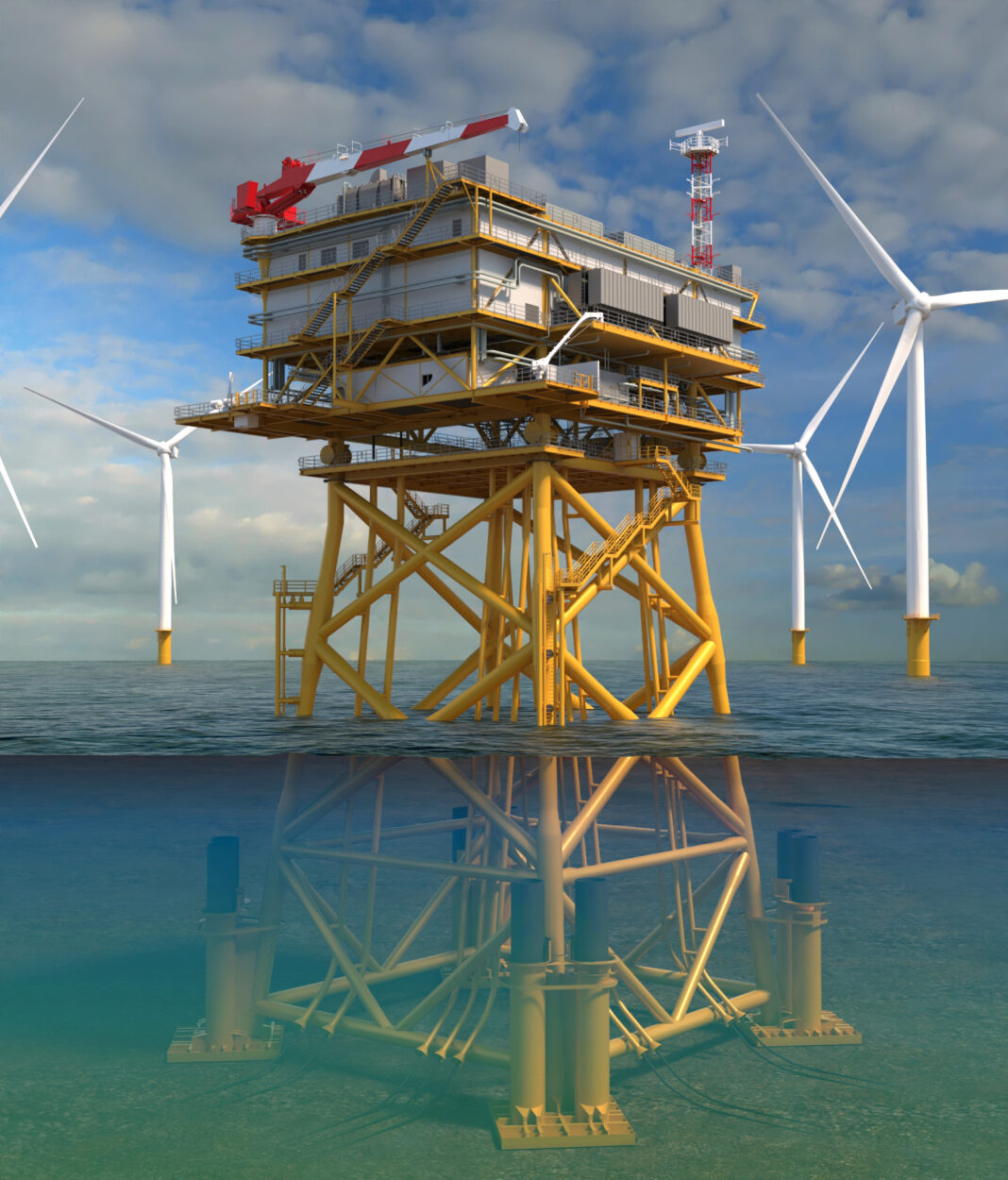
Trump Lifts Ban on $5 Billion Empire Wind Project—Why Offshore Wind Is Back, and What We Learned from Ivanpah’s Collapse

In a dramatic reversal, President Donald Trump has lifted a federal stop-work order on the $5 billion Empire Wind project off the coast of New York, reigniting one of America’s most ambitious offshore wind energy developments. The move comes just weeks after the Department of the Interior froze the project, citing concerns about marine life from a National Oceanic and Atmospheric Administration (NOAA) report.

Equinor, the Norwegian energy firm behind Empire Wind, confirmed construction will now resume. With 30 percent of the offshore infrastructure already in place and weekly suspension costs exceeding $50 million, the restart comes as a lifeline—not just for the company, but for New York’s clean energy goals.

Governor Kathy Hochul praised the decision, noting it will immediately restore roughly 1,500 union jobs.

“I want to thank President Trump for his willingness to work with me to save the 1,500 good paying union jobs that were on the line and helping get this essential project back on track,” she said in a statement.

Related: Trump aims to make Gaza the new Riviera

Equinor CEO Anders Opedal echoed the sentiment, calling the decision a victory for both workers and long-term U.S. energy investment.

“This solution saves thousands of American jobs and provides for continued investments in energy infrastructure in the U.S.,” said Opedal.

Offshore Wind at a Crossroads

The resurrection of Empire Wind is more than a political gesture—it’s a crucial inflection point for America’s renewable energy transition. The U.S. currently has four major offshore wind farms under construction: Empire Wind, Coastal Virginia Offshore Wind, Sunrise Wind, and Revolution Wind. Together, they represent the core of the Biden-era goal of reaching 30 gigawatts of offshore capacity by 2030.

But that vision has faltered. Soaring costs, regulatory whiplash, and supply chain constraints have slowed development. Many in the energy sector feared that the sudden halt of Empire Wind might signal the unraveling of confidence in offshore projects.

Now, the reboot signals that—at least for now—offshore wind remains a national priority, even under an administration often skeptical of renewables.

A Lesson from the Desert: What Happened to Ivanpah

The Empire Wind revival also reopens another conversation: what happens when green megaprojects collapse? For that, look to Ivanpah, the $2.2 billion solar thermal plant in California’s Mojave Desert that once symbolized the promise of utility-scale renewable power.

Ivanpah, CSP plant
Ivanpah was propped up by government grants. Was there oversight?

Today, Ivanpah is effectively defunct—its towers still standing, but its output and relevance fading into obsolescence. Speaking to Green Prophet in 2024, Moshe Luz, one of Ivanpah’s former lead engineers, described how the project was doomed not by a lack of vision, but by poor policy support, unpredictable regulation, and a technology that was rapidly overtaken by more efficient solar PV systems.

“We built something beautiful and huge, but we didn’t build a future-proof system,” Luz told us. “When support dried up and expectations shifted, the project couldn’t adapt fast enough.”

That collapse serves as a cautionary tale. Empire Wind, and projects like it, depend not only on federal approval but on long-term political and public backing. The stakes aren’t just ecological—they’re economic, cultural, and structural.

What’s Next?
Equinor now faces a race to mitigate delays. The company said it will work closely with regulators and suppliers—including turbine-maker Vestas—to get the timeline back on track. The project, once operational, will generate up to 2 gigawatts of clean electricity—enough to power over a million homes in New York.

But the long-term success of offshore wind in the U.S. hinges on something more elusive than turbines or transmission lines: policy coherence. Inconsistency kills momentum. And unlike Ivanpah, the offshore wind industry still has a chance to deliver on its early promise—if political winds don’t shift again.

For deeper stories on the climate, technology, and energy transitions reshaping our world, follow Green Prophet.


LEAVE A REPLY

Please enter your comment!
Please enter your name here

TRENDING

Astro uses AI to help procure land for renewable energy

For oil-rich, environmentally vigilant Gulf states, Astro isn’t just another startup story. It is a blueprint for accelerating an energy transition that is now existential, not optional.

How Renewable Energy is Revolutionizing the Way We Power Our World

Solar has become the star of the transition thanks to modular hardware and straightforward installation. It fits dense cities and remote towns alike. Many companies are turning to rooftop arrays and carport systems - and exploring commercial solar installation as a practical way to lock in future savings.

Leading Through a Dual-Energy Transition: Balancing Decarbonisation with Energy Security

Experience in one area of the energy industry isn't enough to guarantee readiness across all the others. That's where a structured program like an MBA in energy can come in. Today's advanced curricula explore energy economics, finance, policy, and strategic management alongside the technical subjects. And when pursuing an energy MBA online, professionals can skill up and retrain without having to step out of the labor market -- an important perk at a time when skilled professionals are already in short supply.

M2PV Capital Targets the American Southwest as Its Launchpad for Off-Grid EV Growth

In the American Southwest, electric vehicles face extreme heat, long travel distances, and limited grid access that expose the real infrastructure gaps behind the EV transition. M2PV Capital is building off-grid charging and power systems designed to operate independently in the region’s most demanding conditions.

What Renewable Energy Means for Long-Term Environmental Planning

In the context of American energy policy (setting the stage for the world as oil prices are in USD), the relevance of renewable energy planning is increasingly evident. Federal agencies are preparing final biofuel blending mandates under the Renewable Fuel Standard, with decisions expected early in 2026 after delays that have left investors and producers in limbo.

Qatar’s climate hypocrisy rides the London Underground

Qatar remains a master of doublethink—burning gas by the megaton while selling “sustainability” to a world desperate for clean air. Wake up from your slumber people.

How Quality of Hire Shapes Modern Recruitment

A 2024 survey by Deloitte found that 76% of talent leaders now consider long-term retention and workforce contribution among their most important hiring success metrics—far surpassing time-to-fill or cost-per-hire. As the expectations for new hires deepen, companies must also confront the inherent challenges in redefining and accurately measuring hiring quality.

8 Team-Building Exercises to Start the Week Off 

Team building to change the world! The best renewable energy companies are ones that function.

Thank you, LinkedIn — and what your Jobs on the Rise report means for sustainable careers

While “green jobs” aren’t always labeled as such, many of the fastest-growing roles are directly enabling the energy transition, climate resilience, and lower-carbon systems: Number one on their list is Artificial Intelligence engineers. But what does that mean? Vibe coding Claude? 

Somali pirates steal oil tankers

The pirates often stage their heists out of Somalia, a lawless country, with a weak central government that is grappling with a violent Islamist insurgency. Using speedboats that swarm the targets, the machine-gun-toting pirates take control of merchant ships and then hold the vessels, crew and cargo for ransom.

Leopoldo Alejandro Betancourt López Turned Ocean Plastic Into Profitable Sunglasses

Few fashion accessories carry the environmental burden of sunglasses. Most frames are constructed from petroleum-based plastics and acrylic polymers that linger in landfills for centuries, shedding microplastics into soil and waterways long after they've been discarded. Leopoldo Alejandro Betancourt López, president of the Spanish eyewear brand Hawkers, saw this problem differently than most industry executives.

Why Dr. Tony Jacob Sees Texas Business Egos as Warning Signs

Everything's bigger in Texas. Except business egos.  Dr. Tony Jacob figured...

Israel and America Sign Renewable Energy Cooperation Deal

Other announcements made at the conference include the Timna Renewable Energy Park, which will be a center for R&D, and the AORA Solar Thermal Module at Kibbutz Samar, the world's first commercial hybrid solar gas-turbine power plant that is already nearing completion. Solel Solar Systems announced it was beginning construction of a 50 MW solar field in Lebrija, Spain, and Brightsource Energy made a pre-conference announcement that it had inked the world's largest solar deal to date with Southern California Edison (SCE).

Related Articles

Popular Categories