
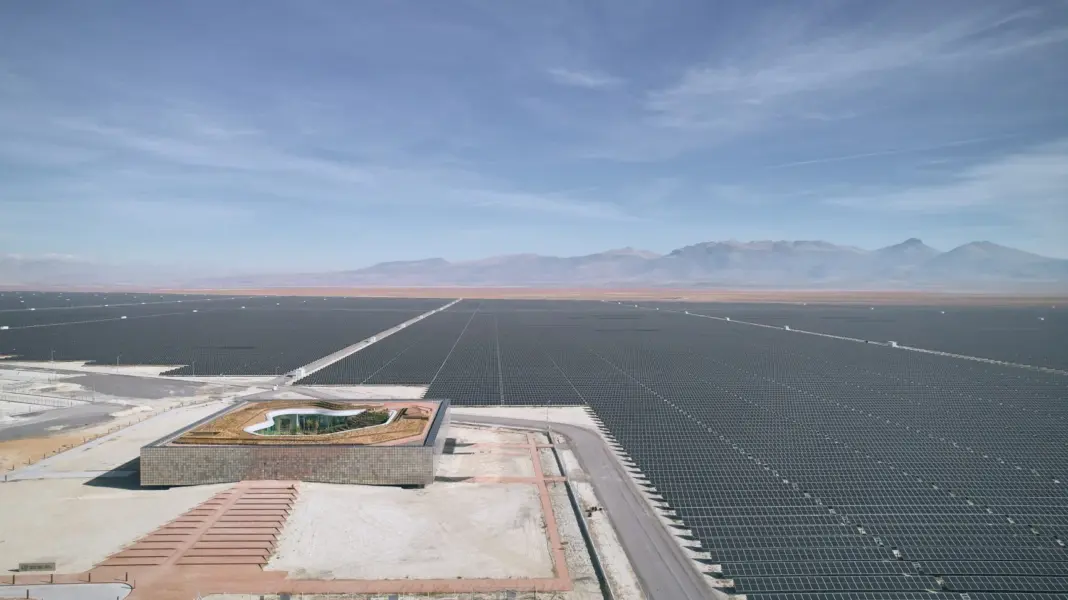

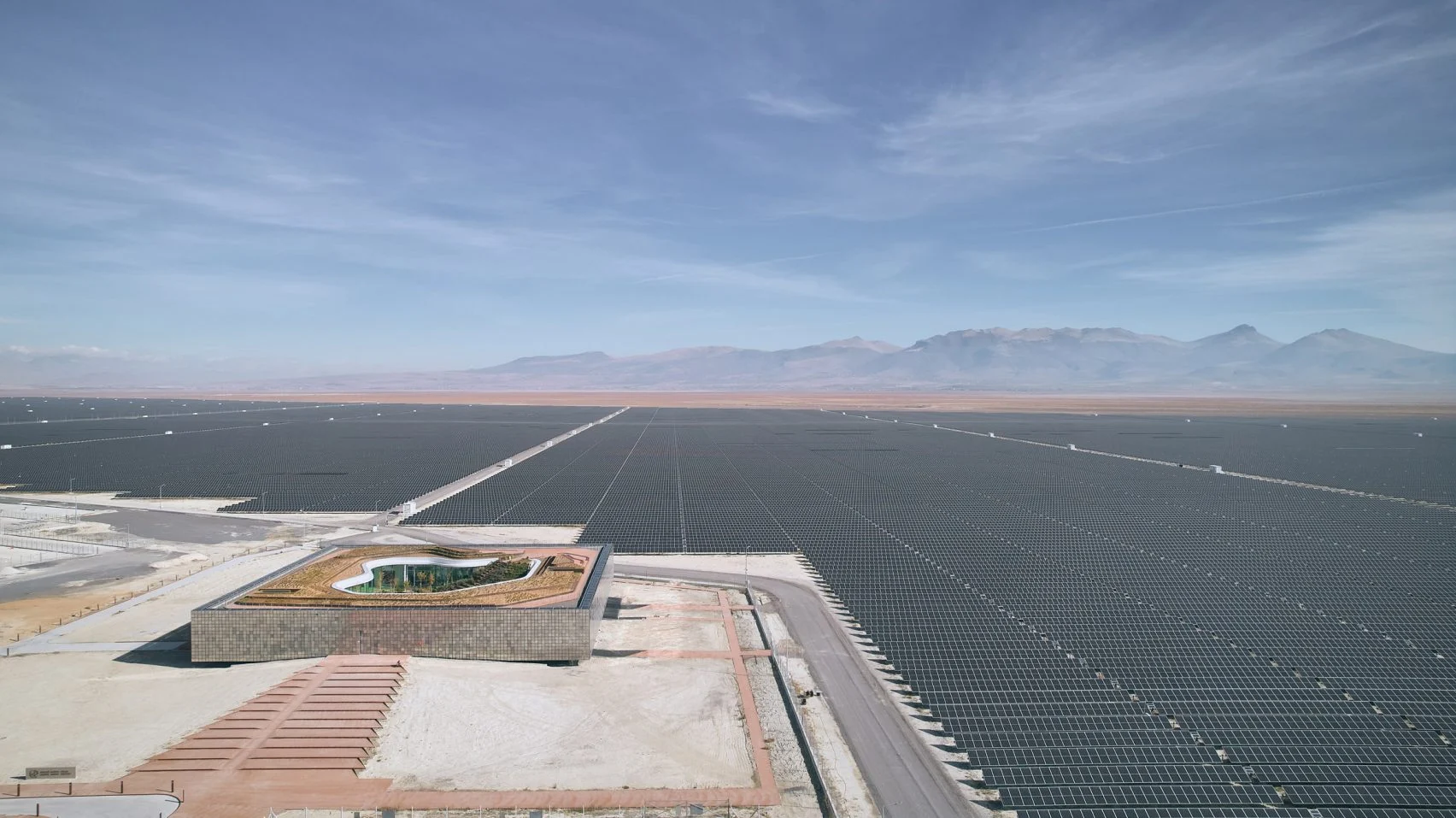
 A facade of shimmering steel panels envelops this control centre that Istanbul studio Bilgin Architects has created in the plains of Karapinar, Turkey.
The Turkish government has signed a USD 1 billion (EUR 919 million) agreement with the World Bank to initiate a program promoting the expansion of renewable energy in the country.
Announced on Thursday, the initiative aims to increase Turkey’s installed renewable energy capacity, support sustainable development, and combat climate change. It will focus on creating a domestic market for distributed solar energy and launching a pilot project for battery energy storage.
Read Related: Stunning solar energy plant in Turkey
The program will be executed by the Development and Investment Bank of Turkey (TKYB) and the Industrial Development Bank of Turkey (TSKB). Funding will be provided through loans from the World Bank’s International Bank for Reconstruction and Development (IBRD) and the Clean Technology Fund, with additional grant funding available under the Energy Sector Management Assistance Programme.
In late 2022, Turkey set a goal to raise its total power capacity to approximately 190 GW by 2035, with wind and solar making up nearly 75% of the new additions. The solar capacity target is 52.9 GW, and installed battery storage is aimed to reach 7.5 GW.
Turkey has a dynamic history with renewable energy, driven by its diverse geography and growing energy needs. The country’s efforts to harness renewable resources began in earnest in the early 2000s, with a significant focus on hydroelectric power due to Turkey’s ample rivers and mountainous terrain. Hydropower remains a cornerstone of Turkey’s renewable energy portfolio, accounting for a substantial portion of its energy mix.

In recent years, Turkey has expanded its renewable energy strategy to include wind and solar power. The government introduced policies and incentives to attract investment in these sectors, resulting in rapid growth. For instance, Turkey’s wind energy capacity has seen a significant increase, with installations concentrated in regions with high wind potential like the Aegean and Marmara. Similarly, solar energy has gained momentum, especially in the sunny southern and central parts of the country. As of the late 2010s, Turkey’s renewable energy sector began to see substantial private sector participation, supported by favorable feed-in tariffs and regulatory frameworks.
However, Turkey’s energy strategy also includes mixed opinions on nuclear power. Proponents argue that nuclear energy is essential for reducing dependence on imported fossil fuels and ensuring a stable, reliable energy supply. The Akkuyu Nuclear Power Plant, Turkey’s first nuclear facility, is a centerpiece of this strategy. It is being constructed with significant Russian investment and expertise, and once operational, it is expected to provide a substantial portion of Turkey’s electricity needs. Advocates emphasize that nuclear energy is a low-carbon option that can help Turkey meet its climate goals.
On the other hand, opponents raise concerns about the environmental risks and long-term safety of nuclear energy. They argue that Turkey should prioritize its abundant renewable resources instead of investing in nuclear power, which poses potential risks such as radioactive waste and the possibility of nuclear accidents. Critics also point to geopolitical and economic issues, including dependence on foreign technology and fuel, which could undermine energy sovereignty.
The debate over nuclear energy in Turkey reflects broader global discussions about the role of nuclear power in a sustainable energy future. While renewable energy sources like wind, solar, and hydro are generally viewed as safer and more sustainable, nuclear energy’s potential to provide large-scale, low-carbon power makes it a contentious but critical part of Turkey’s energy landscape.
Turkey’s troubling history supporting terrorism
As Turkey continues to pursue its ambitious renewable energy targets, the interplay between expanding renewable capacity and incorporating nuclear energy will shape its path towards a sustainable and secure energy future. The government’s recent agreement with the World Bank underscores a commitment to enhancing renewable energy deployment, which, alongside the debate on nuclear energy, highlights the complexity and diversity of Turkey’s energy strategy.
Turkey’s involvement in supporting certain organizations labeled as terrorist groups by various countries and international bodies has been a contentious issue. Critics argue that Turkey has provided logistical, financial, and political support to groups like Hamas and factions within the Syrian opposition, which some classify as terrorist organizations.
This alleged support is seen as part of Turkey’s broader strategic aims in the Middle East, including countering Kurdish militant groups and expanding its influence in regional conflicts. The Turkish government, however, refutes these claims, asserting that its actions are aimed at ensuring national security and regional stability. The Turkish leader Erdogen recently stated that he is holding 1000 Hamas terrorists at Turkish hospitals. He is also sheltering Hamas leaders and leaders from the Hezbollah.
Turkey would like to be part of the European Union. Recent alliances with Russia, North Korea and China suggest that Turkey is heading more towards the despots than a free democracy in the west. The EU has not agreed to let Turkey become a part of the union. Turkey has tried through environment trials and policies. So far it’s failed.


 agreement with the World Bank to initiate a program promoting the expansion of renewable energy in the country.)