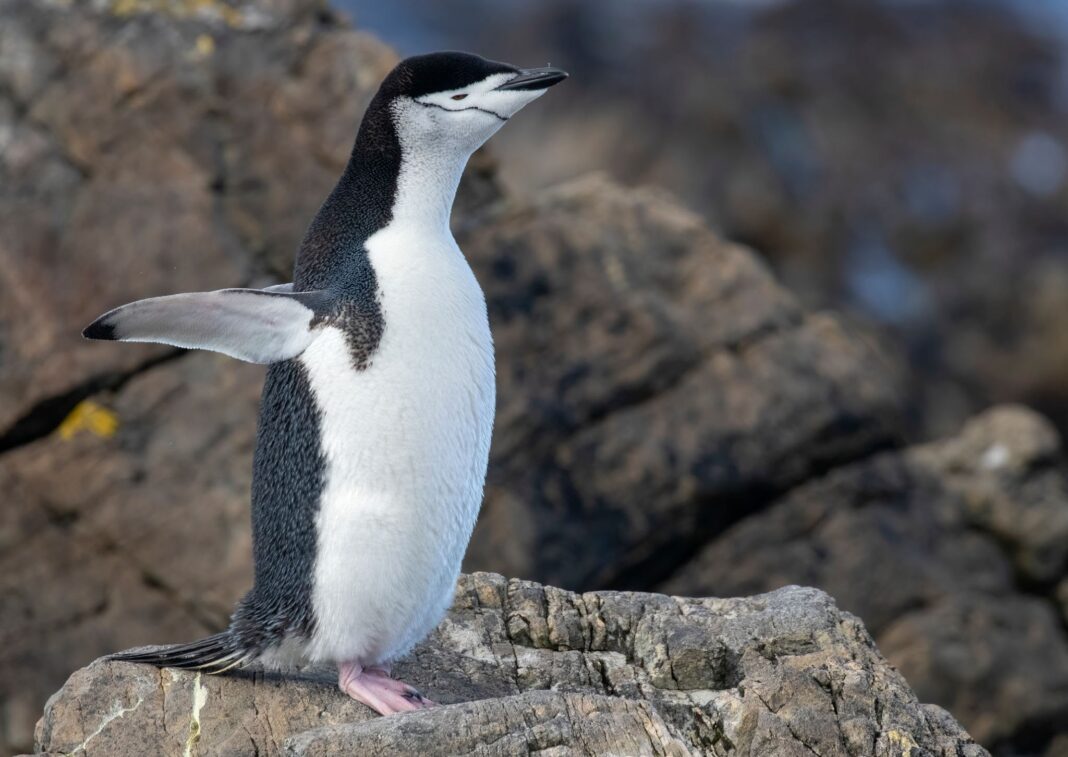


Nursing mothers might feel like they are penguins: new research published in the journal Science finds that penguins can sleep 10,000 times a day for an average of 4 seconds at a time. The breed of penguins studied are chinstrap penguins (Pygoscelis antarcticus) and the scientists observed at 14 birds over 10 days and found that the most the penguins slept was a 34-second power nap, but in total thousands of microsleeps added up to 11 hours of daily rest.
The penguins, researchers surmised, have developed this evolutionary adaptation in order to stay awake while nesting their eggs and guarding themselves from predators. Falling asleep at the wheel for humans, or while sitting on eggs, can be disastrous, so the penguins have adapted in order to rest safely.
The researchers said: “Microsleeps, are seconds-long interruptions of wakefulness by eye closure and sleep-related brain activity, are dangerous when driving and might be too short to provide the restorative functions of sleep. If microsleeps do fulfill sleep functions, then animals faced with a continuous need for vigilance might resort to this sleep strategy.
“We investigated electro-encephalographically defined sleep in wild chinstrap penguins, at sea and while nesting in Antarctica, constantly exposed to an egg predator and aggression from other penguins. The penguins nodded off >10,000 times per day, engaging in bouts of bi-hemispheric and uni-hemispheric slow-wave sleep lasting on average only 4 seconds, but resulting in the accumulation of >11 hours of sleep for each hemisphere.
“The investment in microsleeps by successfully breeding penguins suggests that the benefits of sleep can accrue incrementally.”