
Sustainable and renewable energy is rarely out of the news. As climate change makes headlines regularly due to floods, forest fires, and heatwaves occurring across the world, it is becoming more important to reduce emissions immediately.
The US is one of the leading countries when it comes to solar power, one of the most practical sources of renewable energy. India, Japan, and Vietnam have all adopted solar power and are among the top five producers of solar power. However, one other country dwarfs everyone else.
A report back in 2017 showed how far ahead China was compared to the US when it came to solar power. Four years ago, 2.5 million people were serving in the solar power industry in China. In America, just over 10 percent of that figure worked in a comparable field.
When it comes to solar farms, China is ahead of the field. In 2019, the installed solar energy fleet was measured at over 200 GW. Since then China has put the second-biggest solar farm online so they have only gotten bigger.
But, what are solar farms, is solar power really the answer the world needs, and can it help you?
Just what are solar farms?
Solar farms are sometimes called photovoltaic power plants, perhaps the former is preferable as the latter has non-green connotations. When power plants are mentioned, many people would automatically think of fossil fuel burning, polluting power stations.
However, solar farms are touted as being green and environmentally friendly, at least more so than burning coal or oil are.
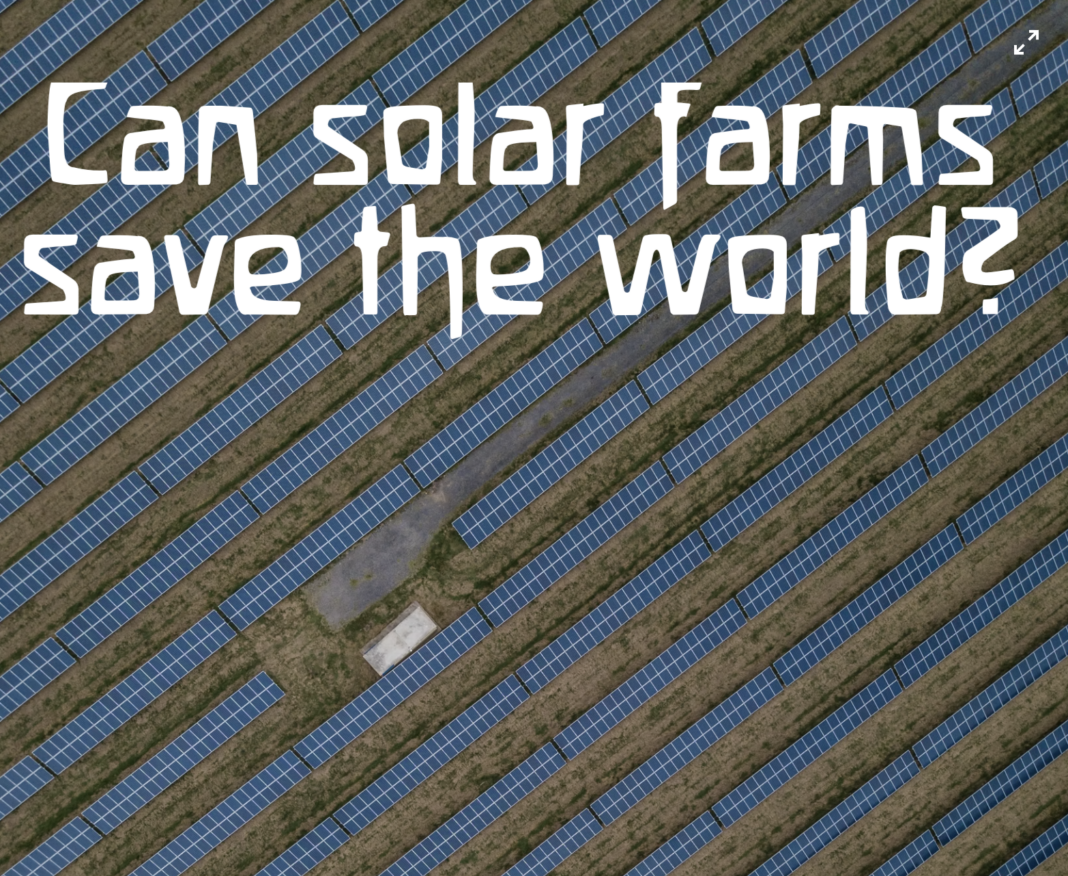
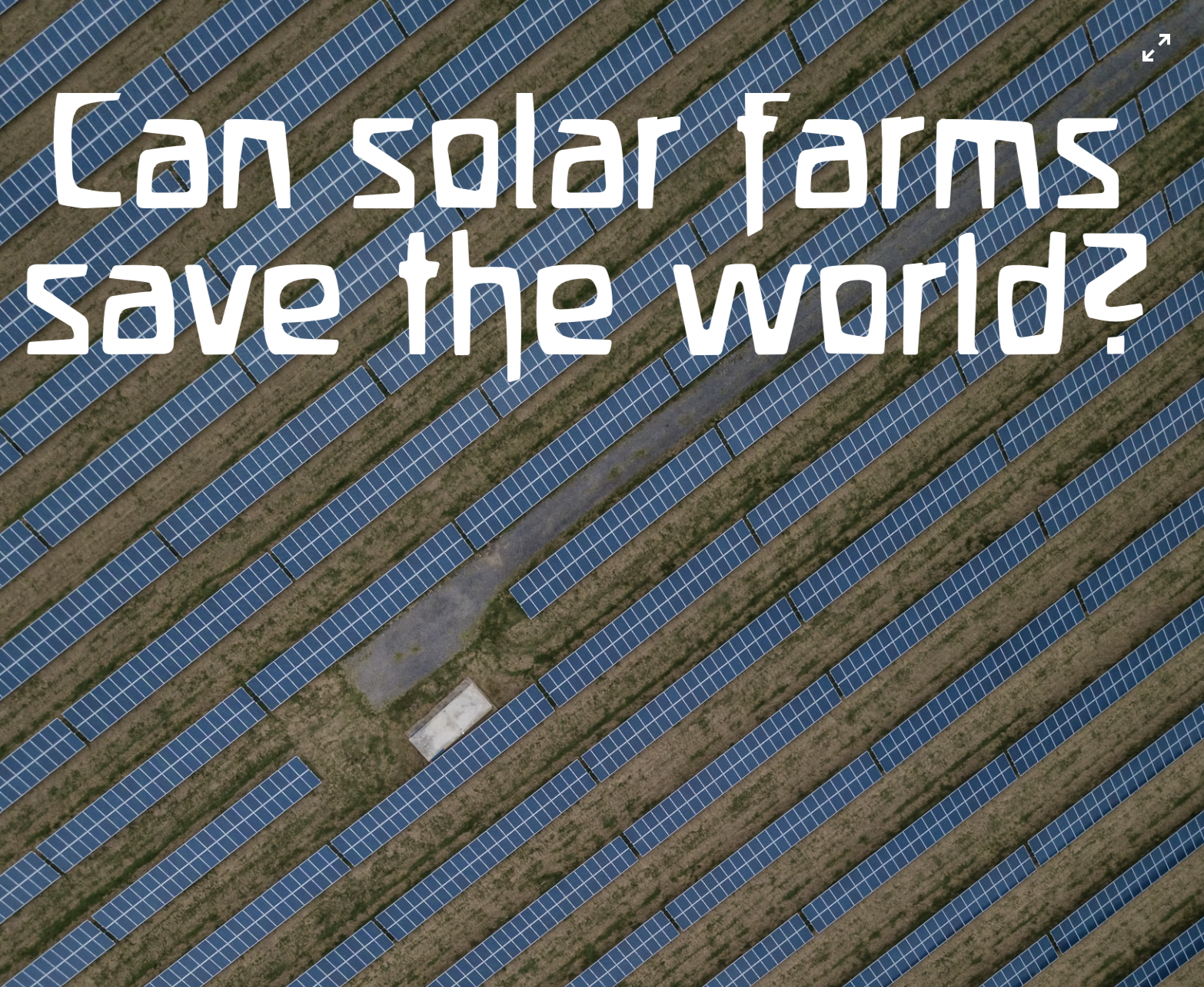
A solar farm is simply an area of land where a considerable amount of photovoltaic solar panels, or PV solar panels, are installed to convert the sun’s energy into power that businesses and residents can use.
Solar farms generally come in two different formats. They can, of course, come in any size or shape, depending on requirements and their owners. But they are largely built for two purposes.
What are the two principal types of solar farms?
Utility-scale solar farms are the ones where vast amounts of land are taken up by solar panels feeding electricity back into the grid. These vast solar farms can seem almost endless to the human eye, and the biggest are in India and China.
The Bhadla Solar Park in India takes up fourteen thousand acres and can produce 2.25 GW of energy. The closest rival is in China and is a close 2.2 GW installation. Riverside solar in New York has just submitted a tender for a-thousand acre plant. Watch this space as the developers have plans to take the power plant up to 16 GW in the future.
Making up the top five largest utility-scale solar farms are one more each from India and China, and one from Egypt. Then there are the smaller solar farms; the community scale installations.
What are community-scale solar farms?
The name fairly accurately describes what these solar farms do. These installations are much smaller in scale than any of the mammoth farms mentioned above. Most likely a community-scale solar farm would be perhaps between 1 and 5 MW.
They would be designed to power a local neighborhood, and perhaps some business or retail units in that area. One of these solar farms could work well on an industrial estate or small area housing manufacturers.
For these types of solar farms to work there would need to be a clear area available to install the required amount of solar panels. It would also need to be in the optimal space for sunlight.
Are the normal alternatives of coal and oil ending soon?
Sadly, many people are still ignorant of the damage that fossil fuels are doing to the environment, and many don’t even realize that they are running out.
According to a study by The Millennium Alliance for Humanity and the Biosphere, or MAHB, at Stanford University, the worst-case scenario is frightening. It would see coal running out in about 70 years’ time, with oil and coal going far before that.
That particular picture would see you losing oil and gas during your lifetime, and if not, then certainly during the next generation’s.
However, it isn’t quite as bleak as that hopefully. Coal is likely to be around for another 150 years, and oil and gas should last a little longer than MAHB’s doomsday prediction.
Other predictions have been re-evaluated over time too. In 1999 The American Petroleum Institute believed that oil would be depleted before the end of this century, and perhaps up to forty years earlier.
Just seven years later there was a different prediction when it was estimated that there was perhaps triple the amount of oil left on the planet than the API believed.
Can the world not just continue with fossil fuels then?
With there being oil, coal, and gas, still available, some people don’t see the dangers in continuing to use these reserves.
Indeed, it is possible, and probably likely, that some other fossil fuel reserves will be discovered in the future and the life of these sources of energy extended.
However, as the fuels run out, the consumption of energy is increasing. The world is heading towards the end-game as far as fossil fuels are concerned. Continued use of fossil fuels is also increasing global warming and damaging the environment.
Renewable and sustainable energy sources are needed more than ever, and this is the reason that so many huge solar farms are being installed.
Are solar farms good for the environment?
They may not be too aesthetically pleasing, but the energy they produce is completely renewable. It doesn’t harm the sun or the environment to harness solar energy, and the sun is going nowhere soon.
It is estimated that the sun will be around for at least another 5 billion years, so unlike coal, there is no need to search for more reserves, or ‘suns’.
There are a lot of misconceptions about solar panels, and these usually revolve around such things as the cost of installation. However for all the good that solar power brings, the manufacturing process can be questionable sometimes.
When buying solar panels it may be worth checking the manufacturers and their eco-friendly credentials. Certain harmful chemicals are used in the production of solar panels, and many manufacturers in China use coal-powered electricity to make them.
How useful is solar energy to the average homeowner?
These days, solar power is extremely common. While not everyone has solar panels on the roofs of their homes, they may have them in at least one area. Sometimes solar power is used quite subtly. Small garden lights that stick straight into the ground can have solar panels on top of them.
Outdoor security lights and driveway lighting can be solar-powered. Even indoor lights can utilize solar energy if enough of the sun’s light enters the home.
Uplights, deck lights, and solar-powered pool covers are common now, and even RVs can be solar-powered.
When it comes to more serious uses, poor and developing nations can benefit from solar power. There are practical solar-powered innovations for developing countries, which are often based around water supplies.
Solar power can be used to help poor farmers irrigate their land in countries where drought is an issue. Even more importantly, solar power can help to produce sanitary drinking water.
Summary
Perhaps surprisingly, solar power is only the third biggest form of renewable energy after hydro and wind. While solar panel manufacture has some concerns still, the overall benefits of this energy source far outweigh the bad.
If there are spaces in the world that are unusable for living, then it makes sense that solar farms be built on them. If more coal-fired electricity is replaced by solar energy, then the planet should be able to breathe a little easier.