How has Oil Performed During the COVID-19 Crisis?

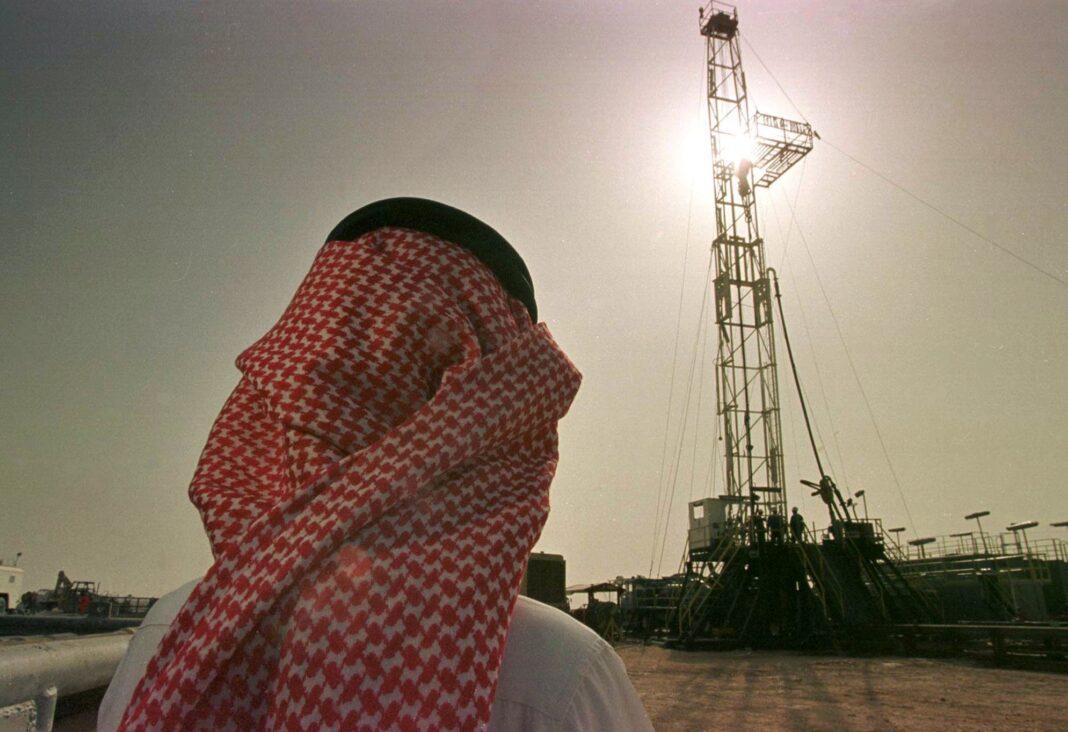
saudi oil baron looks to oil field
Khaled al Otaiby, an official of the Saudi oil company Aramco watches progress at a rig at the al-Howta oil field near Howta, Saudi Arabia, on Feb. 26, 1997. Energy is the big strand in a web of U.S.-Saudi economic ties that has grown in the six years since an American-led army rolled back Iraqi aggression in the Persian Gulf. (AP Photo/John Moore)

Oil prices and oil products, including gasoline and diesel, have tumbled in the wake of the COVID-19 crisis, and demand is far from ready to rebound. Most of the world is ready to begin the process of reopening their economies, but until consumers get on the road or in the air, oil demand will remain subdued. Generally, at this time of year, US gasoline demand is starting to push into high gear, peaking during the summer above 10-million barrels of demand per day. Ethanol production is experiencing a drastic slowdown in response to the market being flooded with fuel at a time that demand has disappeared. 

What Happened?

The novel coronavirus started to spread in Wuhan China and made its way into Asia, and then western Europe. Italy experienced a major outbreak, and in early February the spread of COVID-19 moved into the east coast and the west coast of the United States. The US is the world’s largest consumer of oil, ingesting approximately 20-million barrels a day. As countries around the globe began to shut down, the consumption of petroleum started to drop. In the US, total consumption has declined by approximately 28%, with most of the drop seen in gasoline and jet fuel.

According to the US Department of Energy, the total volume of petroleum products consumed in the last 4-weeks is 14.5 million barrels a day, down by 28.0% from the same period last year. The breakdown is as follows. During the past month, gasoline demand averaged 5.3 million barrels a day, down by 43.7% from the same period last year. Distillate fuel, which includes heating oil and diesel averaged 3.2 million barrels a day over the past four weeks, down by 15.1% from the same period last year. Lastly, the Energy Information Administration reported that Jet fuel demand was down 61.6% compared with the same month last year

The drop in gasoline has harmed renewable fuels such as ethanol. US ethanol exports were already on the decline and the impact of the COVID-19 has made the issue even worse. US ethanol exports fell by 14% in 2019 even though the number of export destinations increased from 34 destinations in 2018 to 39 destinations in 2019. On the renewable front, the lack of gasoline demand has hit harder than diesel. The trucking industry has had to continue moving production and inventory while Amazon trucks have been busy filling everyone’s home shopping needs.

The Decline in Demand was Met with a Supply Cut

The drop in demand has been the catalyst for the decline in prices, but an initial crude oil war, between the Saudi’s and Russian’s, created an impetus to push prices even lower. In the wake of the spread of the virus, OPEC was looking for a solution that could counter the huge decline in demand. Their goal was to cut production, but Russia was uninterested, as they viewed the rise in US production as a major issue. The US has increased production by more than 1-million barrels a day over the past year. Russia wanted the US to cut production as well before it would come to the table.

Eventually, OPEC+ decided on a production cut that would remove 9.7-million barrels a day from global production. Norway recently followed and plans to reduce production in June. The US has not officially joined the production cuts but has been forced to shutter many rigs. The number of oil rigs that are in production in the US, has dropped substantially. In early April, Baker Hughes, the oil rig giant reported that the number of active US rigs drilling for oil dropped by 53 to 325. The oil-rig count has now declined for seven weeks in a row. The total active US rig count, meanwhile, also fell by 57 to 408. This compares to a 35-year high of 1,609 active rigs and a low of 98-active rigs. This has taken 700 thousand barrels a day off the market. The last time the US active rig count was at the current level, the oil production in the US was approximately 9-million barrels a day.

The Bottom Line

The upshot is that demand will need to come back for prices to rise. Companies involved in the production of oil or renewable fuels will remain under pressure until prices can rebound. Oil companies are cutting production and if the lack of demand persists, dozens will go out of business. While the world is slowly beginning to come back and undertake certain activities, without employees going to work, or people taking vacation it’s hard to see petroleum demand rebounding to prior levels.

Bhok Thompson
Bhok Thompsonhttp://www.greenprophet.com
Bhok Thompson is an “eco-tinkerer” who thrives at the intersection of sustainability, business, and cutting-edge technology. With a background in mechanical engineering and a deep fascination with renewable energy, Bhok has dedicated his career to developing innovative solutions that bridge environmental consciousness with profitability. A frequent contributor to Green Prophet, Bhok writes about futuristic green tech, urban sustainability, and the latest trends in eco-friendly startups. His passion for engineering meets his love for business as he mentors young entrepreneurs looking to create scalable, impact-driven companies. Beyond his work, Bhok is an avid collector of vintage mechanical watches, believing they represent an era of precision and craftsmanship that modern technology often overlooks. Reach out: [email protected]

LEAVE A REPLY

Please enter your comment!
Please enter your name here

TRENDING

Italy’s energy company Eni adds Italian flair for design in industrial fusion reactor

“We have the chance to explore new forms of storytelling about energy,” adds Italo Rota, co-designer of the installation. “We believe that design is a powerful tool to turn a narration into an experience, allowing visitors to sense the energy while being surrounded by a unique atmosphere.”

Azerbaijan state energy company buys into Israel’s gas fields

SOCAR will continue its efforts to acquire stakes in strategic assets in foreign countries in the future. It is a major source of income for the authoritarian regime in Azerbaijan.

Gulf oil company wants to support startups in the circular way

Gulf oil companies want to support circular startups: Dr. Abdulwahab Al-Sadoun

The UAE goes nuclear – complete’s first nuclear plant in the Arab world

The United Arab Emirates has gone nuclear to keep running its air conditioners.

Just Stop Oil activists await jail time for Van Gogh and airport vandalism

Just Stop Oil activists are in jail awaiting sentencing.

Qatar’s climate hypocrisy rides the London Underground

Qatar remains a master of doublethink—burning gas by the megaton while selling “sustainability” to a world desperate for clean air. Wake up from your slumber people.

How Quality of Hire Shapes Modern Recruitment

A 2024 survey by Deloitte found that 76% of talent leaders now consider long-term retention and workforce contribution among their most important hiring success metrics—far surpassing time-to-fill or cost-per-hire. As the expectations for new hires deepen, companies must also confront the inherent challenges in redefining and accurately measuring hiring quality.

8 Team-Building Exercises to Start the Week Off 

Team building to change the world! The best renewable energy companies are ones that function.

Thank you, LinkedIn — and what your Jobs on the Rise report means for sustainable careers

While “green jobs” aren’t always labeled as such, many of the fastest-growing roles are directly enabling the energy transition, climate resilience, and lower-carbon systems: Number one on their list is Artificial Intelligence engineers. But what does that mean? Vibe coding Claude? 

Somali pirates steal oil tankers

The pirates often stage their heists out of Somalia, a lawless country, with a weak central government that is grappling with a violent Islamist insurgency. Using speedboats that swarm the targets, the machine-gun-toting pirates take control of merchant ships and then hold the vessels, crew and cargo for ransom.

Leopoldo Alejandro Betancourt López Turned Ocean Plastic Into Profitable Sunglasses

Few fashion accessories carry the environmental burden of sunglasses. Most frames are constructed from petroleum-based plastics and acrylic polymers that linger in landfills for centuries, shedding microplastics into soil and waterways long after they've been discarded. Leopoldo Alejandro Betancourt López, president of the Spanish eyewear brand Hawkers, saw this problem differently than most industry executives.

Why Dr. Tony Jacob Sees Texas Business Egos as Warning Signs

Everything's bigger in Texas. Except business egos.  Dr. Tony Jacob figured...

Israel and America Sign Renewable Energy Cooperation Deal

Other announcements made at the conference include the Timna Renewable Energy Park, which will be a center for R&D, and the AORA Solar Thermal Module at Kibbutz Samar, the world's first commercial hybrid solar gas-turbine power plant that is already nearing completion. Solel Solar Systems announced it was beginning construction of a 50 MW solar field in Lebrija, Spain, and Brightsource Energy made a pre-conference announcement that it had inked the world's largest solar deal to date with Southern California Edison (SCE).

Related Articles

Popular Categories