


Artificial Intelligence (AI) and robots are no longer vague terms used to describe futuristic technology. It is no news how AI has benefited various industries, such as finance, healthcare and especially manufacturing, but in recent years, it has done much more than assisting humans at their everyday job. AI and robotics can play a major role in environmental projects, such as preserving wildlife and fighting climate change, developing a better life for humans altogether. Environmental projects are not taking the spotlight from other popular fields, such as financial technology, where new artificial intelligence-based projects are developing at a rapid pace, but they are starting to benefit more and more from the existence of such technology.
For many years now, human employees have felt threatened by AI and robots coming to replace them, although a 2018 study of 1,500 companies proved that humans and machines working together has led to significant performance improvements in said enterprises. But how is the new era of technology really helping the world we live in and, moreover, how much of a role can it play in restoring the planet’s health?
The Positive Impact of AI on Land

Whit the help of artificial intelligence, farming processes can be optimized and transformed to become safer for both Earth and human life. Machine learning and robotics can be used to interact directly with crops, analyzing their state and using the information to determine the best time to plant, water, spray and harvest them, reducing fertilizers and pesticides usage. This will increase efficiency and lead to more eco-friendly crops. These processes can be extended to more than farming and can help monitor and protect all sorts of ecosystems and habitats around the globe. By using AI-empowered drones, environmental researchers can monitor endangered areas, identify species and track animal migration.
While they can not be prevented, natural disasters can also be better understood and contained with the help of AI. For example, massive amount of data regarding hurricanes has, for a long time, been collected and stocked, but without suitable technology, it could not be processed to reveal valuable information regarding climate modeling.
In recent years, the use of machines has evolved past the robot assembly lines. Various projects have surfaced in recent years, utilizing robots to repopulate forests that have been affected by human hand or natural disasters. Robots can plant trees ten times faster than a human hand, helping forests recover from damage and making cities a much greener and healthier environment.
Fighting Air Pollution
Monitoring air pollution has been a challenge that environmental researchers have faced throughout the years. Environmental organizations and governments can use technology to identify air pollution sources and implement precaution measures. By using smart sensors that are equipped with machine learning techniques, they can detect gas breaches and other air polluting sources.
Besides analyzing and monitoring air pollution, AI can help reduce it altogether. Take for example transportation, where studies have shown that autonomous cars can reduce oil consumption by 4% over the next 10 years. This increases the possibility of autonomous public transportation, with dynamic bus routing, leading to fewer vehicles on the road. Smart traffic lights can also improve traffic flow, thus reducing driving time and carbon print.
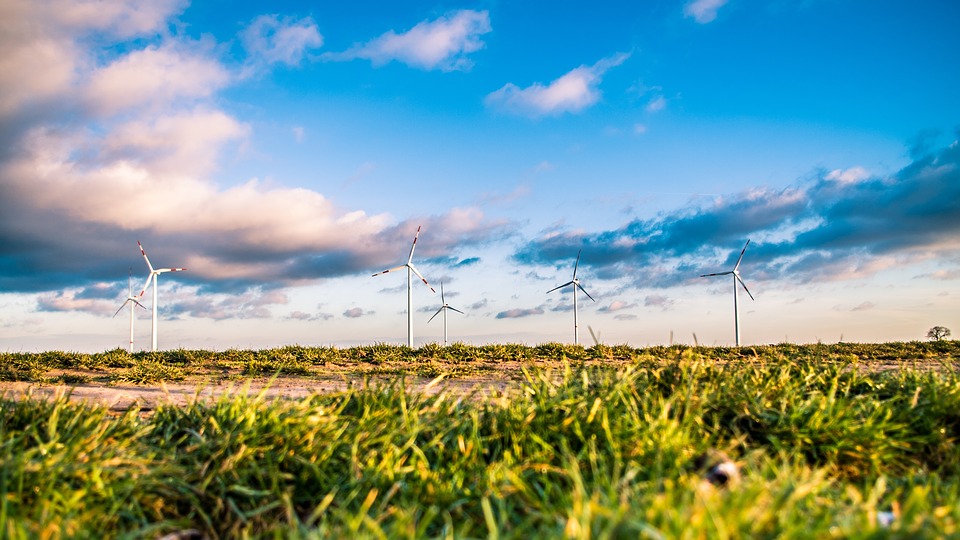
In order to reduce pollution, society’s dependency on fossil fuels has to decrease. AI can help make sustainable energy technology, such as solar panels and wind turbines, more efficient. Smart meters can be used to give energy providers a better understanding of the usage of energy and help them make adjustments for better efficiency.
Using AI to Make Waters Healthier
If one were to use the Earth’s water as an indicator of the planet’s health, the results would turn out to be quite alarming. According to recent studies, one truck of garbage is dumped into the ocean every minute and it has to stop. Fortunately, AI has already come to the rescue, helping with the deconstruction of the Great Pacific Garbage Patch. The Ocean Cleanup Project is an autonomous “garbage truck” powered by artificial intelligence that collects garbage faster and more cost effective than conventional methods can. Machine learning is also making it possible to monitor marine life and understand and prevent the endangering impact of human actions, such as industrial activity and illegal fishing.

In 2013, reports showed that only 15% of the ocean floor has been mapped. With the need to discover more about what lies underneath Earth’s blue blanket, the development of diving bots comes as no surprise. Computer scientists developed a humanoid diving robot able to travel to areas that are too deep and dangerous for humans to collect samples that are vital for a better understanding of marine life.
But collecting data and doing research is not the only way robots are helping the oceans. A tuna-shaped robot that blends in with the marine life and acts as a real fish was developed to keep an eye on vessels, piers and harbors. The robot is used to detect illegal goods that are often stored in the body of ships and can otherwise pass by undetected.
Taming the Urban Jungle
Saving the planet doesn’t only mean rebuilding the flora and fauna. It also means developing new ways to help humans consume fewer resources and reduce their impact on the environment. More and more people have developed a habit in recycling and the benefits are abounding. Recycling robots use AI to identify and sort items into designated bins, to make recycling more efficient. Humans don’t have to wonder if a certain item belongs to a blue or yellow bin. This also helps reducing human exposure to a toxic environment such as garbage dumps and sewers. Another robot, operated by a simple smartphone app is now used to study bacteria, viruses and chemicals found in manholes. Why do we need it? Well, in a scenario involving a flu virus outbreak, the sewers are the first to know. There is no need to expose the risk a human would be exposed to, when collecting and transporting recipients filled with sewage water.