See how Asia’s Aral Sea shrinks before our very eyes in these time lapse photos

aral-seaWe’ve killed it! Once the fourth largest lake in the world, the Aral Sea between Kazakhstan and Uzbekistan is about 10% of its former size.

Is it our love for cotton or Soviet mismanagement? See the individual images below of a dying saltwater lake in progress.

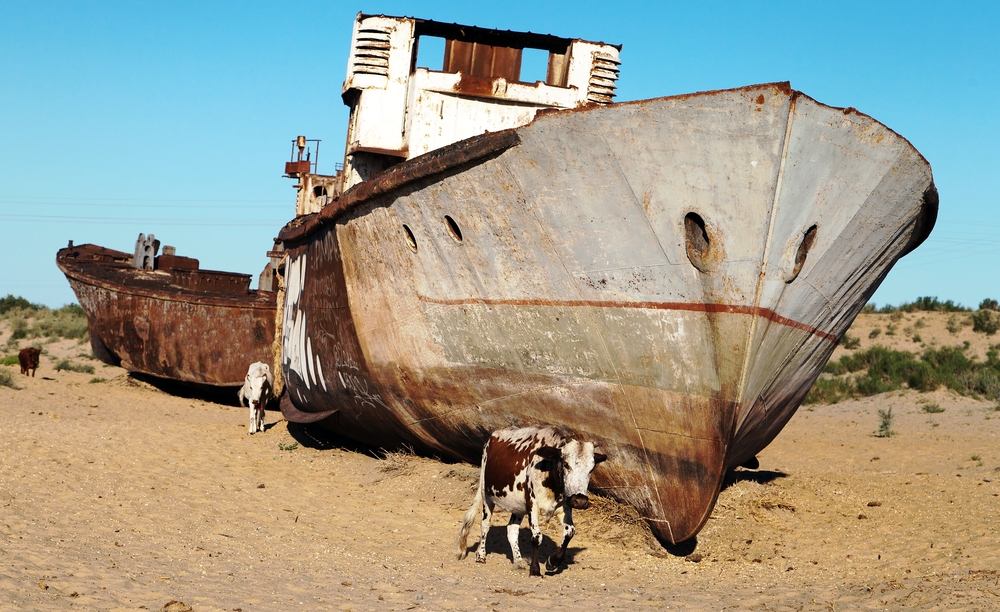
What’s left of the Aral Lake one of the strangest sights, Green Prophet’s Larry told me two weeks ago, while reflecting on his trip ther: Ports and boats stuck at “harbor” in the middle of the desert as shown in the images below. Located in the arid plains between Kazakhstan, Uzbekistan, and Turkmenistan, the Soviet Union had great plans to build a cotton empire and diverted water from the Aral Sea to irrigate crops.

Out to pasture at the Aral Sea:
aral-sea-lake-iran

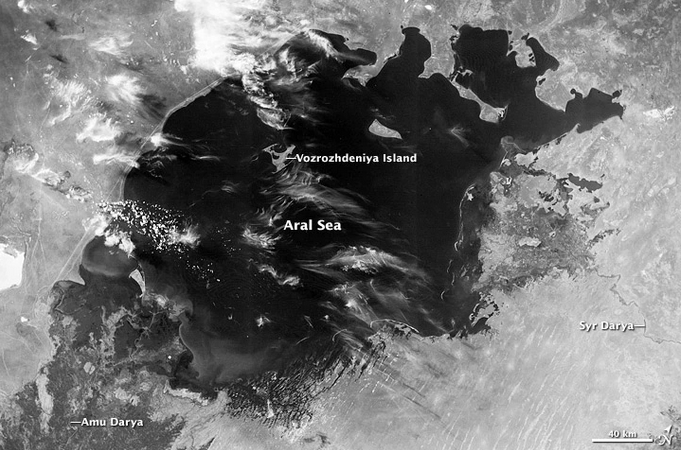
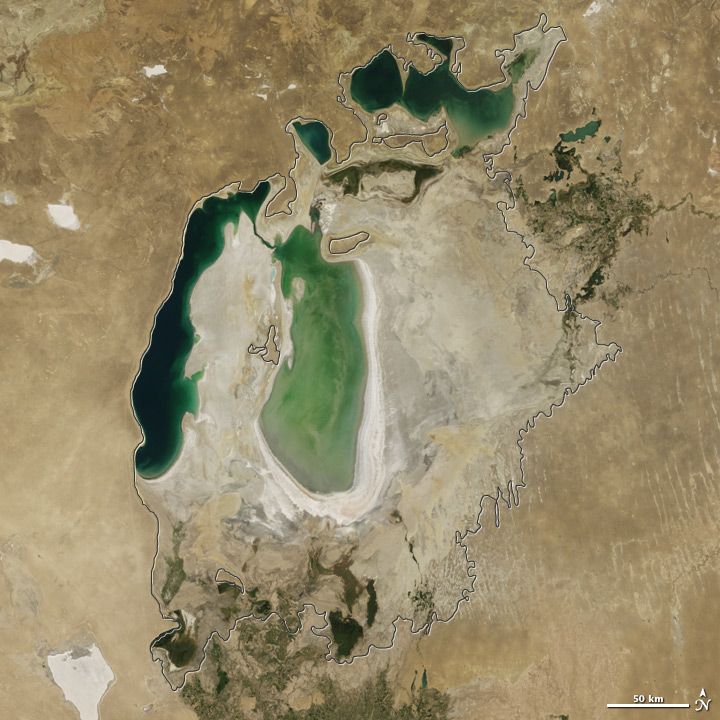
Aral Sea in 1964:

aral-sea-1964

Aral Sea 2014:

Aral Sea 2014

The region’s two major rivers which are fed by both snowmelt and rain in faraway mountains were used to “transform” the desert into farms for cotton and other crops.

Once, the Syr Darya River and the Amu Darya River flowed down from the local mountains, passed through the Kyzylkum Desert, and met at the Aral Sea, which is actually an inland saltwater lake, at the lowest part of the basin.

While irrigating from its waters helped the desert bloom, thanks to Soviet-era enterprise, it has devastated the Aral Sea.

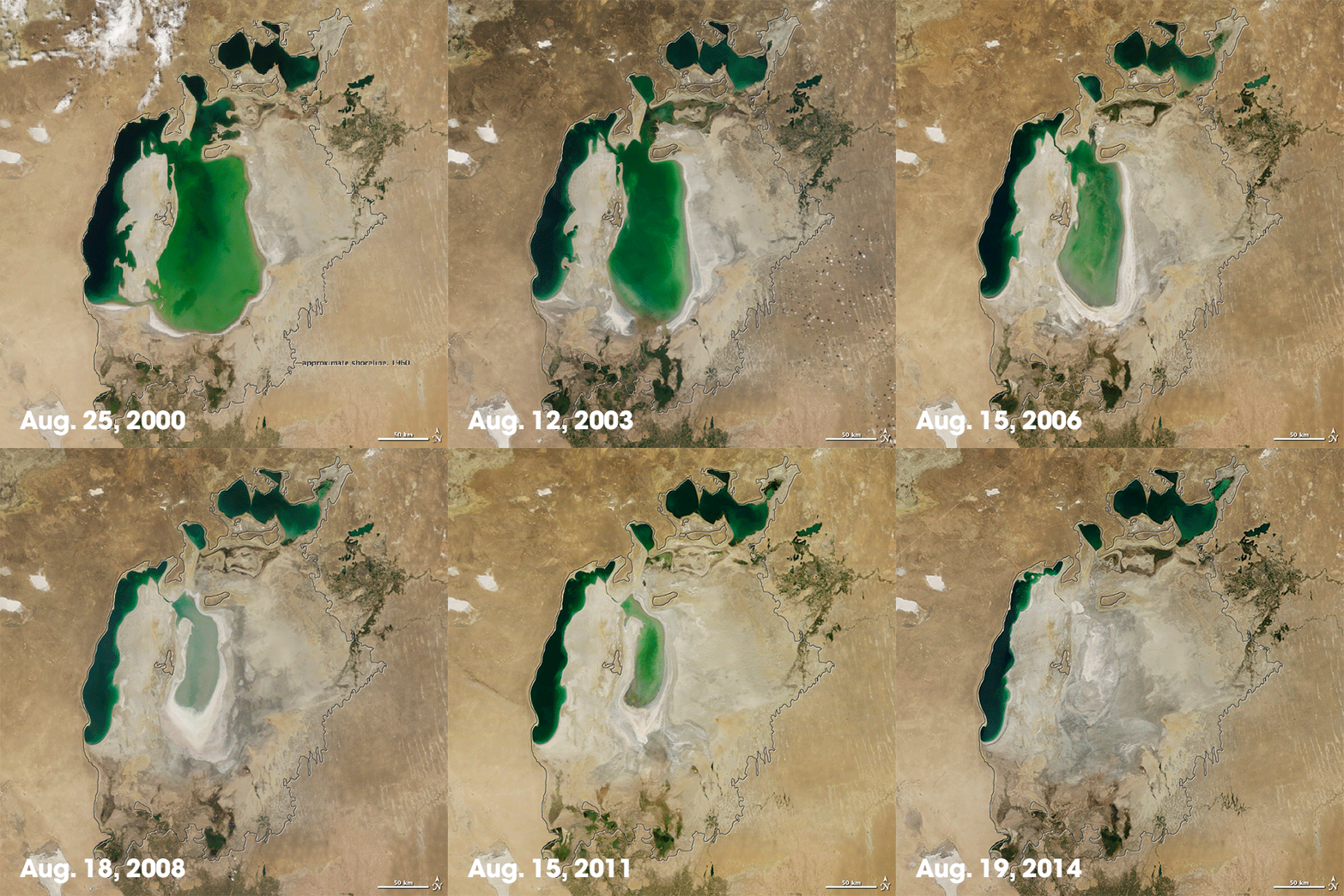
NASA’s Moderate Resolution Imaging Spectroradiometer (MODIS) on NASA’s Terra satellite have documented the changes. Let’s see how fast the devastation happened over the last 15 years.

By 2000 the Aral Sea was already only a fraction of its 1960 levels. The Northern Aral Sea (or the Small Aral Sea) had already separated from the Southern (Large) Aral Sea.

Aral Sea in 2000:
Aral-sea-2000

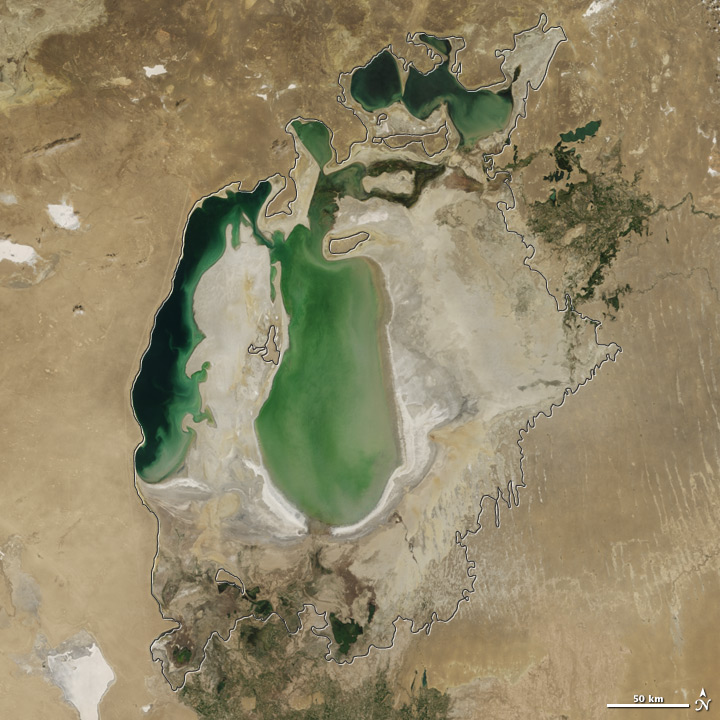
By 2001, the southern connection had been severed.

Aral Sea 2001:
Aral Sea 2002

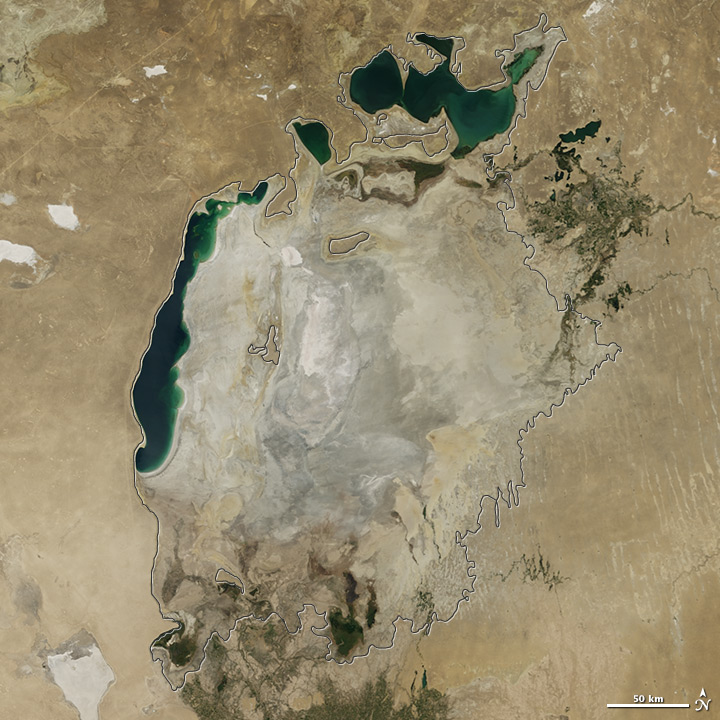
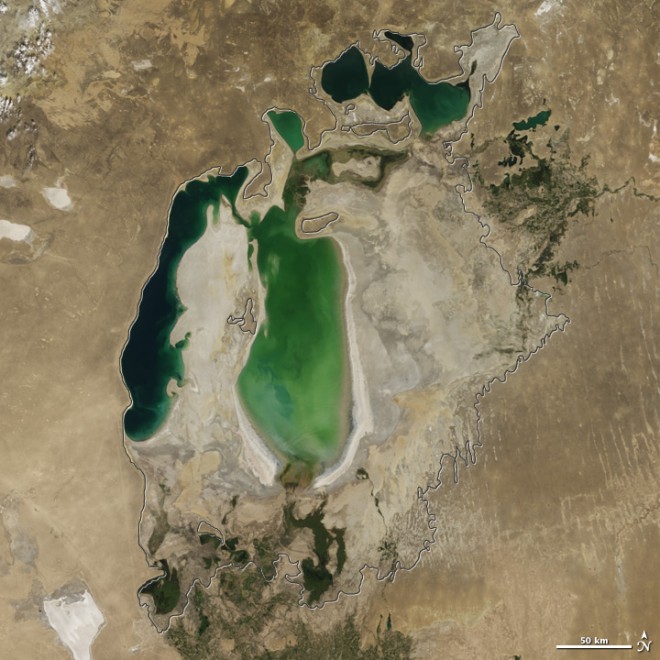
In 2005 a drought started and then cut off the flow of the Amu Darya to the Aral Sea.

Aral Sea 2004:
aralsea_tmo_2004229

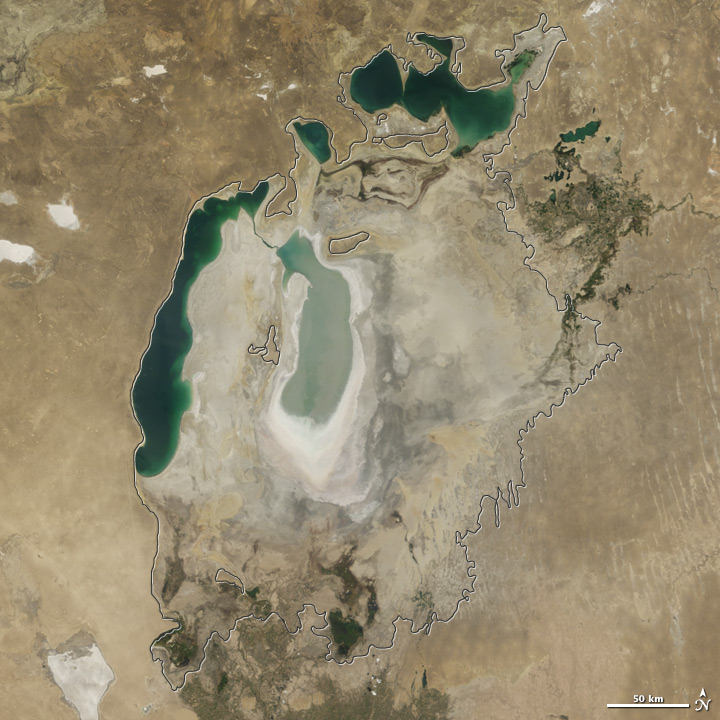
Aral Sea 2006:
aralsea_tmo_2006227

Aral Sea 2008:
Aral Sea 2008

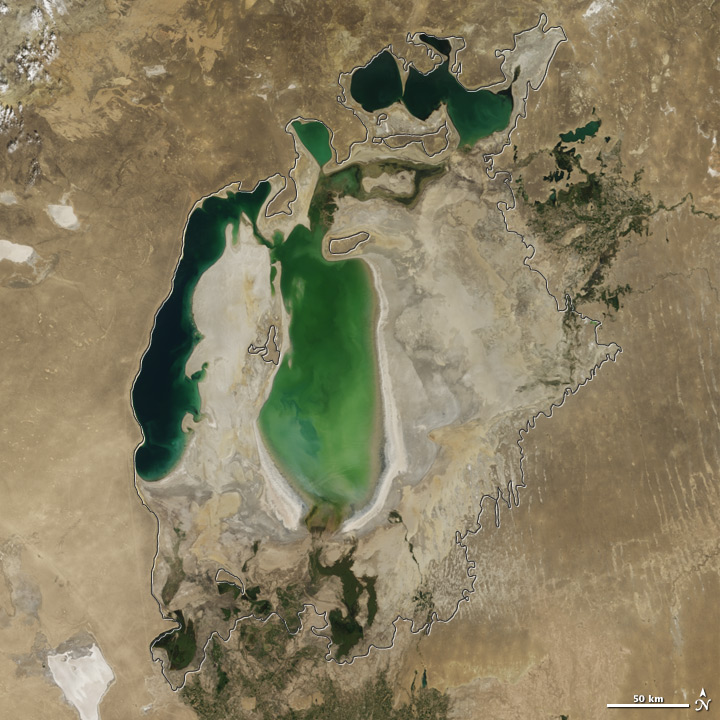
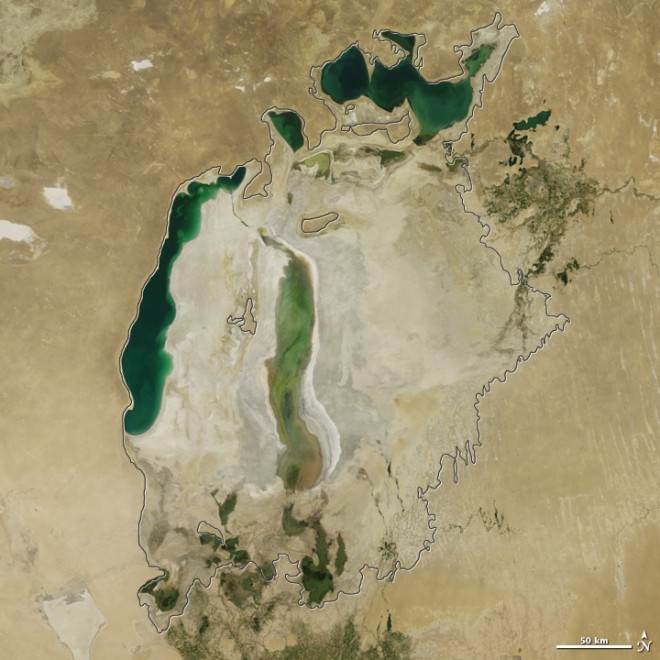
Between 2009 and 2014 there were alternating dry and wet years.

Aral Sea 2012:
aralsea_tmo_2012230

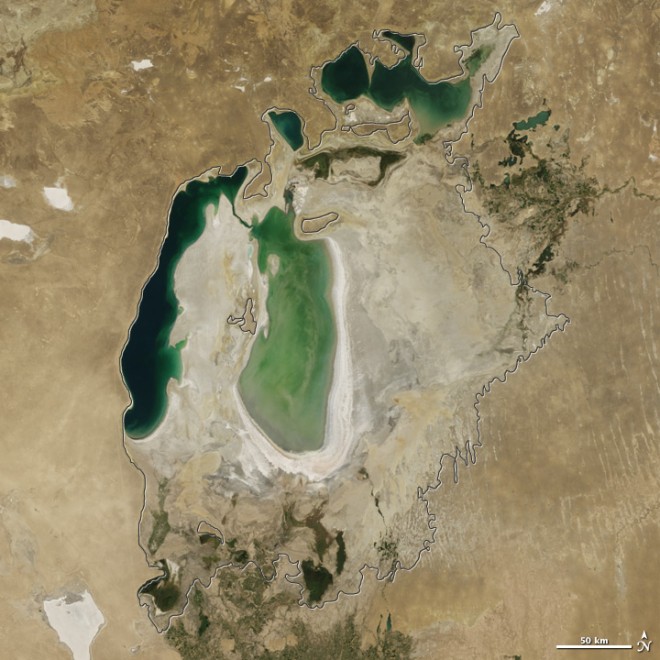
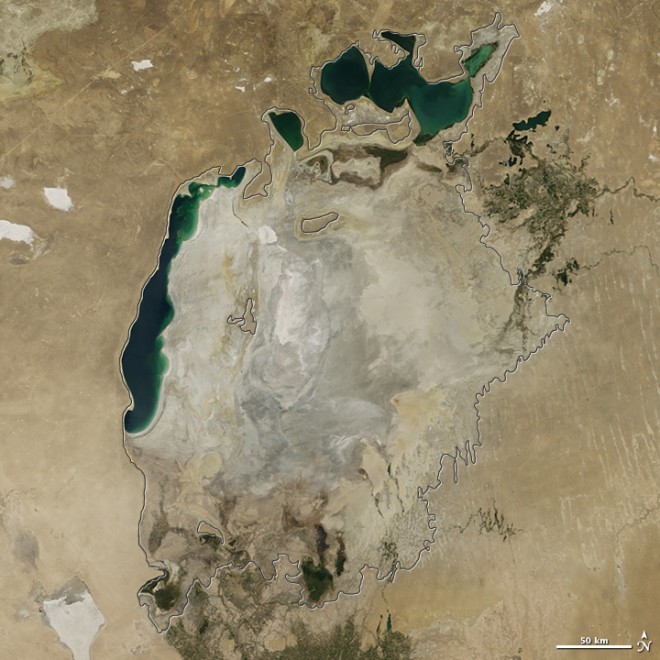
Aral Sea 2014:
Aral Sea

In 2014 the eastern lobe of the Aral Sea dried up completely. If it weren’t for NASA documenting and publishing these kinds of reports, then who?

RELATED: Iran’s Lake Orumiyeh is drying up

You see, as the lake dried up local people did take notice because their livelihoods changed. Fishing died out and the water became over saturated with pesticides and pollution. Now blowing dust from the Aral Sea lakebed which is full of chemicals is contaminating the air that people are breathing.

More facts about the Aral Sea:

Crops now need more water to counteract over salty soil.

Without the lake summers are hotter and winters colder.

Kazakhstan built a dam between the upper and lower sections of the Aral Sea in 2005, but it didn’t work.

We still haven’t figured out that reengineering planet earth might not be a hot idea.

Satellite images by NASA; cow at Aral Sea from Shutterstock

Karin Kloosterman
Karin Kloostermanhttp://www.greenprophet.com
Karin Kloosterman is an award-winning journalist, innovation strategist, and founder of Green Prophet, one of the Middle East’s pioneering sustainability platforms. She has ranked in the Top 10 of Verizon innovation competitions, participated in NASA-linked challenges, and spoken worldwide on climate, food security, and future resilience. With an IoT technology patent, features in Canada’s National Post, and leadership inside teams building next-generation agricultural and planetary systems — including Mars-farming concepts — Karin operates at the intersection of storytelling, science, and systems change. She doesn’t report on the future – she helps design it. Reach out directly to [email protected]
1 COMMENT

Comments are closed.

TRENDING

Luxury meets the textile waste stream with Coach – Bank & Vogue

A new collaboration between luxury brand Coach and textile reuse pioneer Bank & Vogue attempts to stitch those two worlds together: high fashion and the global textile waste stream.

Fishermen sue tire manufacturers on behalf of the salmon

A federal trial in San Francisco has brought US tire manufacturers, fishing groups, and environmental scientists into court over a chemical most drivers have never heard of — but which scientists say may be silently reshaping aquatic ecosystems.

Factors That Determine the Payout of Asbestos Cases

Asbestos is found in eye shadow and talc. Know your rights of this deadly environmental hazard.

Toxins in tiny bodies: American children are carrying invisible chemical burden

Chemical exposures were highest among younger toddlers and racial/ethnic minorities, reflecting systemic environmental injustice. While some older chemicals like triclosan and certain phthalates are decreasing (likely due to public pressure and reformulations), new unregulated substitutes like DINCH and emerging pesticides are on the rise.

Your Sweat is Unlocking Toxins in Plastic—Here’s Why Natural Fibers Matter

Natural fibers like organic cotton, hemp, and wood-based fabrics such as Tencel and modal offer a safer, breathable alternative to synthetic materials. These fabrics don’t shed microplastics, don’t contain toxic flame retardants, and allow your skin to breathe without the risk of chemical exposure.

Turning Your Energy Consultancy into an LLC: 4 Legal Steps for Founders in Texas

If you are starting a renewable energy business in Texas, learn how to start an LLC by the books.

Tracking the Impacts of a Hydroelectric Dam Along the Tigris River

For the next two months, I'll be taking a break from my usual Green Prophet posts to report on a transnational environmental issue: the Ilısu Dam currently under construction in Turkey, and the ways it will transform life along the Tigris River.

6 Payment Processors With the Fastest Onboarding for SMBs

Get your SMB up and running fast with these 6 payment processors. Compare the quickest onboarding options to start accepting customer payments without delay.

Qatar’s climate hypocrisy rides the London Underground

Qatar remains a master of doublethink—burning gas by the megaton while selling “sustainability” to a world desperate for clean air. Wake up from your slumber people.

How Quality of Hire Shapes Modern Recruitment

A 2024 survey by Deloitte found that 76% of talent leaders now consider long-term retention and workforce contribution among their most important hiring success metrics—far surpassing time-to-fill or cost-per-hire. As the expectations for new hires deepen, companies must also confront the inherent challenges in redefining and accurately measuring hiring quality.

8 Team-Building Exercises to Start the Week Off 

Team building to change the world! The best renewable energy companies are ones that function.

Thank you, LinkedIn — and what your Jobs on the Rise report means for sustainable careers

While “green jobs” aren’t always labeled as such, many of the fastest-growing roles are directly enabling the energy transition, climate resilience, and lower-carbon systems: Number one on their list is Artificial Intelligence engineers. But what does that mean? Vibe coding Claude? 

Somali pirates steal oil tankers

The pirates often stage their heists out of Somalia, a lawless country, with a weak central government that is grappling with a violent Islamist insurgency. Using speedboats that swarm the targets, the machine-gun-toting pirates take control of merchant ships and then hold the vessels, crew and cargo for ransom.

Related Articles

Popular Categories