
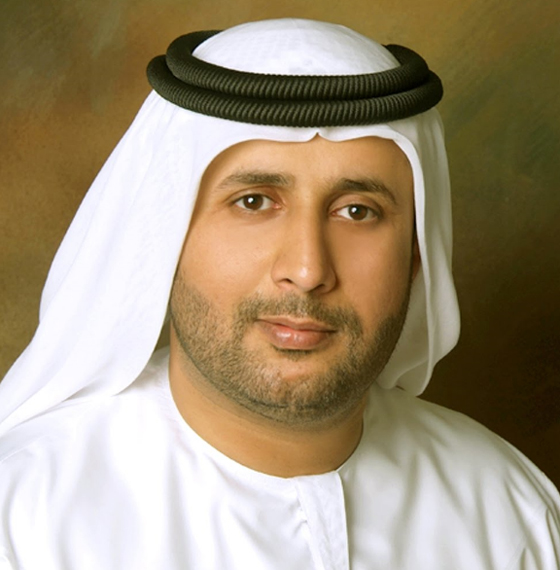
Empower to Cool Dubai With Recycled Sewage


District cooling is already super green. Now Ahmad Bin Shafir plans to take the mission one step further

Wild and crazy Dubai is hardly known for sensible conservation of scarce resources, but CEO Ahmad Bin Shafir could change all that with a radical new approach to keeping cities cool. His rapidly growing company Empower already cools Dubai’s most efficient new buildings with district cooling.

Far more efficient than air conditioning, district cooling uses water that has been cooled once in a central plant and then distributed through a network of piping systems to individual customer buildings. It achieves economies of scale because it uses centralized plants instead of duplicating the energy used with individual cooling units in each building.

Along with district heating, district cooling has been widely used in the greenest nations globally, such as Sweden, to minimize energy use and achieve carbon neutral buildings.

In Dubai, Empower has grown by leaps and bounds: in 2010 the company had a 37 percent increase in its signature district cooling plants, and as a result – it added 34 employees. Many CEOs, faced with that kind of success, would just keep doing things the same way, regardless of the fact that Dubai, like all the MENA nations, has extreme water scarcity, which will get worse over the next decades with climate change.

But Empower CEO, Ahmad Bin Shafir appears to be an unusual CEO. He plans an innovative solution to Dubai’s water scarcity. Instead of wasting freshwater, circling endlessly inside the cooling pipes of his district cooling projects, Empower has just begun to substitute recycled waste water to do the same work.

“The purpose of district cooling is to save energy” he says. “As we lead by example, we have adopted this new technology. Most real estate projects in Dubai are equipped with district cooling services which require a huge amount of water. Using sewage or recycled water represents a huge step in water conservation.”

Using waste water in place of fresh water is even more crucial in Dubai. The arid nation uses energy to desalinate water to make drinkable freshwater. It makes little sense to then waste that energy that has already been expended, by simply pushing that desalinated water around in contained pipes to cool buildings, negating the energy savings of district cooling.

::Empower

Related stories:
Israel Well Positioned to Meet Growing Gulf Need for New Water
Dubai’s New Net Zero Building Codes Should Boost Cleantech Worldwide
Abu Dhabi’s Costly Desalination Plants Prompt Wastewater Treatment Plans

LEAVE A REPLY

Please enter your comment!
Please enter your name here

TRENDING

Astro uses AI to help procure land for renewable energy

For oil-rich, environmentally vigilant Gulf states, Astro isn’t just another startup story. It is a blueprint for accelerating an energy transition that is now existential, not optional.

Runners Can Break Guinness World Records at the Dubai Marathon in 2026

Runners at the Dubai Marathon will have a rare chance to enter the Guinness World Records archive this year, as the global record-keeping authority partners with the marathon to mark the race’s 25th anniversary.

Dubai developer uproots ancient Italian olive trees, $270,000 USD each for “eco” project

Flying centuries-old trees across continents via specialized cargo burns enormous fossil fuels. Replanting them in a desert climate—no matter how advanced the irrigation or “heritage preservation techniques”—places immense stress on organisms that evolved for Mediterranean seasons, soils, and rainfall patterns. And we've seen that the UAE is not capable of taking care of trees so survival rates are uncertain.

Sink holes from over-watering farmers’ fields

Sinkholes are rapidly appearing in Turkey’s central Anatolian farming region, particularly around Konya and Karapınar. These giant gaping holes in the ground in areas of farmland, known locally as obruk, are not random geological events. They are linked to prolonged drought, climate-driven heat stress, and heavy groundwater extraction for agriculture in one of the country’s most important breadbaskets.

Luxury tower in Jerusalem ruins its sacred heritage and eco-architects are worried

Critics of a new set of luxury towers including Israeli-Greek architect Elias Mesinas, warn that the scale of the towers, loss of public green space, and creeping luxury-led gentrification risk undermining Jerusalem’s historic skyline, community fabric, and long-standing planning principles — raising a fundamental question: not whether Jerusalem should densify, but how it can do so responsibly while preserving what makes the city unique.

Qatar’s climate hypocrisy rides the London Underground

Qatar remains a master of doublethink—burning gas by the megaton while selling “sustainability” to a world desperate for clean air. Wake up from your slumber people.

How Quality of Hire Shapes Modern Recruitment

A 2024 survey by Deloitte found that 76% of talent leaders now consider long-term retention and workforce contribution among their most important hiring success metrics—far surpassing time-to-fill or cost-per-hire. As the expectations for new hires deepen, companies must also confront the inherent challenges in redefining and accurately measuring hiring quality.

8 Team-Building Exercises to Start the Week Off 

Team building to change the world! The best renewable energy companies are ones that function.

Thank you, LinkedIn — and what your Jobs on the Rise report means for sustainable careers

While “green jobs” aren’t always labeled as such, many of the fastest-growing roles are directly enabling the energy transition, climate resilience, and lower-carbon systems: Number one on their list is Artificial Intelligence engineers. But what does that mean? Vibe coding Claude? 

Somali pirates steal oil tankers

The pirates often stage their heists out of Somalia, a lawless country, with a weak central government that is grappling with a violent Islamist insurgency. Using speedboats that swarm the targets, the machine-gun-toting pirates take control of merchant ships and then hold the vessels, crew and cargo for ransom.

Leopoldo Alejandro Betancourt López Turned Ocean Plastic Into Profitable Sunglasses

Few fashion accessories carry the environmental burden of sunglasses. Most frames are constructed from petroleum-based plastics and acrylic polymers that linger in landfills for centuries, shedding microplastics into soil and waterways long after they've been discarded. Leopoldo Alejandro Betancourt López, president of the Spanish eyewear brand Hawkers, saw this problem differently than most industry executives.

Why Dr. Tony Jacob Sees Texas Business Egos as Warning Signs

Everything's bigger in Texas. Except business egos.  Dr. Tony Jacob figured...

Israel and America Sign Renewable Energy Cooperation Deal

Other announcements made at the conference include the Timna Renewable Energy Park, which will be a center for R&D, and the AORA Solar Thermal Module at Kibbutz Samar, the world's first commercial hybrid solar gas-turbine power plant that is already nearing completion. Solel Solar Systems announced it was beginning construction of a 50 MW solar field in Lebrija, Spain, and Brightsource Energy made a pre-conference announcement that it had inked the world's largest solar deal to date with Southern California Edison (SCE).

Related Articles

Popular Categories