
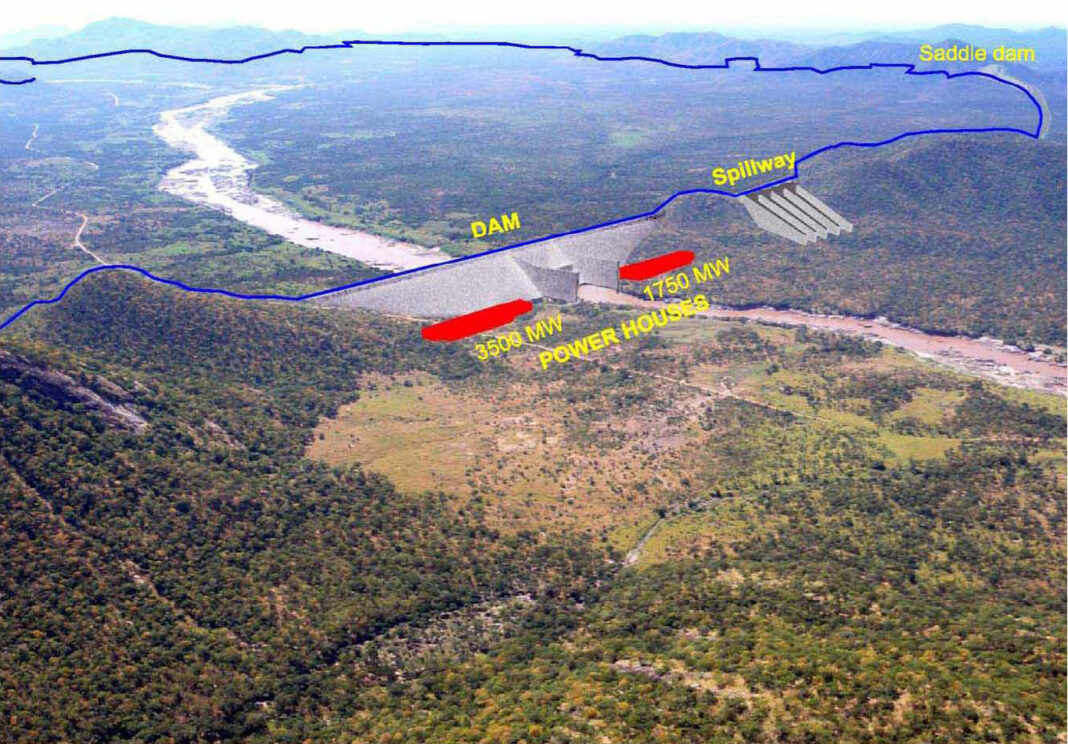

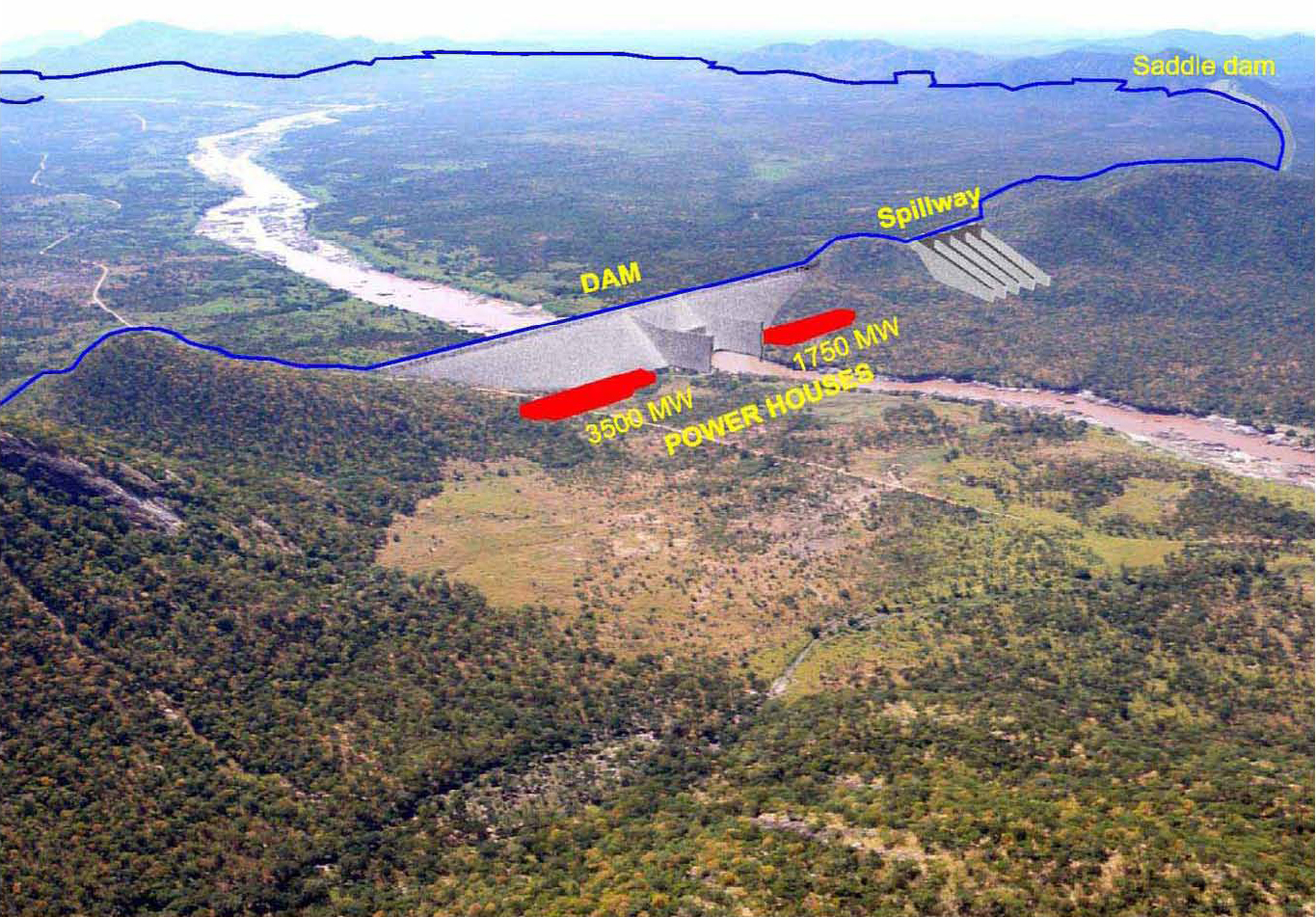
 Egypt has been in danger of losing a part of its water lifeline the Nile River. Ethiopia is dead set on constructing a giant dam over their part of the mighty river. And both parties still don’t see eye to eye.
This project, which was planned for the Blue Nile by Ethiopia, is just a part the water problems of population dense Egypt; which also loses a significant part of Nile River water from other sources: evaporation, leaky water pipe infrastructure, and from vegetation growing on the banks of the Nile and on river islands.
Talks between water resource ministers of three of the countries that share the Nile’s water resources, Egypt, Ethiopia and Sudan, ended inconclusively this week in Khartoum, with the participants agreeing to meet meet again next month.
The ‘successful’ Egypt-Ethiopia talks failed to end differences over Nile water. A number of unresolved issues still remain to be solved. They revolve around Ethiopia’s Grand Renaissance Dam project on Ethipia’s upstream portion of the Nile, called the Blue Nile. Many water experts say this project could “damn Egypt’s development future”. Bur Ethiopia feels that this water is their energy right.
Ethiopia is an energy-poor country that is also plagued by drought and famine. Constructing the massive dam will provide it with both increased water supplies and with hydro-electric power. According to Middle East Online, Ethiopia began diverting the Blue Nile in May to build the 6,000 MW dam, which will be the largest dam built in Africa when completed in 2017.
Although Ethiopian water experts claim that Egypt’s water loss from the project will be “minimal”, Egypt claims that it has ‘historic rights’ to the use of Nile water. These rights stem from two treaties made in 1929 and 1959 that allow it 87 percent of the Nile’s flow and gives it veto power over upstream water projects.
 Egypt itself constructed a large dam on the Nile at Aswan (see above photo), which was completed in 1970 during the presidency of Gamal Abdel Nasser.
This ten-year project caused much controversy and resulted in many historic archeological sites having to be relocated due to subsequent flooding by what is now known as Lake Nasser.
A dam on the Blue Nile by Ethiopia would obviously have an affect on both neighboring Sudan and Egypt.
Sudan, which like Egypt has still not signed Nile water use treaties with Ethiopia, has said that it will not be so much affected by the Renaissance Dam project. Sudan, Egypt’s long time ally, has apparently switched sides in favor of Ethiopia in regards to this project.
The unresolved issues dealing with the project will be further discussed when the water ministers meet again on January 4. After being weakened following the political turmoil of the Arab Spring uprisings, Egypt appears to be less able to exert its influence over Ethiopia on this important issue.
More articles on issues surrounding the River Nile:
The Dam that May Damn Egypt’s Future
Egypt Losing its Mighty Nile Drop by Drop
Defiant Ethiopia to Proceed with Massive Dam on the Nile River
Nile River dam illustration photo by Seeker
Photo of Nile River at Aswan by World Travelist




It’s an awesome paragraph in support of all the internet people;
they will get advantage from it I am sure.
fantastic points altogether, you simply received a new reader.
What might you recommend in regards to your put up that you made a few days
ago? Any certain?
My web site; Judy Neinstein In 2011
I delight in, lead to I discovered just what I was taking a look for.
You’ve ended my 4 day long hunt! God Bless you
man. Have a nice day. Bye
Feel free to visit my site :: epapieros (e-papierosyy.pl)
I have been exploring for a little for any high quality articles or
weblog posts in this kind of space . Exploring in Yahoo
I at last stumbled upon this site. Studying this info So i am happy to convey that I’ve
a very good uncanny feeling I discovered just what I
needed. I most for sure will make sure to don?t disregard this
site and give it a glance regularly.
Feel free to surf to my web page Toronto’s Judy Neinstein (youtube.com)
I do not understand why :
1. Egypt is always seen belt tight in trying to monopolize the Nile Waters and not willing to equitable share with the Nile water producing counties and its neighbors. After all they deserve the right to use their resources. All the previous ‘historic’ treaties were illicitly done without the participation of the peoples and the governments of the riparian countries. These so called ‘ trinities’ even swindles the brotherly neighbors peoples of Sudan. A fair and equitable treaty must be agreed upon by all the Nile riparian countries – and Egypt to its best interest and as ‘0’ contributor to the Nile should broker the agreement.
2. At the same time , Egypt having economic and other advantages utilize its seas potentials.
Zakari – UAE
The same bla bla pro-Egypt no-clue mouthpieces…”Although Ethiopian water experts claim that Egypt’s water loss from the project will be “minimal”…”. It wasn’t just Ethiopian experts, rather international experts: 10 of them, two from each of the three countries and 4 from outside the continent studied consequences of the Dam for 1 full year and arrived at the conclusion you mentioned….Get your facts straight for ones. And the colonial era agreement is between British occupied Egypt and British occupied Sudan…no other country was involved….So basically and agreement signed by British on both sides…a hoax worth clarifying when mentioning the so called treaties. At any rate, the future of the Nile depends on the wills of the upstream until Egypt comes to terms with tail between its legs… it is as simple as that.
Under the old agreement the share Sudan got was a small fraction reserved for Egypt.
It is so small that nothing Ethiopia could or will do could ever reduce that small amount further.
Rather than switching sides, Sudan recognized it was being used by Egypt to fight Egypt’s battle. Since Sudan sits on the front lines so to speak, Egypt was hoping they’d do the fighting as well and for what cause brotherly love thanks to both being Sunni dominated nations?
Please that has not brought much benefit to Sudan ever.
So when the Sudanese had an opportunity to look at the potential conflict they realized they really don’t have anything to worry about. If Egypt wants Sudan to fight its battles it needs to be ready to give Sudan something big in return. As things stand now, Egypt doesn’t have anything to give Sudan to begin to make it worthwhile.
Ethiopia and the Nile Source nations do have something to give Sudan, and that’s a way to Sudan to maintain the upper hand with South Sudan.
They are getting that thanks to the fact that those nations also fear the chaos there. By not obstructing Sudan’s efforts the threat to them cannot materialize.
Egypt is the only nation really facing any threat of reduced water rights from the Nile.
Egypt also was responsible for the biggest single reduction in water flow to Egypt when the Aswan High Dam was built. Thanks to evaporation they reduced the water reaching Cairo by over 15% annually.
Rather than demanding Ethiopia not build the dam Egypt should focus on reducing the massive water waste and stupid water use (like cotton and rice growing) that currently costs them so much water.
And if not building a dam is such a good thing, then maybe Egypt should remove the Aswan. Being such a big dam no doubt would mean tremendous benefits for Egypt.
While removing it, they could instead opt to store water in underground aquifers they are fast depleting.
If they did that they’d solve 2 problem instantly. They’d restore to the river flow the 15%+ lost to evaporation and ensure their aquifers remain viable for centuries into the future.