 Consequences of climate change especially acute in the Arab world, and traditional methods for coping with climate are severely stressed finds new World Bank assessment.
All eyes are on Qatar now as the country hosts the UN-sponsored climate change event COP18. We’ve been reporting on COP18 before it began and during, and recently posted about the need for Muslim and Arab-led action in the fight against climate change. Now the World Bank is following the lead of activists in the Middle East region calling for the attention of Arab leaders to help in the global fight, before it is too late.
The Arab world has been adapting to climate change for centuries. There is a long history and tradition of coping with the associated challenges, such as changes in temperature and rainfall. New climate change risks are emerging at a much faster rate, including the prospect of a world that is four degrees hotter, and resilience built up over years is being severely tested.
According to the World Bank impact of climate change will be especially acute in the Middle East and North Africa (MENA) region, and immediate action will be needed to avoid the projected consequences of worsening water shortages and rising food insecurity. A new report Adaptation to a Changing Climate in the Ara Climate in the Arab Countries provides a comprehensive assessment of the threat to the region posed by increasingly severe weather, and offers a set of policy options for the urgent task of managing current effects and building resilience against those yet to come.
“Reducing vulnerability to climate change will require concerted action on multiple levels,” said Rachel Kyte, World Bank Vice President for Sustainable Development. “Political leadership now, will be critical in establishing climate change as a national and regional priority.”
These risks have been identified and assessed in the new climate report which was prepared in partnership with the League of Arab States, involving specialists, researchers, policymakers and civil society organizations from across the region.
The report reinforces the warning that decades of poverty reduction efforts could be reversed as contained in the recent World Bank publication, Turn Down The Heat: Why a 4° C Waritalic”>° C Warmer World Must be Avoided.
Over the past 30 years, climate change has affected 50 million people in the Arab world, costing about $12 billion directly and many multiples of that indirectly. Recent trends suggest that dry regions are becoming drier and flash floods have become more frequent. The 2006 flooding of the Nile River Basin led to 600 deaths, with a further 118,000 people affected, while in 2008 a record five-year drought finally ended in the Jordan River Basin.
Globally 2010 was the warmest year since records began in the 1800s, and of the 19 countries that set new record temperatures, five were in MENA. Regional temperatures are projected to reach new record highs, coupled with less rainfall which, in a region with the world’s lowest endowment of freshwater, could make this precious natural resource even scarcer.
A harsher climate threatens livelihoods throughout the region. Extreme weather could affect both the annual US$50 billion tourism industry and agriculture, already under severe climate stress. The combination of higher temperatures, lower rainfall and increased frequency of drought could cause more crop failures and lower yields putting MENA’s rural population, nearly half the region’s total, under growing stress. Migration to already overcrowded cities and vulnerable costal zones would accelerate.
Yet a further consequence of climate change could be the upending of traditional social roles, as it is usually the men who migrate for low-wage, low-skill jobs, and the women who remain behind with all the farming and community responsibilities.
“Climate change is a reality for people in Arab countries,” said Inger Andersen, World Bank Vice President for the Middle East and North Africa region. “It affects everyone – especially the poor who are least able to adapt – and as the climate becomes ever more extreme, so will its impacts on people’s livelihoods and wellbeing. The time to take actions at both the national and regional level in order to increase climate resilience is now.”
The report stresses that adaptation should be integrated into all national policies and actions to ensure they are climate resilient. This spans efforts from collecting climate data to strengthening basic services. Accurate weather information is critical for preparing for extreme events. Improved access to services such as education, health and sanitation, along with effective social safety nets to compensate for sudden loss of livelihood, will give citizens the skills and resources to navigate climate challenges.
The World Bank Group is currently engaged across the region in supporting countries and communities in coping with the effects of a changing climate. A project in Morocco is financing the integration of adaptation measures into the national agriculture strategy, while in Yemen more effective land management is being promoted, along with research into drought resistant crops.
Moreover, sustainable development, increasing social and economic inclusion and improving governance – the essential ingredients for building and maintaining resilience – are overarching goals of all Bank activities throughout the region.
Action for change
According to the World Bank Arab countries can take steps to reduce the impacts of climate change. The report outlines measures that not only potentially reduce the region’s vulnerability, but can also contribute to more sustainable long-term development. The report offers a model, an ‘Adaptation Pyramid Framework,’ to strengthen public sector management in a changing climate, and to assist stakeholders in integrating climate risks and opportunities into all development activities.
The main messages suggest that countries and households will need to diversify their production and income generation, integrate adaptation into all policy making and activities, and ensure a sustained national commitment to address the social, economic and environmental consequences. With these coordinated efforts the Arab world will be able to rise to the challenge once again and, as it has for centuries, successfully adapt to a changing climate.
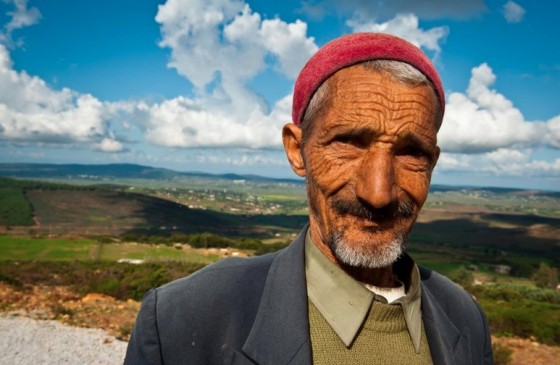
Above image via the World Bank Facebook page