

Omar Yousef’s Crowded Architecture

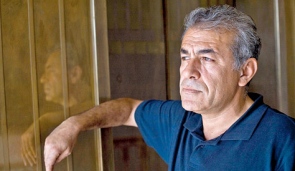
omar-yousef-architectPalestinian Architect Omar Yousef draws attention to the occupation’s “forced ecology” at the Ecoweek conference in Israel [image taken by Tomer Appelbaum]

Designed to teach young architects the most progressive building practices available, beyond borders or cultural differences, the Ecoweek conference taking place in Israel draws inevitable attention to disparities.

Green Prophet’s interest in natural building practices such as Hassan Fathy’s Nubian-esque structures stems from our intellectual interest in and understanding of ecology. Yousef, on the other hand, explains how in Palestinian territories, natural building occurs out of necessity.

Haphazard Architecture

A Professor at Al Quds Palestinian University in Jerusalem, Omar Yousef is one of several guests slated to influence budding architects to incorporate greener principles into their design.

But his presentation, entitled “Recyling Water in Gaza: Discrepancy between Sustainable Ecology and the Occupation,” has a political spin, according to Haaretz reporter Esther Zandberg.

Yousef grew up in East Jerusalem and lives and works in Shuafat. In his time, he has not witnessed a systematic building pattern, but rather a haphazard pattern that responds to daily happenstance.

“It is an architecture of chaos, crowdedness, instability, temporariness and destruction, improvised building additions and a separation fence,” he told Zandberg, “…an authentic reaction to necessities, a testimony to the survival instinct of Palestinian society.”

Ideology vs necessity

Whereas we tout the benefits of green building techniques and earth-based architecture, advocating a healthy dose of peaceful harmony thrown in the mix, Palestinians can’t afford to be so ideological. According to Yousef,

Ironically, Gaza’s population is also very ecologically aware, involuntarily, and the consumer world could learn from it.For lack of conventional building materials, they build houses out of mud and straw. For lack of waste disposal sites, they use junk to build playgrounds for children and recycle overflowing sewerage for irrigation and watering vegetable plots (permaculture.)

Though the complicated political situation does not escape us, and we are deeply empathetic to all  suffering, we provide environmental news and leave politics to the experts. However, what we did find interesting is this notion of what Yousef calls “forced ecology.”

Living and building simply

Without the political spin, the description of houses built of mud and straw sounds like a community using the materials at hand to eke out a life. This is what we did before the Industrial Revolution. This is what we always should do.

Our modern concept of architecture and design, on the other hand, assumes that there are no limits to where we can source our materials, no limits to how big we can build, because the earth’s bounty overflows.

This thinking has given us front row tickets to the uncomfortable, and sometimes frightening, theater of rising temperatures and seas.

Earth architecture is sustainable

“Currently it is estimated that one half of the world’s population—approximately three billion people on six continents—lives or works in buildings constructed of earth,” according to EarthArchitecture.org.

Earth construction is worthwhile. It is sustainable. And I dare to say it only seems unfortunate when compared to the unsustainable high-rises and mansions built by wealthier nations.

Of course, there is no excuse for ruptured infrastructure – such as mismanaged sewage or the lack of waste disposal facilities – that imperils health or happiness, and we hope these issues will be addressed.

But we can all learn a lesson about simpler living from the people who have no other choice.

:: Haaretz

More on Sustainable Building:

Geotectura’s Residential Building Set to Sail
Cambridge to Build Europe’s First Eco-Mosque

Sharing Eco-Friendly Construction Techniques is So’Eco

Tafline Laylin
Tafline Laylinhttp://www.greenprophet.com
As a tour leader who led “eco-friendly” camping trips throughout North America, Tafline soon realized that she was instead leaving behind a trail of gas fumes, plastic bottles and Pringles. In fact, wherever she traveled – whether it was Viet Nam or South Africa or England – it became clear how inefficiently the mandate to re-think our consumer culture is reaching the general public. Born in Iran, raised in South Africa and the United States, she currently splits her time between Africa and the Middle East. Tafline can be reached at tafline (at) greenprophet (dot) com.

Read More

TRENDING

Dan Zaslavsky’s energy tower dream is rising again in Iran and China

The Energy Tower idea never made the leap from drawings and engineering studies to full-scale construction. But nearly two decades after most people stopped talking about it, the concept is quietly evolving in two unexpected places: China and Iran. The concept let dreamers dream and doers do - figuring out more pleasing designs and engineering.

A visit to Amirim, Israel’s first all-vegetarian village in the Galilee

Just 15 kilometers from Tzfat there is a moshav that was founded in the late 50s that was ideologically influenced by organic, vegetarian and vegan principles. My hostess at Ohn-Bar, the tzimmer where I stayed, explained that the people of Amirim were among the pioneers of Israel’s strong vegetarian movement.

Israeli Hydrogen Startup H2Pro Are Trying to Solve Clean Energy’s Hardest Problem

The company has attracted backing from major investors including Breakthrough Energy Ventures, the climate fund founded by Bill Gates, along with industrial partners such as Sumitomo, ArcelorMittal, and Temasek, a multi-billion dollar company that owns Singapore airlines. H2Pro has raised more than $100 million USD and is moving from pilot projects toward commercial-scale deployments.

Desalination experts debunk Aqua Solaire, the floating desalination barge

AI makes it easy to dream, develop, and create images of what could be world-changing ideas, until the reality sets in. A new project making the rounds is Aqua Solaire, an allged French concept for a solar-powered desalination vessel designed to bring drinking water to coastal communities facing drought, storms, and infrastructure failures.

Saving Gourmet Wild Plants For The Future

Think of truffles, a gourmet wild food. The European...

Locals From Rishon Fight IKEA

Big Box stores are a pretty new concept in Israel, and thank God that not every Israeli city wants them in their backyard. A word from someone who has see the beautiful farmland around her hometown Newmarket, Ontario stripped and converted into vulgar strip malls of big box shops: they have no place in a healthy and sustainable town or city.

The Jewish National Fund Meets An Inconvenient Truth

According to the JNF, it has transformed thousands of acres of barren land into green forests in Israel. They state that each person emits about 23 tons of carbon per year, estimating that each tree planted can absorb one ton of carbon in its lifetime. That's a whole lot of trees you'd need to be planting. Could so many fit in Israel?

How to quiet noise from construction in your office

Streets need to be resurfaced in New York but the humming and grinding noise is unsettling. Noise is environmental pollution. 

EarthX and a blueprint for sustainable investing

Trammell S. Crow, a Dallas-based businessman and father of four, is focusing his efforts on impact investing, and media that focuses on saving the planet through EarthX.

Mining Afghanistan’s Mineral Discoveries Similar to Avatar

Now that American forces in Afghanistan are commemorating the longest period of any war that America has been involved in, including the 1965-73 Vietnam War, the recent discoveries of large and extremely valuable mineral and metal deposits may finally bring to light a reason to continue the presence of US fighting forces in this war torn and backward country.

From Pilot Plant to Global Stage: How Aduro Clean Technologies’ 2026 Expansion Signals a Turning Point for Chemical Recycling Investors Like Yazan Al Homsi

The company's Next Generation Process (NGP) Pilot Plant in London, Ontario, has officially moved into initial operating campaigns, generating the kind of structured, repeatable data that separates laboratory promise from commercial viability.

Nobul’s Regan McGee on Shareholder Value: “Complacency Is the Silent Killer” 

Why the governance framework designed to protect shareholders so...

Should You Invest in the Private Market?

startustartup Unlike public stock exchanges, which offer daily trading, strict...

Popular Categories